Solarpunk technology

3714 readers
1 users here now

Technology for a Solar-Punk future.

Airships and hydroponic farms...

founded 3 years ago
MODERATORS
1


cross-posted from: https://scribe.disroot.org/post/6075818

Archived link

The Canadian International Trade Tribunal has initiated an interim review of its order concerning the dumping and subsidizing of solar modules and laminates originating in or exported from China.

The review concerns order RR-2020-001, issued on Mar. 25, 2021, which encompasses Chinese solar modules and laminates composed of crystalline silicon cells and thin-film photovoltaic products made of amorphous silicon, cadmium telluride or copper indium gallium selenide.

...

2


cross-posted from: https://scribe.disroot.org/post/6034089

Archived version

Solar panels used widely across Ireland, including in large solar farms, at airports, and on government buildings, were sourced from companies linked to forced labour and environmental devastation in the Xinjiang region of China, RTÉ Investigates has found.

Two Chinese solar panel manufacturers, JA Solar and Jinko Solar, were sourcing a raw material called polysilicon – one of the essential ingredients in the manufacture of panels – from Xinjiang, where China has built a regime of forced labour and repression targeting the region's ethnic minorities, particularly Uyghurs, a system some critics, including the US government, describe as a genocide.

In a landmark 2022 report, the United Nations concluded that human rights abuses in [Xinjiang] were widespread and could constitute crimes against humanity.

...

JA Solar and Jinko Solar panels can be found on sites across Ireland, including at a new solar farm at Shannon Airport, opened by Minister for Climate Energy Darragh O’Brien on 28 November, in Wicklow County Council’s car park, and in Ireland’s largest solar farm developments, including at sites owned by ESB.

...

The investigation also found that** enormous volumes of coal**, the dirtiest fossil fuel, were being mined and burned in order to process and purify the polysilicon.

This lead to extremely high levels of air pollution in an industrial zone called Zhundong Development Park, one of the most important areas for polysilicon production in China, where polysilicon companies are co-located with vast open-pit coal mines. Three of the world’s top ten polysilicon manufacturers are based in the park.

China's subsidisation of its solar industry has driven down prices and made solar power the most affordable energy source in the world, but critics say this has been done at a human and environmental cost that is too great to ignore.

...

China's production of panels ... has vastly overshot demand. It produces twice as many as is needed by the global economy, and the environmental cost has primarily been borne by Xinjiang.

"There are crimes against humanity being perpetrated in the Uyghur region, so we don't see this as a trade issue or even a national security issue," said Patricia Carrier, a human rights lawyer with the Coalition to End Forced Labour in the Uyghur Region.

"The Chinese government has purposefully invested heavily in several sectors to ensure that they are concentrated in or reliant on Uyghur forced labour and also very lax environmental standards...so not only is there forced labour being used, but it is also very environmentally damaging."

...

Industry bodies say that China's dominance comes at the cost of social and human rights, and has "jeopardised" and "undermined" Europe's commitment to a "fair and resilient energy transition."

"The nexus between forced labour and the unsustainably low prices of Chinese-made solar PV modules and inverters poses a serious threat," said the European Solar Manufacturing Council in a letter addressed to the then taoiseach Leo Varadkar and energy minister Eamon Ryan in January 2024.

"Without EU regulations scrutinizing goods throughout the value chain for forced labour, European PV manufacturers, adhering to higher social and environmental standards, are jeopardised."

...

Though allegations of forced labour and environmental issues in China’s solar industry have been known since at least 2020, Ireland continued to import and deploy panels from JA Solar and Jinko Solar.

...

3


OSE Germany have created a search engine for open hardware designs that publish an OKH manifest. Some info about the site is here https://stack.opensourceecology.de/

4
5


cross-posted from: https://lemmy.sdf.org/post/46467998

With the renewable energy transition underway in Australia, the higher than expected uptake of solar panels has human rights groups concerned about links to Uyghur forced labour in the supply chain. As Australia looks into developing its own solar panel industry, rights groups say government and industry should work to ensure the clean energy transition isn't at the cost of freedom.

Archived

[...]

Without a domestic supply chain, though, Australia is importing around 90 per cent of its solar panels from China.

Ramila Chanisheff, President of the Australian Uyghur Tangritagh Women's Association, says her people are being forced to make them.

“We know that the biggest industry that is complicit in Uyghur forced labour is the solar industry or the wind turbine industry or the EV vehicles.”

Since 2016, the Chinese government has reportedly kidnapped and detained millions of Uyghur people in the Xinjiang province, known to its indigenous Uyghur population as East Turkistan.

In what was officially described as an effort to combat extremism, around one million members of the majority Muslim Uyghur minority were sent to so-called re-education centres between 2017 and 2019.

Evidence and testimony from ex-detainees reveals torture and political indoctrination, forced sterilisation and drugging, as well as food deprivation to punish those who showed resistance.

An official Chinese government report published in November 2020 documents the “placement” of 2.6 million minority citizens in farms and factories within the Uyghur Region and across the country through state-sponsored initiatives.

[...]

“We do have credible evidence and Uyghur who have spoken about their family members who've been taken into the concentration camps, which have with research, and that's come out that they are turned into labour camps. All those Uyghur reserve being put into forced labour within East Turkistan or Xinjiang and or being trafficked to mainland China to do the work.”

[...]

Australia has poured billions into solar power and green manufacturing and the Australian Renewable Energy Agency is currently funding feasibility studies for new domestic polysilicon production facilities.

But for now, with a few small exceptions, Australia still imports most of its solar panels from China.

Fuzz Kitto is the co-founder of Be Slavery Free, which works to raise awareness and end modern slavery.

“The conflict between climate and human rights commitment has led investors to feel that they've got no choice but to invest in companies sourcing, or connected to, the Xinjiang region despite the human rights abuses that are there. And even though the experts say that there's enough outside of that region to supply the United States, Europe and leading countries in their needs for solar produced electricity, it is certainly not being transparent about where these are coming from. In fact, quite opaque sometimes and a lot of greenwashing.”

[...]

To make solar panels you need solar-grade polysilicon, which is made from silica sand produced from quartz.

China manufactures around 95 per cent of the global supply of polysilicon, much of it made in factories with links to forced Uyghur labour.

According to the Australian Mining Review, Australia is the largest silica sand exporter in the Asia-Pacific region, with most of our exports going to Chinese markets.

[...]

Fuzz Kitto says we should be making it here.

“I think one of the great difficulties is that people think that there are no alternatives and now there are a growing amount of that. The thing is that in Xinjiang there are the sands that produce the polysilicon. So to produce poly silicons, basically you need cheap electricity and you need sands of that quality. We do have sands of that quality in Australia, not quite of the standard of Xinjiang. In fact, we export sand to China for the making of polysilicons, which is just incredible. Why we are not producing an industry in Australia of making them is beyond us.”

[...]

6


We built an electric cube heater, powered by a 100-watt solar PV panel. During the day, the solar panel slowly heats the cube, which radiates heat to its surroundings. Due to its high thermal mass, the object continues to radiate heat for hours after sunset.

The heat cube can serve multiple purposes. You can use it as a modern variant of a preindustrial foot stove. Put your feet on the cube and throw a blanket over your lap to trap the heat.

Historically, foot stoves contained glowing sintels from the fireplace, but an electric version is safer and healthier. There is no risk for carbon monoxide poisoning or fire. The heat cube contains no flammable materials.

7


cross-posted from: https://lemmy.sdf.org/post/45406669

Archived

Longi Green Energy posted a net loss of AUD180 million (USD 116 million) in the third quarter of 2025, narrowing from $272 million a year earlier as weak demand and price pressure weighed on margins. Revenue fell 9.8% year on year to $3.9 billion. For the first three quarters, revenue totaled $11 billion, down 13.1%, while net losses narrowed 47.5% to $739 million.

The company shipped 38.15 GW of wafers and 63.43 GW of cells and modules during the period. BC-series shipments reached 14.48 GW, with HPBC 2.0 modules accounting for 23% of total deliveries. Operating cash inflow was $390 million.

JinkoSolar recorded a net loss of $220 million in the third quarter of 2025 as revenue fell 34.1% year on year to $3.5 billion. Cumulative module shipments for the first three quarters reached 61.9 GW, including more than 200 GW of total N-type Tiger Neo deliveries, while energy storage system shipments exceeded 3.3 GWh.

The company maintained its 2025 full-year shipment guidance at 85–90 GW for modules and 6 GWh for storage systems.

JA Solar registered a net loss of $210 million in the third quarter of 2025, reversing a profit in the same period last year, as revenue fell 34.1% year-on-year to $2.7 billion.

Cumulative module shipments for the first three quarters reached 52 GW, including 18.17 GW in the third quarter. The company expects full-year module shipments of 70–75 GW in 2025 and anticipates faster growth in its energy storage segment.

Flat Glass Group said unaudited revenue for the third quarter ending Sept. 30 was $1 billion, with profit attributable to shareholders totaling $81.3 million. Revenue for the first nine months of 2025 reached $2.69 billion, down 14.6% year-on-year, while profit fell 50.8% to $137 million.

Xinte Energy posted a net loss of $113 million for the nine months ending Sept. 30, 2025, with revenue of $2.5 billion attributable to shareholders of the listed company.

...

8
11
submitted 1 month ago* (last edited 1 month ago) by oeuf@slrpnk.net to c/technology@slrpnk.net


Cross-posted from fediverse user @peachy@goto.micromail.me

Is there such a thing as a configurable full-body input controller for computers? Is anyone working on that? I know there is work on controlling computers directly with the brain, which will be ace for people with full paralysis, but what I’m interested in is something that goes in the other direction - using more of the body. Think Tom Cruise’s interface in Minority Report but better. Sitting, or even standing, to work at a computer takes its toll on the body, especially the back. Our bodies didn’t evolve to be so static while we’re awake. Emerging from a flare-up of a slipped disc, it has got me thinking of better ways to interface with machines.

Imagine the following:

You come to see me in my studio to see how I and my colleagues do image editing and graphic design in GIMP 4.0. Some of us are stood in front of large displays but no one seems to be using a keyboard, mouse or graphics tablet. I appear to be doing a dance routine from a music video... As I bounce my knee up and across my body you see that the Move tool has been selected. As I raise my left fist above my head it is as though I am holding shift to toggle “Pick a layer or guide”. I draw my right hand across my body with my thumb and forefinger pinched and the selected layer moves with me. Finally, I quickly raise both hands, like I'm flipping over a table and my project is saved and closed. Now that I’ve stopped moving around so energetically you notice that my stylish and comfortable cotton loungewear and gloves have small sensors dotted around them. I explain that the position of these sensors relative to each other and to the space have been mapped to traditional keyboard and mouse inputs via my operating system.

Moving to the next workspace you see my colleague Babs. Her white hair pokes out above a VR headset and she has a number of small cameras tracking her movement to the soundtrack of Chinese classical music. She is an elder and a veteran and even contributed some of the code that makes this stuff work, back in the day. She says it was no big deal; she mostly just connected up different programs, some of which Hollywood has been using since the 1990s. Her movements are slow and smooth. It looks like she’s doing Qi Gong or Tai Chi or something. Raising a hand in front of her heart you see the Filters menu open and lowering it slowly the menu scrolls down to Enhance. Gracefully stepping sideways and lowering her hand further, Heal Selection is highlighted in the submenu. Turning her hand palm-up launches the plugin. She tells you that one of her first contributions to the interface was to make the body position tolerances configurable by the user in their desktop settings.

Lastly you watch my cousin Tommy at work. When we met I told you about how a head injury had left him partially paralysed and unable to speak. He too is using a VR headset, but instead of having cameras pointed at him he has a HD sonar array. His disability was caused by an error in the police’s facial-recognition software and understandably he’s had a thing about cameras ever since. The bad guy got away and he never caught the bus he was running to catch. Every couple of days he asks whether Nancy’s cameras are still disconnected from the network, which they always are. Tapping his ring-finger once on the armrest of his wheelchair selects the Text tool. Turning his head to the side, he purses his lips and sweeps his face back around to make his text box. You see his mouth moving but there is no sound. “Hi, nice to meet you” appears in his projects new text layer. “You too” you reply. Twitching his right shoulder you see his text layer is duplicated, blinking twice and nodding his head replaces the text with what you just said. He must have used speech-to-text to record your words to his desktop clipboard and then pasted them into the text field. Pressing his index finger against the arm rest and looking toward the ceiling brings the new text layer to the top of the stack. Running the same sequence of movements again, a third text layer becomes visible onscreen. “I’d never edited a picture in my life until I got into this tech as part of my physiotherapy treatment. My cousin ended up offering me this job and now I can work faster than anyone else here, especially Babs. I’m pretty sure she’s just here for fun but none of us mind.”

#tech #health #disability #GIMP #solarpunk

9


Video of the sailboat and interview with Neoline CEO: https://www.youtube.com/watch?v=dUdaBnJ58jI

Informative comment by /u/thatjoachim:

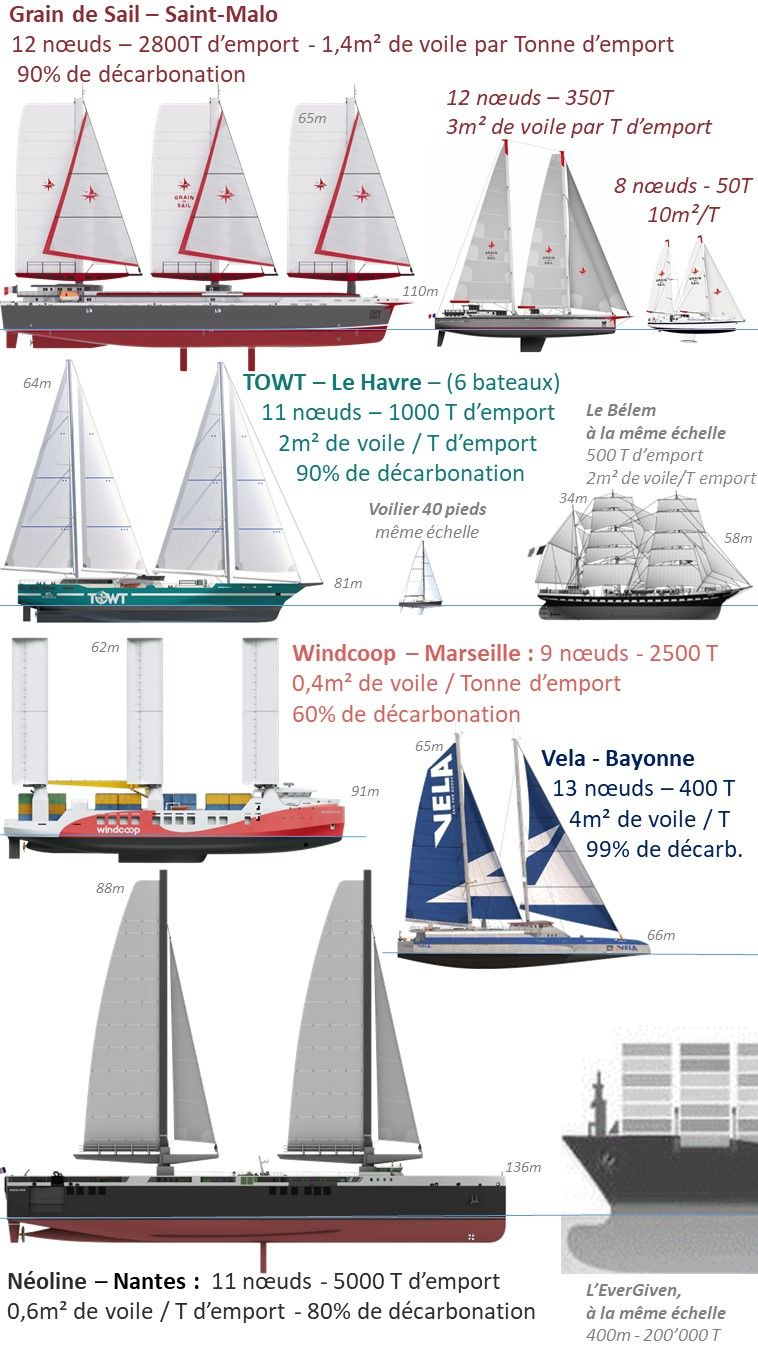
Especially in France, the industry is very innovative. Here are some of the wind-powered cargo ship companies:

  • Néoline (based in Nantes), one ship (which we see on the video), more are yet to come

  • Vela (based in Bayonne), 5 ships are expected to be launched between 2026 and 2028

  • TOWT (based in Le Havre), 2 ships since 2024, 6 more are being built

  • Windcoop (based in Marseille), expected launch of their first ship in 2027

  • Grain de Sail (based in Saint-Malo), 3 ships, their chocolate is delicious

    some other names, though I don’t know as much about >them: Hisseo, Fairtransport, Bourlingue et Pacotille, Heol Sailing

If you want to see their respective sizes, here’s a diagram showing the ships side by side with a famous sail ship (the Bélem) and the famous cargo that blocked the Suez Canal, the Evergiven

Some more info about wind powered and wind assisted cargo ships around the globe:

https://www.wind-ship.org/vessel-list/

https://velic-consulting.com/?page_id=309

In fact in Paris I can buy coffee that is specifically transported by wind power: https://www.fcco.fr/

10
11


Electric aircraft are quickly becoming a reality, it is bewildering to keep track of all the innovation, this article does a good job!

12
13


cross-posted from: https://feddit.org/post/20437303

This is Akkudoktor's (Andreas Schmitz) home energy management and optimization system. Some people will know Andreas by his YouTube channel @akkudoktor in which he discusses DYI home energy systems. That channel was born out of a frustration how unnecessary technical and regulatory hurdles, as well as lack of good system integration were obstructing the energy transition in Germany. Among other things, Andreas showed that one can build a home battery from refurbished cells with a fraction of the cost of commercial systems - provided that one has solid engineering knowledge - and he is a control engineer.

So, because just before, I did post a link to the evcc project, I should explain what are the differences between evcc and Akkudoktor's EOS:

evcc is mainly concerned with charging electrical vehicles (EVs) from home solar or dynamically priced power from the grid.

  • it is set up to be easy to use with phone interfaces etc.
  • it already supports a wide range of hardware
  • it is comperatively mature
  • it is limited in optimization capabilities
  • it is written in Go language

Akkudoktor EOS has the top priority of high level optimization - getting the most bang out of each buck

  • it is a rather new project in alpha stage. So, it might be more interesting for people looking to contribute - or scratch their own itch.
  • it tries to optimize home photovoltaics, home batteries, heat pumps, grey water heat pumps, other heating and manageable devices, and the remaining household demand
  • electrical vehicles are supported (and currently, they are an important economical use case because batteries are still expensive and the only other large type of consumers are heat pumps).
  • Such an optimization is complex because it requires predicting renewable generation (both in the home and as wind power from the grid), electric power price prediction (if dynamic or day/night prices are used), and also the individual consumption (which could depend on the forecasted weather, time of the day, day of the week, or time of the year). Things like the insulation of the house modify the impact of the weather. Also, usage pattern of components such as heat pump or battery can have influence in their life time. So that's a complex optimization problem.
  • And a good optimization also requires sufficient input data. This also needs to observe data privacy aspects (I guess you don't want to give a burglar info on when nobody is at home)
  • The interface is a REST service.
  • The targeted integration is via Home Assistant, or HA.
  • written in Python

Oh, last not least, there is also a (mostly German-language, but engineers do speak English) forum on home energy systems which is also used to discuss the software:

https://www.akkudoktor.net/

14
15
16


It's green washing at its best, but I'm a big fan of these wood building initiatives.

That said, it's still fuck Amazon!

17
18
19


We’re happy to announce the release of the Eco-Libre Life-Line version 2025.10.

Eco-Libre Life-Line v2025.10 Release Announcement

Who is Eco-Libre?

Eco-Libre is a volunteer-run project that designs libre technology for sustainable communities.

Eco-Libre's mission is to research, develop, document, teach, build, and distribute open-source technology that sustainably enfranchises communities' human rights.

We aim to provide clear documentation to build low-cost machines, tools, and infrastructure for people all over the world who wish to live in sustainable communities with others.

Contribute to Eco-Libre

If you'd like to help Eco-Libre reach our mission to enfranchise sustainable communities' human rights with libre tech, please contact us to get involved :)

Join Us
eco-libre.org/join

Cheers,
The Eco-Libre Team
https://www.eco-libre.org/

20
21
22
23
92
submitted 2 months ago* (last edited 2 months ago) by poVoq@slrpnk.net to c/technology@slrpnk.net
 
 
24
25
view more: next ›