Monero

2124 readers
1 users here now

This is the lemmy community of Monero (XMR), a secure, private, untraceable currency that is open-source and freely available to all.

GitHub

StackExchange

Twitter

Wallets

Desktop (CLI, GUI)

Desktop (Feather)

Mac & Linux (Cake Wallet)

Web (MyMonero)

Android (Monerujo)

Android (MyMonero)

Android (Cake Wallet) / (Monero.com)

Android (Stack Wallet)

iOS (MyMonero)

iOS (Cake Wallet) / (Monero.com)

iOS (Stack Wallet)

iOS (Edge Wallet)

Instance tags for discoverability:

Monero, XMR, crypto, cryptocurrency

founded 2 years ago
MODERATORS
201


XMRGlobal just added a Tombola for Swaps – every swap you make is a chance to win free XMR! 🎟️🎉

🏆 Weekly Prizes: 5 winners of 0.1 XMR each

🏆 Monthly Grand Prize: 1 winner of 0.5 XMR

💰 Reminder: 0% fees for Monero P2P deals

🔒 Buy, Sell, Swap, win, and stay private!

🌍 XMRGlobal Swap

202


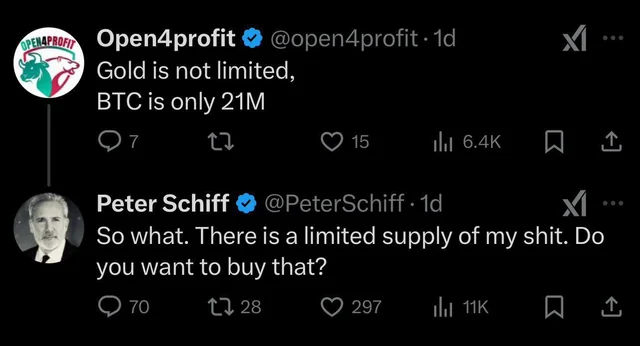
“Monero can do what I thought bitcoin could, which means it has value

The question is, how much is it worth?”- @PeterSchiff

8:03 PM · Mar 11, 2025 https://x.com/CrashiusClay69/status/1899551812291543445

https://files.catbox.moe/0kz3s3.webp

https://www.reddit.com/r/Buttcoin/comments/1jbn89m/even_less_useful/

203


I'm super excited to announce that cyphergoat.com is now live!

What is CypherGoat?

It is a crypto swap aggregator it automatically finds the best exchange rates from our partnered exchanges at no extra cost. You can then perform the swap on that exchange, without ever leaving our website! We currently support 12+ exchanges.

You can read a detailed announcement post on my blog

Why it stands out:

We will be the first open source crypto exchange aggregator on the market.

We offer an extremely easy to use interface for both advances and new users. CypherGoat is extremely fast since all estimates are provided in less than 5 seconds (unlike other aggregators)

We offer an open source privacy friendly cli, so that you can perform swaps without even using a web browser, GitHub repo: https://github.com/CypherGoat/cli

Giveaway:

We are giving away 50$ worth of XMR (or any crypto supported by CypherGoat) on twitter. Join the giveaway here

Head over to cyphergoat.com to see the magic for yourself ; )

204
205


Is there any way to solve this?

206


I'm currently running xmrig, but I'd like to mine without joining a pool. I understand the tradeoffs, that I'm likely to never be the one to mine a block.

Anyone here that does the same? Or knows of a way to do that?

207


Marketing Monero to Save Souls from Technological Totalitarianism w/ Monero Master (MT 343)

TODAY'S 🎙SHOW: In this episode Douglas Tuman interviews Sean Bradford about Monero, Christianity, and privacy-focused marketing initiatives. Sean Bradford, who recently emerged in the Monero community, discusses his various projects including the Monero Masters podcast and surveillance resistance campaign. The discussion explores biblical prophecies relating to digital currency, surveillance states, and how Monero could serve as a tool for resistance. Sean shares details about his Meta advertising campaign, which has reached nearly 30,000 people with click-through rates exceeding industry standards. The campaign costs approximately $500 over a month, targeting English-speaking countries with interests in dystopian fiction and VPNs. Sean also discusses his email funnel system, which maintains a 42% open rate for welcome emails and 60% for later stage emails. The conversation also covers XMR Bazaar's role in the Monero ecosystem and the importance of building a circular economy.

Watch Here (YouTube)➡️ https://youtube.com/live/c7Wd3APP38U Listen Here 🎧: https://www.monerotalk.live/monerotalk-343

Coffee & Monero, Go to Gratuitas.org today!

FOLLOW US https://monero.town/u/monerotalk & https://mastodon.social/@monerotalk

Thank you to sponsors, u/cakelabs and u/Stealthex_io as well as u/sunchakr for making these interviews possible! And of course our listeners and supporters for making Monero Talk possible!

Podcasts 🎧 :

iTunes: https://podcasts.apple.com/us/podcast/monero-talk/id1445930212 Spotify: https://open.spotify.com/show/60lQ05X8lcuXv71fhi6hl7

If you enjoy our show please Subscribe, Like, Share, Rate our YouTube Channel & Podcasts. This will help us grow and spread Monero content!

208
2
submitted 9 months ago* (last edited 9 months ago) by orwelwasright@monero.town to c/monero@monero.town


I wonder how to syncronize the wallet on Haveno-Reto (Reto-Swap?) using Tor because it was impossible to me at the moment.

Tried moving the data folder, it continue stuck at 0% with peers connected to the network.

My internet connection is solid but I can't enter the app because of this.

209


Before I go deeper into technical details regarding important aspects of Carrot with further posts, I present you, as something like an "interlude", a history of Monero privacy technologies. One aim is to show you how we arrived at the point where we are now with FCMP++ and Carrot. It's also an already quite long and IMHO interesting history that is worth to be told as part of this post series. (You find part 1 here.)

CryptoNote pure (2014)

Monero started a new blockchain in 2014 with code forked from Bytecoin, initially running unmodified CryptoNote technology as far as "privacy tech" was concerned.

Stealth addresses were already hiding receivers, in the same way they still are today. Ring signatures were already hiding, or better obfuscating, senders. The ring size was not fixed until a hardfork in 2018 however; transactions with 3, 10 or even zero decoys and thus no sender hiding were possible, and also actually occurred.

It may surprise that transaction amounts were still fully visible in the blockchain back then. Have a look at what is claimed to be the Monero transaction with the largest known amount, from July 17, 2017, for more than XMR 500,000, corresponding to a fiat value of over USD 100 million today. If you scroll down the linked block explorer page to the 117 inputs(s) for total of 506510.898899999971 xmr heading, you can see that the ring size is 0: All the enotes that contribute to the total amount are in the clear, without any need to guess.

Bytecoin is still running by the way, using the unmodified CryptoNote technology described here to this day, as you can see at their block explorer.

RingCT (2015)

Although nothing was ever actually deployed to the Bitcoin blockchain, various people discussed enhancing privacy quite early on. As this article from Binance details, already 2013 somebody came up with the basic idea for a scheme called Confidential Transactions, abbreviated as CT, to hide transaction amounts. Bitcoin Core dev Greg Maxwell refined this in 2015 and published a description, still available via Archive.org here.

Also still in 2015 somebody with the pseudonym Shen Noether, a member of the Monero Research Lab (MRL), adapted CT for Monero and named it Ring Confidential Transactions, or RingCT for short; see the published paper as a PDF file here.

When Monero hardforked to use RingCT in 2017, all its 3 basic privacy mechanisms were in place, hiding receivers, hiding senders and hiding amounts. Monero introduced ring signatures that were smaller and allowed faster verification than the original CryptoNote ones in 2020 called CLSAG, but this changed nothing fundamental: As of now, in Spring 2025, the technology established with the 2017 introduction of RingCT is still what powers the Monero blockchain.

Triptych (2020)

While stealth addresses and RingCT are basically unassailable and may stand firm indefinitely into the future, or at least until working quantum computers arrive, ring signatures are less solid in comparison, and were known to have some weaknesses early own. It's therefore not surprising that further attempts to improve Monero's privacy technologies centered on them.

It's quite obvious that the larger the rings, the better the privacy and protection against statistical attacks that they offer. That's the main reason why the mandatory ring size for Monero transactions stands now at 16, quite some step up from 11 established in 2018. Obvious idea: Switch to still larger rings. How about, for example, rings of size 128? Or why not 1024 while we are at it?

The problem: While these would be possible in theory, with the current cryptography that Monero uses they are not really feasible. Transactions would swell to an enormous size.

A few numbers to illustrate: This transaction from 2021 has ring size 11 and a size of about 1.9 kB. This recent transaction from 2025 has ring size 16 and is 2.2 kB. This transaction from a Monero fork called Wownero but quite comparable has ring size 22 and is already 2.5 kB.

Around 2020, the MRL members Sarang Noether and Brandon Goodell worked out an alternative scheme that they called Triptych. See the announcement on Reddit here and the published academic paper here.

Advanced cryptography often looks a bit like magic, like in this case. With Triptych, the byte size of a transaction scales logarithmically with the ring size. A ring size 512 transaction with 2 inputs and 2 outputs would be only 3.4 kB, and a mere 0.2 kB more would allow you to double the ring size to 1024!

This blockchain explorer screenshot shows a 2/2 Triptych transaction with ring size 128 in all its glory. Yes, Triptych was implemented and reached an early beta stage.

Unfortunately it turned out that multisig transactions would be awfully complicated to implement with Triptych and laborious to handle for users. See e.g. this report with an analysis.

When an alternative scheme was presented with basically the same benefits as Triptych but much simpler multisig the latter was finally abandoned.

Seraphis and Jamtis (2021)

This alternative is called Seraphis and was worked out by a cryptographer with the pseudonym koe. See e.g. this blog post on the getmonero.org website. Seraphis allows for large ring sizes like 128 with reasonable transaction sizes and also reasonable verification times, plus it makes a simple multisig implementation possible.

Seraphis was intended to come together with Jamtis. That's a so-called addressing protocol: Like Carrot that I described in my first post, it defines which keys secret and public there are, how they allow wallets to work and how Monero addresses look with them. It was developed by a cryptographer with the pseudonym Tevador who already came up with RandomX, Monero's current "ASIC busting" proof-of-work algorithm. They originally published the specification here.

There is one significant drawback of this duo of technologies compared to Triptych: The current 95-character CryptoNote style addresses would become invalid, and much longer brand new addresses would take their place. See my 2022 Redit post Why Seraphis / Jamtis addresses will be so awfully long, and what we will get from those for a detailed story.

Never mind addresses with a length of 200 characters or even more: Moving a whole community of cryptocurrency users the size of Monero's over to completely new addresses for each and every wallet is a large and complicated endeavor in any case.

Nevertheless for quite some time the majority of Monero devs assumed that Seraphis and Jamtis would indeed be the future Monero technologies, and people went to work. Over the course of about a year and paid by the Monero community through the CCS koe himself implemented Seraphis in the form of a beautifully architected and solid library, and a group of devs called the Seraphis wallet workgroup started to implement, as you can guess from the workgroup name, a new wallet component as part of the Monero core software.

FCMP++ (2023) and Carrot (2024)

What cryptographer and dev kayabanerve first presented at MoneroKon 2023 is in a way a much more radical approach to improve sender privacy for Monero than both Triptych and Seraphis are. Instead of merely making larger rings, it gets rid of them altogether. As I wrote in my first post: "Until now, if you spend XMR, you hide among 15 other people doing so. With FCMP++ you hide among all the people who ever did an XMR transaction since Monero's genesis in 2014."

This blogpost on the GetMonero.org website explains that the original plan was to deploy full-chain membership proofs with a second hardfork after the one to "original" Seraphis, or in the best of all cases together with Seraphis in a single hardfork, after delaying that hardfork a bit to make that possible. But then something happened that would change the course of Monero history, so to say:

In March 2024 the Monero network was flooded with hundreds of thousands of additional transactions. Daily Monero transaction volume suddenly more than tripled, which is hard to explain as just a sudden surge of Monero use for some reasonable and legit reason. It was speculated that a single adversary was basically spamming the Monero blockchain with their transactions, with the purpose of this attack unknown. One possible purpose: Getting to know as many enotes as possible to weaken Monero's sender anonymity. The basic approach: If I can recognize on average, say, 10 of the enotes making up the rings of your transaction as mere decoys, because I all made them myself, your protection is down to a ring size of about 6.

You find an interesting explanation of this, together with plenty of fascinating charts, in the report of Monero's resident statistics researcher Rucknium here. The average effective ring size was indeed down to about 5.5 during the attack.

In the light of all this the Monero dev community came around to agree that rings had to go, and had to go quickly. kayabanerve managed to modify this full-chain membership proof technology to run independently of Seraphis instead of "on top of it" and named it FCMP++.

A bit later jeffro256 developed Carrot as a clever way to get almost all benefits of Jamtis but without the need to push everybody through a painful address format change, which made it more acceptable still to put Seraphis and Jamtis aside and go "all in" on FCMP++.

Possible futures

If we look a few years into the future, what kind of base technologies for Monero could come after FCMP++ and Carrot?

One possibility is to stop all attempts to improve using "conventional" cryptography and try to figure out how to build a completely quantum-computer-proof cryptocurrency that is both fully private and feasible regarding key sizes, transaction sizes and transaction processing times. That would probably not be easy, and might depend on advances in post QC cryptography in general that don't exist yet right now but are yet to come. Still, it may be worth it.

Conclusion

With FCMP++ and Carrot, for the second time in a row already after Triptych and Seraphis plus Jamtis, something still better came along, interesting technology and a considerable amount of work done were put aside, and the Monero roadmap rewritten. You may very well doubt the wisdom of doing such abrupt and wasteful changes of direction, but I guess this is to be expected in a field that is developing as quickly as cryptocurrency related cryptography, at least if you decide to go with the times and improve instead of working with something that was more or less frozen in 2009 like Bitcoin does.

210
211


Monerokon 5 will take place on 20th - 22nd June and we are still looking for people who want to speak at the event!

You can submit talks on the linked page which also has a lot more important details.

Along with 20-minute presentations, we welcome 60-minute self-organized panel discussions with 3-6 panelists, 60-minute workshops, related to the general themes of privacy, security, and/or censorship resistance.

If you are interested, please make sure to not miss the submission deadline: 24 March 2025 @ 17:00 CET

212


Marketing Monero to Save Souls from Technological Totalitarianism w/ Monero-Master | Tune-in to a LIVE MoneroTalk episode TOMORROW 3/6 at 7:15AM-EST!

Watch on YT➡️: https://www.youtube.com/live/c7Wd3APP38U

TWITCH ➡️: twitch.tv/monerotalk

Thank you to our show sponsors cakewallet.com / stealthex.io /

213


📰Missed Monerotopia Episode (#204) ? Check out the Price, NEWS, GUEST Segment.

Reports here! ⤵️

📊Price Report 📈:

Youtube: https://youtu.be/vC6fjbjLivw

📰News Segment🗞️ :

Youtube: https://youtu.be/crghod9Qk9U

️GUEST Segment 👥 :

Youtube: https://youtu.be/SfUy_UCCvd0

214


Appeal and Pardon Efforts for Roman Sterlingov with Mike Hassard & Tor Ekeland (MT 342)

TODAY'S 🎙SHOW: In this episode Douglas Tuman speaks with legal experts Tor Ekeland and Mike Hassard about various cryptocurrency-related legal cases and the changing political landscape. They primarily discuss Roman Sterlingov's case, who received a 12.5-year sentence for allegedly running Bitcoin Fog, though they maintain his innocence. The conversation explores how the Trump administration's approach to cryptocurrency regulation differs from previous administrations, with particular focus on the recent pardon of Ross Ulbricht. They discuss the problems with government surveillance, chain analysis companies, and the importance of financial privacy. The experts share their experiences with prosecutorial overreach and the changing attitudes toward cryptocurrency in Washington. They also discuss the BitLicense in New York, the role of agencies like the SEC and CFTC, and the future of cryptocurrency regulation under different political administrations.

Watch Here (YouTube)➡️ https://youtube.com/live/L7aC6cs6idw Listen Here 🎧: https://www.monerotalk.live/monerotalk-342

Coffee & Monero, Go to Gratuitas.org today!

FOLLOW US https://monero.town/u/monerotalk & https://mastodon.social/@monerotalk

Thank you to sponsors, u/cakelabs and u/Stealthex_io as well as u/sunchakr for making these interviews possible! And of course our listeners and supporters for making Monero Talk possible!

Podcasts 🎧 :

iTunes: https://podcasts.apple.com/us/podcast/monero-talk/id1445930212 Spotify: https://open.spotify.com/show/60lQ05X8lcuXv71fhi6hl7

If you enjoy our show please Subscribe, Like, Share, Rate our YouTube Channel & Podcasts. This will help us grow and spread Monero content!

215
 
 
216


cross-posted from: https://monero.town/post/5614701

Have you used XMRGlobal to buy, sell, or swap Monero? We’d love to hear your experience!

🔹 What worked well? 🔹 What can we improve? 🔹 Any issues or suggestions?

We're here to make XMRGlobal better for the Monero community while keeping privacy, security, and decentralization first.

If you’ve used our Tor .onion site or CLI swap tool, let us know your thoughts!

Drop a review, share your experience, and help improve Monero trading. 🏴💰

🌍 Clearnet: XMRGlobal.io 🕶️ Tor: xmrglobalbtadqwzhwohwlonc252y5zfdv3ssoob35n5pb3wrghsvvyd.onion

217
218


Appeal and Pardon Efforts for Roman Sterlingov with Mike Hassard & Tor Ekeland | Tune-in to a LIVE MoneroTalk episode TONIGHT 2/28 at 7PM-EST!

Watch on YT➡️: https://www.youtube.com/live/L7aC6cs6idw

TWITCH ➡️: twitch.tv/monerotalk

Thank you to our show sponsors cakewallet.com / stealthex.io /

219
220


Is Monero keeping Bitcoin’s Cyperpunk Dream Alive? With Boaz Sobrado (MT 341)

TODAY'S 🎙SHOW: In this episode Douglas Tuman interviews Boaz, a Forbes contributor who published a notable article about Monero last month. The discussion explores his background in crypto, starting from his experiences using Bitcoin for business operations in Cuba, to his current role as a writer for various crypto publications. The conversation delves into Monero's resilience despite widespread delistings, its role in maintaining Bitcoin's original cypherpunk vision, and its growing adoption as digital cash. Boaz shares insights about his experiences in countries like Cuba and Burma where crypto serves practical purposes. The interview also covers developments in the Monero ecosystem, including XMR Bazaar and the upcoming Serai DEX project. The discussion concludes with perspectives on Monero's future potential, particularly if regulatory clarity allows for easier access through mainstream exchanges.

Watch Here (YouTube)➡️ https://youtube.com/live/r2ZhoPAglJQ Listen Here 🎧: https://www.monerotalk.live/monerotalk-341

Coffee & Monero, Go to Gratuitas.org today!

{Buy your MoneroTopia 24 Mexico City Confer tickets TODAY at MoneroTopia.com! }

FOLLOW US https://monero.town/u/monerotalk & https://mastodon.social/@monerotalk

Thank you to sponsors, u/cakelabs and u/Stealthex_io as well as u/sunchakr for making these interviews possible! And of course our listeners and supporters for making Monero Talk possible!

Podcasts 🎧 :

iTunes: https://podcasts.apple.com/us/podcast/monero-talk/id1445930212 Spotify: https://open.spotify.com/show/60lQ05X8lcuXv71fhi6hl7

If you enjoy our show please Subscribe, Like, Share, Rate our YouTube Channel & Podcasts. This will help us grow and spread Monero content!

221
222
223


From the link:

Results summary

At current Monero ring size of 16, the theoretical minimum attack success through completely random guessing would be 1/16 = 6.25%. According to preliminary estimates, an adversary could take advantage of the divergence between the real spend age distribution and the status quo decoy distribution to achieve an attack success probability of 23.5%, on average, since the August 2022 hard fork. This corresponds to an effective ring size of 4.2. The attack success probability prior to August 2022 may be higher, but this was not measured due to time constraints.

The OSPEAD techniques suggest a new decoy distribution, which would reduce the average attack success probability to 7.6 percent, corresponding to an effective ring size of 13.2. Implementation and deployment

It is likely that deployment of a new decoy selection algorithm without a blockchain hard fork would do more harm than good due to some users being slow to upgrade. (For more information about the risk, read my "Formula for Accuracy of Guessing Monero Real Spends Using Fungibility Defects". Therefore, the OSPEAD-derived decoy selection algorithm likely won't be implemented in Monero's standard wallet code before the next hard fork.

Monero's next hard fork is expected to deploy Full Chain Membership Proofs, which will eliminate the on-chain ring signature privacy model. However, in certain situations, decoy-based privacy will still be used to provide protection to users' wallets from a potentially malicious spying remote node. Therefore, the OSPEAD-derived decoy distribution can be used in those circumstances. For more details, read "Initial Probability Density Function for OSPEAD".

The OSPEAD documents and code are being publicly released now because there is now an implementable solution to the problems I raised in my original HackerOne submission. Public release will allow greater review and scrutiny of the proposed OSPEAD techniques.

224
-10
submitted 10 months ago* (last edited 10 months ago) by 8uddyjai@monero.town to c/monero@monero.town


(update: Banned from mastodon.social instance, no reason) Hi guys! I want to promote this account, its a cool project. Maybe you also like it.

The project tries to provide anonymous airbnb with personal help.

@project_1@mastodon.social

225
view more: ‹ prev next ›