Philosophy

1768 readers
1 users here now

All about Philosophy.

founded 5 years ago
MODERATORS
76
77
1
Nothing. (www.secretorum.life)
submitted 3 years ago by saint@group.lt to c/philosophy@lemmy.ml


About the internets

78


Some thoughts for food :)

79


This thread caught my attention regarding the philosophy of science. I've read through the comments and discussions, but I want to move the arena to lemmy's philosophy community.

What's your opinion on the Scientific Method? Do your perceive its usefulness in the practical world? And are the flaws in Science the result of this method or the individual causations of the scientists themselves?

80


Mind on fire ;)

81


The Trolley Problem is a cyclical (iterative) experiment, showing how a change in the available information can affect the choices made.

To increase the emotional factor in the decision-making process, it is dramatized as a scene where a speeding car runs along a track, and the subject of the experiment (the "player") has to decide whether to divert it to one track or the other.
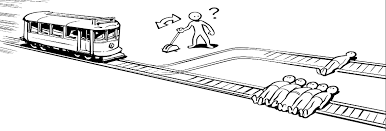
One of the options is technically easier because it only requires doing nothing. Without player interference, things will (khem, khem) take their course anyway.

The Trolley Problem trap is built of three parts:

  1. The experiment has an arbitrary number of cycles. In each consecutive cycle, the experimenter (equivalent to the game master "GM" / director) changes the scope and content of the information available to the player, trying to lead them from a situation of simple and obvious choice to a situation in which the choice becomes less and less obvious.

  2. The player is also under increasing tension between the emotional aspect (Track A: the last panda on the planet; Track B: a psychopathic rapist, the future father of the first feminist president of the Earth Nations Federation) and the implicit expectation that they will solve the dilemma using rational thinking only. In reality, the only goal of the MG is to drive the player to a nervous breakdown due to an unbearable cognitive dilemma.

  3. A subtle element of the trap is the time travel aspect. Each cycle (iteration) begins (in the story world – "in-game") at the same point – after a full reset. However, "out-game" the player is aware of previous cycles and the choices made in them. The human mind tends to become attached to its own decisions. The MG tries to push the player to change his or her decisions for less and less obvious reasons, which adds to the discomfort, as the mind wants to see itself as an "integrated" being, not an unstable one.

How to get out of the trap (and use the experience to strengthen self-determination)?

This requires developing several important elements of awareness, which boil down to a readiness to make (and fix) mistakes.

1. Acknowledging the information reset.

When I receive new significant information regarding a previously made decision, it is as appropriate as possible to review that decision and possibly change it. I don't get attached to my previous choices, and it doesn't offend me if I back out of them.

2. Accepting the limitations of rational thinking.

Regardless of the completeness of the decision information, I am always ready for the fact that some things cannot be (especially under time pressure) compared rationally. I am ready to make some decisions (after exhausting other sensible ways) randomly or intuitively, and accept the consequences.

3. Accepting that my knowledge and agency are incomplete – always and everywhere.

I will never have full knowledge of the circumstances of my choices. I will never be fully capable – physically, mentally or emotionally – of making and executing every decision imaginable.


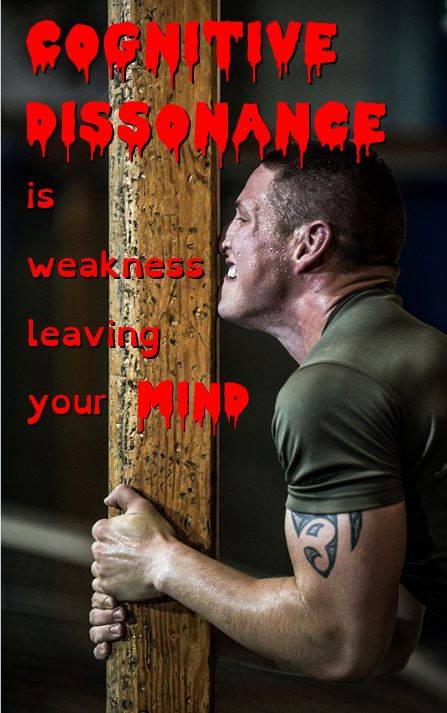
To sum up, the trap of the trolley dilemma is to impose unrealistic and contradictory expectations on the player. And getting out of it requires acknowledging one's own limitations and making more direct contact with reality (bypassing even the most magnificent intermediaries). The plus side is that it doesn't require rearranging a vase full of glowing coals with your bare hands....

82
83
84


Consider two contradictory statements—"All lemons are yellow" and "Not all lemons are yellow"—and suppose that both are true. If that is the case, anything can be proven, e.g., the assertion that "unicorns exist", by using the following argument:

We know that "Not all lemons are yellow", as it has been assumed to be true.
We know that "All lemons are yellow", as it has been assumed to be true.
Therefore, the two-part statement "All lemons are yellow or unicorns exist" must also be true, since the first part "All lemons are yellow" of the two-part statement is true (as this has been assumed).
However, since we know that "Not all lemons are yellow" (as this has been assumed), the first part is false, and hence the second part must be true to ensure the two-part statement to be true, i.e., unicorns exist.

https://en.wikipedia.org/wiki/Principle_of_explosion

85
86
87
1
Philosophy Department (www.existentialcomics.com)
submitted 3 years ago by cypherpunks@lemmy.ml to c/philosophy@lemmy.ml
88
1
submitted 3 years ago* (last edited 3 years ago) by tomasz@lemmy.ml to c/philosophy@lemmy.ml


‘The acceptance or rejection of abstract linguistic forms, just as the acceptance or rejection of any other linguistic forms in any branch of science, will finally be decided by their efficiency as instruments, the ratio of the results achieved to the amount and complexity of the efforts required.’ (Carnap)

89
90
91


The Simpson's paradox is a paradox in probability and statistics in which a trend appears in several groups of data but disappears or even reverses when the groups are combined. This result is often encountered in social-science and medical-science statistics and is particularly problematic when frequency data is unduly given causal interpretations.

Example: There exist treatment A and treatment B for kidney stones. Treatment A is more effective when used on small stones, and is also more effective when used on large stones, yet treatment B is more effective when considering all stones at the same time.

Different levels of overview:

simple.wikipedia.org

en.wikipedia.org

plato.stanford.edu

92


".. a community dedicated to improving our reasoning and decision-making."

93


A discussion on HackerNews

I would love to see a parallel universe, where collective transportation obtained the upper hand. Where countryside railroads are still operating, and where roads/highways haven't consistently led to the expropriation of millions of people worldwide, and to the current car-oriented urban nightmare. See Ivan Illich for a demonstration that car-oriented urbanization is hostile and counter-productive, as opposed to what he calls "convivial tools" (empowering technologies).

94


What is virtue ethics? Gonzo philosophy uses a moral dilemma from the game Wither 3 to discribe what virtue ethics is.

95
96


May everything come true. May they believe. And may they laugh at their passions. For what they call passion is not really the energy of the soul, but merely friction between the soul and the outside world. But, above all, may they believe in themselves and become as helpless as children. For softness is great and strength is worthless. When a man is born, he is soft and pliable. When he dies, he is strong and hard. When a tree grows, it is soft and pliable. But when it's dry and hard, it dies. Hardness and strength are death's companions. Flexibility and softness are the embodiment of life. That which has become hard shall not triumph.

Stalker (1979) - Andrei Tarkovsky

97


Gonna dig into this a little.

The metaphor of Facts is an escape from the responsibility of personal judgment. ... As the presumptive base unit of epistemic reality, the metaphor of Facts seems designed to excuse humanity from any exercise of the rational functions whatsoever.

In a world where we are all committed to the idea/ideal of Facts, trust and context-synthesis are still how we end up with those Facts. People naturally have to hone their rational functions that are necessary to evaluate these, just to exist in the world... but we are committed to the idea of denying what we are doing. And where getting the Facts Right is especially valued, it is more important to us to construct our identities on this, and thus we are especially blinded to our own assumptions and heuristics.

The metaphor of Facts implies a moral obligation to believe. ... The metaphor of Facts implies a moral obligation to convince others to believe. Given Facts imply a moral obligation to believe, every fact is a micro-Bible, demanding its own micro-crusade to carry it forth to trample the heretics.

Bzzt! This is a parochially Christian--nay, specifically Protestant view of the world. The Crusades sought to conquer, not convert. The idea that Facts constitute a great Truth is what's here being criticized. And yes, the idea that Truth obligates belief is pretty embedded in a lot of stuff dealing with the concept of Truth at all, so sure, let's go with it. But the idea that it necessarily follows that if you possess Truth, you have an obligation to proselytize--that's pretty culturally specific. If he's just trying to make an observation on a particular culture's relationship with truth, though, it's a nit I shouldn't pick.

The piece gets weaker as it moves to social consequences.

The future of humanity does depend on persuading people to be rational.

If that's the case, humanity doesn't have a future. The more committed we are to personal rationality, the more troubling we find our own irrationality, and thus the better we learn to rationalize it ex post. (I'll spare you my full rants on contemporary 'rationalists')

Then how he says a belief in Facts leads people to behave. 'Bullying'.

Ultimately we must decide what’s more important — freedom of speech, or the metaphor of Facts.

They're both pretty flimsy concepts outside of a legal context, IMO.

The problem of taking this piece to the social consequences of the idea of Facts is that -- look, he's pointing out that you can't clean observations of context, you can't wash them off independently of trust and make them this clean Platonic form of Knowledge where we all get to be objective in Facts-world together. This much I'm with him on, yes. But the idea that censorship is bad--why, this relies upon value statements around a clean Platonic form of Speech. Except of course speech has context, doesn't it? There's causality to speech, origins and impacts. When the whole point of the piece is to show how this is problematic for Facts, speaking of Speech as a distinctive category, assuming an objective good -- doesn't fit well as an axiom/assumption for here.

Ultimately every time we're talking about epistemology it's a good day for me.