kixiQu

joined 5 years ago
MODERATOR OF
 

There's a lot in this metaphor that seems valuable! Cf. "homebrew" in tabletop role-playing games.

Best practices in a commercial kitchen will differ from those in a condo kitchen. Some things are only worth the effort to make in a large quantity, which can mean not at all at home. At the same time, no restaurant would care enough to make a picky-eater loved-one of yours their masala chai specifically without cinnamon, or something. Tools that wouldn't make sense in a space-strapped restaurant kitchen may be okay if you've got suburban-size cabinets.

What is the bash script of the kitchen?

What is the Trader Joe's pre-chopped mirepoix of code?


He's an independent type designer. His site shows properly fleshed out respectable-looking typefaces for respectable-typography costs, but the Font Of The Month Club is the real joy. Whether you're looking for Victorian flavor, elegant text typefaces, design-forward display options, or the latest font feature noodling around (color fonts! color fonts!) there's a fine assortment here to be worth looking through. The Mini license costs are really nice as a reasonable impulse buy for the font-oriented and not too shocking a figure for the non-font-oriented.

I'm not at all a proper Font User -- my website's main typeface is a true abomination I keep only because an SVG filter to replicate the effect sounds hard to get right -- but I love imagining print projects that would merit Polliwog or Klooster Thin.


The sidenotes alone are a thing of beauty and wonder. I am very much not sarcastic when I say that.

The vibe is sort of like reading beautiful little booklets, which is wonderful and non-distracting but also not very hypertexty. Their pieces don't link among each other a ton so far as I've read. I wonder if it's an intentional choice?


I'm gradually assembling a little page with alternative search engines, especially ones that aren't striving to recreate what Google does. This newest entry is phenomenal. The way that it uses sites' own background images to decorate their results is wonderfully reminiscent of whostyles. I haven't used it enough yet to really be able to evaluate how well the search indexing does, but the spirit of the project is such that no matter the quality I'll be happy to follow it and watch it iterate.


From the about page:

FEMICOM Museum is a physical and digital museum and archive dedicated to the preservation and reimagination of femme aesthetics and girlhood within twentieth-century video games, computing, and electronic toys.

There is so much energy in these photos! Is it just millennial nostalgia that makes me so jazzed about them?


One thing that probably drew me to this sort of style from a young age was that -- it's a highly refined Internet look that is entirely built up by women and girls trying to impress other women and girls. I love when it goes fully over-the-top because it's saying, you know what, other nichey girls like me are worth trying to outdo. My scene is worth my investment. The careful attention to detail is a statement of values.

Anyway, click around until you get to her art; there's a very cool glitchy oekaki vibe.


Is there a name for this kind of thing? "GIF painting" captures something about how the GIFs are being layered and composited differently from ye olde Geocities, but maybe it should be "collage" to capture the aspects of reuse.

Anyway, it's a genre that's taking off on Multiverse and on mmm.page and I find it really interesting. Please feel free to comment with any you've come across and liked; the more artistic hubris evident, the better.


Did anyone else spend a lot of time listening to MIDIs back in the day? Past their proper heyday we still hadn't had internet fast enough to do much in the way of MP3s, so this is a very nostalgic sound for me.

A nice pairing for this link is MIDIjs, which is now necessary to get a MIDI going on a webpage. H/t Castle Cyberskull on that.


h/t kicks condor

Okay I'm like one of the probably-fewer-than-ten people in the world with a defined whostyle, so obviously I'm psyched by this.

Having a list of people (defined by h-cards) and an offline tool to traverse their sites, grab the whostyles, sanitize the CSS, rescope the selectors, and repackage for your own site seems like a totally valid approach to me. That way the sanitizing could improve over time without having to respec inter-site dynamic inclusion.

If you wanted to be properly agnostic about it, I'm sure you could make something like a Jekyll plugin to handle specifying the origin of the blockquote and kicking off finding the h-card and doing the style pull for that within a static build.


Local news is less stressful because I feel proportionally less impotent to react to it. I recommend making this swap. I also like that they don't save the miscellaneous news till the end of the podcast, so if for whatever reason the daily topic isn't working for me, I already caught the headline round-up.

[–] kixiQu@lemmy.ml 0 points 4 years ago* (last edited 4 years ago) (1 children)

Was your blog in English, though?

If you take Internet access...
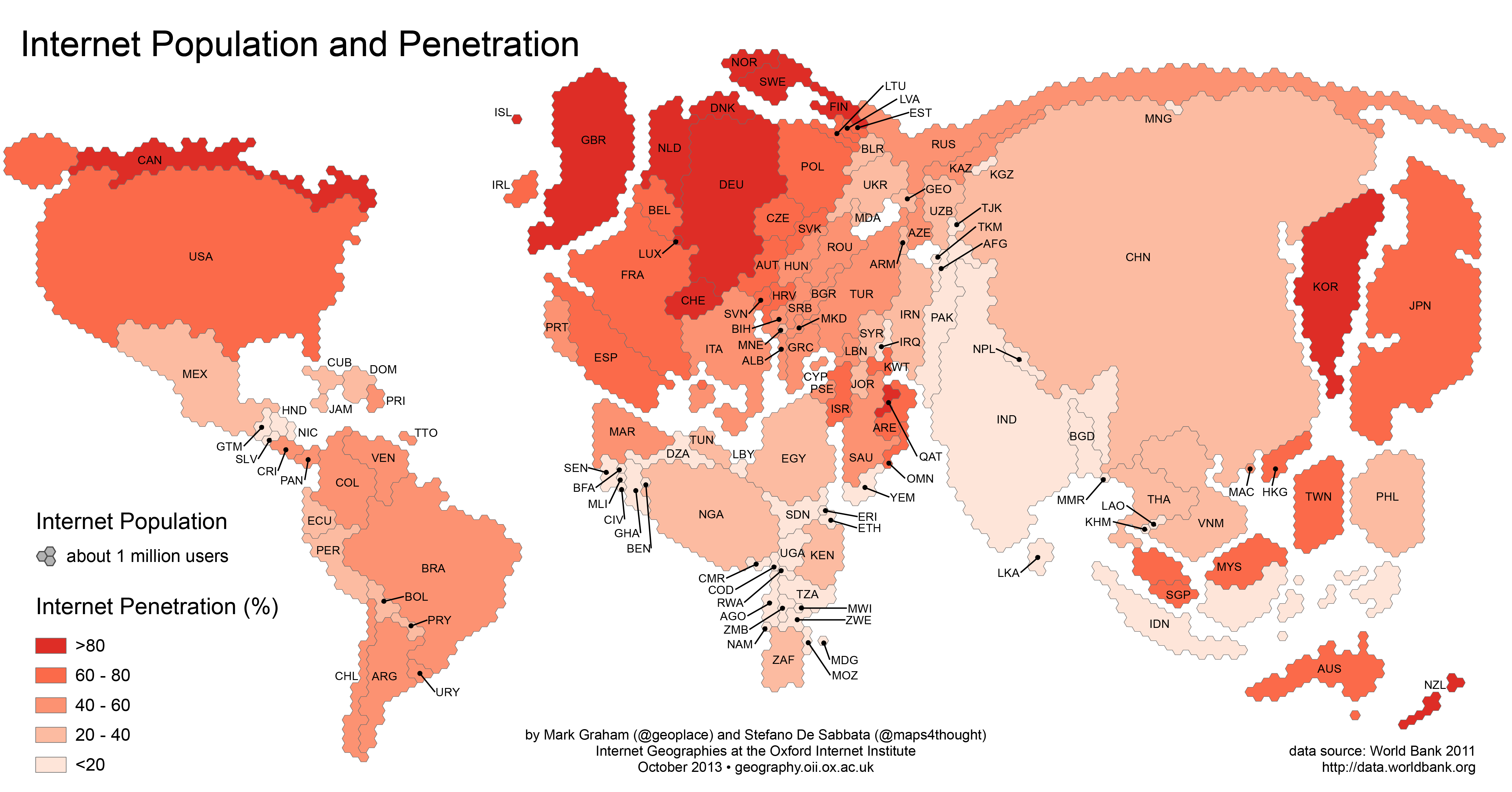
....and cross reference against English speakers...

...then I think that's enough explanation, no?


I think Benedict Evans writes about a lot of really interesting stuff. Sometimes he gets right to the hearts of things. Sometimes he's wrong in important (and interesting!) ways.

This seems to me to be an example of the latter.

However, it often now seems that content moderation is a Sisyphean task, where we can certainly reduce the problem, but almost by definition cannot solve it. The internet is people: all of society is online now, and so all of society’s problems are expressed, amplified and channeled in new ways by the internet.

Fully agreed! Yes! Absolutely--technical problems are rarely just technical problems, but also social problems.

We can try to control that, but perhaps a certain level of bad behaviour on the internet and on social might just be inevitable, and we have to decide what we want, just as we did for cars or telephones - we require seat belts and safety standards, and speed limits, but don’t demand that cars be unable to exceed the speed limit.

This, however, does not follow, and it doesn't follow even for cars. It took a lot of corporate manipulation of people's beliefs for us to start thinking about car crashes as "accidents". It took intense lobbying to create the crime of "jaywalking" where before, people had been allowed to walk in the streets their taxes paid for, and people driving cars had been responsible for not hitting others.

Powerful entities had it in their interest to make you believe this was all inevitable. People made a lot of money from making us think that this is all just How Things Are, that we have to accept the costs and deaths. They're still making a lot of money. Even those seat belt laws exist because the auto lobby wanted to get out of having to build in airbags.

Automotive technology is technology just like the Internet is technology. Where technology lets us leap over natural physical limitations, "human nature" isn't an inherent fundamental to the situation. Why did we build the cars to go fast? Why do people assume they should be able to get around faster in a car than on a bike, even around pedestrians? If I write a letter that tells you to kill yourself and have a print shop blow it up into a poster, is the print shop at all responsible for their involvement in my words? What if they put out a self-service photocopier and choose not to look at what people are using it for? Is it different if it's not a poster but a banner ad? A tweet? Sure, we can acknowledge that it's some part of human nature that we're going to be shitty to each other, but should we be helping each other do it at 70 miles per hour? The speed of light? These are uncomfortably political questions, questions that have power tied up in them.

And that's exactly why I think it's important to reject Evans' thinking here.

Some people argue that the problem is ads, or algorithmic feeds (both of which ideas I disagree with pretty strongly - I wrote about newsfeeds here), but this gets at the same underlying point: instead of looking for bad stuff, perhaps we should change the paths that bad stuff can abuse. The wave of anonymous messaging apps that appeared a few years ago exemplify this - it turned out that bullying was such an inherent effect of the basic concept that they all had to shut down. Hogarth contrasted dystopian Gin Lane with utopian Beer Street - alcohol is good, so long as it’s the right kind.

Of course, if the underlying problem is human nature, then you can still only channel it.

He does not argue in the linked piece that algorithmic newsfeeds are worth their bad effects, only that they're a response to a real problem -- that's why I liked the linked piece!

Let's not make fuzzy comparisons, even with tongue in cheek; Dickens was quite right to note that the "great vice" of "gin-drinking in England" arose out of "poverty", "wretchedness[,] and dirt", which are no more human nature than all the riches of Silicon Valley... and as a non-teetotaler I am free to add without fear of being thought a nag that any quantity of alcohol is bad for your health. There aren't inherent inducements to good or evil in beer or gin. The existing context is too important, and someone's getting rich off of selling you either.

I'm not even sure I believe that we can know anonymous messaging inherently leads to bullying, only that the populations who seize upon it in our preexisting imperfect context are using it toward that end.

But if you're willing to believe that YikYak had to die, why then believe that an engagement-maximization framework -- algorithms harvesting your eyeballs -- is not having significant impact on the way we interact with each other? Is this guy invested in Facebook? Did any philosopher, pessimist or optimist, imagine like count displays in their state of nature?

Ah, blech, the guy's got a history in VC. I shouldn't have opened the Twitter to try to confirm pronouns. There's a very sad genetic fallacy (well, heuristic) we could apply here but I'm too busy to let myself be saddened by its conclusions.

[–] kixiQu@lemmy.ml 0 points 4 years ago (3 children)

Hey, if you're getting death threats in PMs please reach out directly to admins. That is not something we tolerate. I am not sure what options like IP bans exist or will exist. We don't want anybody to be harassed.


Honestly the main reason I'm posting this is that I find fascinating that there are little audio clips sprinkled throughout the way people use GIFs. I can think of reasons why this isn't more broadly done, but I still... love it?

[–] kixiQu@lemmy.ml 2 points 4 years ago

So as @PP44 is saying, it's open source. The devs work to make sure that anyone can set it up straightforwardly to run with their own modifications, not just the main version -- and that means modifying the slur filter is also supposed to be straightforward, even though it's not encouraged. There isn't actual moderation on the whole platform per se, since two instances can federate even if one has no slur filter. There are lots of "points" to federated stuff, though, so the existence of a slur filter works well to help keep Lemmy from attracting the cesspool-types while still enjoying those other benefits.

[–] kixiQu@lemmy.ml 1 points 5 years ago

then it comes down to the principles, then--let's set aside objective superiority. if most people like the older looks, should they be made to live and work around buildings that they find unpleasant? (and it really is an active dislike--I look at your last example and on an instinctive level feel that cantilevered (?) projection is threatening me, like it can choose to crush me if I walk under it) or is it problematic that this leads to Kincadeification? then again, is that different than architects' being constrained by the current expectation of what a contemporary building should look like?

view more: next ›