Poems

202 readers
1 users here now

A community to link to or copy and paste poems. It is not complicated.

Formatting help: two blank spaces at the end of a line will show you the path in the edit window

most certainly learning the Unicode markdown labels for spacing

nbsp

ensp

emsp

and how to activate them for your or someone else's poetry.

if a poem's language settings make it at all difficult to mod i'm deleting it.

founded 2 years ago
MODERATORS
126


Let me not to the marriage of true minds

Let me not to the marriage of true minds
Admit impediments. Love is not love
Which alters when it alteration finds
Or bends with the remover to remove.
O, no, it is an ever-fixèd mark
That looks on tempests and is never shaken;
It is the star to every wand’ring bark,
Whose worth’s unknown, although his height be taken.
Love’s not Time’s fool, though rosy lips and cheeks
Within his bending sickle’s compass come;
Love alters not with his brief hours and weeks,
But bears it out even to the edge of doom.
  If this be error, and upon me proved,
  I never writ, nor no man ever loved.

127


One Child Has Brown Eyes

One child has brown eyes, one has blue
One slanted, another rounded
One so nearsighted he squints internal
One had her extra epicanthic folds removed
One downcast, one couldn't be bothered
One roams the heavens for a perfect answer
One transfixed like a dead doe, a convex mirror
One shines double-edged like a poisoned dagger
Understand their vision, understand their blindness
Understand their vacuity, understand their mirth

128


This Talk of Poems

I will tell you this thing,
as I do
(this is the game we play together:
one retracts the half-revealed,
one coaxes out what’s left concealed). This, then,
is what I will say to you,
stumbling over your eyes’ architecture,
a clumsy grasping after words—
I called your eyes cathedrals, was sincere,
and blush to remember how you laughed—
this, then, is what I will say—

no, I can’t. Not yet! Not now,
not when the secret curls and stammers
while you clamour insistence, disbelief—not now,
but later, perhaps, when you don’t expect
a sudden surge of metaphor,
a tidal rush, a rising line of foam and salt
to soak shock into your ankles.

We’re not there yet. Not yet at the place
where I can tell you how I think
of days when you’ll tell some other girl
about this girl who read you poems
thinking you enjoyed them, thinking
you listened to anything more than the sound of her voice,
the funny lilting of her foreign vowels
and her foreign cadence,
mixing syllables and emphases
while longing for yours.

“She even wrote me a poem,” you’ll say,
to this other girl, cool and secure
in her place at the end of your history,
“and it was a bit shit, but what do I know about poetry.”

I won’t tell you this, won’t read you this,
because how could it ever be the time
to tell you I write in self-defence,
to tell you that to write to you
is to think of you hurting me—
to imagine you hurting me
if you haven’t yet—

and to remember that when I said
those poems I wrote for other people
those poems I didn’t write for you
are full of thorns, are healing stings,
are scabbing over wounds—
you said,
you don’t care about me enough
to write a poem—
but meant
you don’t care about me enough
to let me hurt you.

You’ll say this isn’t fair. How could you know
that a poem is a grudge
clutched tight against the liver, bile-steeped,
nursed to savage potency? How could you know
that a poem is catharsis,
is septic in conception, a boil
lanced in execution?

You never listened, after all,
to anything but the sound of my voice.

So I’ll cut you this slack. Here is a poem.
It isn’t pretty, it isn’t built
of honey and spice, isn’t sweet
or savoury, isn’t anything
like what a poem is thought to be.
I won’t call you Green Man, Diamond Jack,
Knight of Coins or Pentacles,
won’t speak of stretching out on graves,
or how the tracery of your irises
might have taught architects to dream
of stained glass.

I certainly won’t tell you I love you.

And maybe once you’ve read it,
to yourself, in quiet,
in your own mind’s voice,
you’ll think twice before asking me
to write you another.

129


Dos Corazones: After Papo Colo

My second heart got an email
about My First Heart at The Museum of Modern Art.

My first heart tells my second heart
that now is her chance to say something important,

Something for the archives about who she is.
About who her mother never got to be.

My second heart immediately gets to work
on the administrative portion and compiles a list

of possible exhibition titles.
Proud Diasporican. Diasporican Gang.
Lonely Diasporican. Diasporican in Distress.

My first heart is always Diasporican
but never quite knows how to feel about it.

My first heart doesn’t trust museums,
she heard they be stealing people’s hearts.

My second heart tells my first heart that things are different now.
These days they ask the heart for permission.

It’s for educational purposes only.
My first heart tells my second heart she isn’t anybody’s teacher.

She’s still trying to learn her own history.
That’s why my first heart became an anthropologist

and found out she was a rare artifact.
I’m talking wild vintage and shit.

Records trace her back all the way to 1898
but my first heart says that’s bullshit.

My first heart has a memory long as a Yuca root
and she demands you acknowledge that she existed way before that.

My first heart is a complicated machine
that breaks down in multiple languages.

My first heart knows Spanish is a colonized tongue
so she doesn’t feel bad about speaking it terribly.

My first heart knows English is a colonized tongue,
so, for fun, my first heart pisses off strangers by telling them

“In America, we speak Spanglish.”

My first heart knows where she is from
but still asks Puerto Rico for forgiveness for being born in Brooklyn.

My first heart knows where she is from
but still asks Brooklyn for forgiveness for moving to New Jersey.

My first heart can’t afford the rent anywhere,
so my first heart finds home wherever Boricuas are.

Wherever Boricuas have had to be.
My first heart has a plan to birth Boricuas on the moon.

My first heart has big dreams
that involve an avocado tree,

a 15-piece orchestra
and an aluminum tray full of relleno de papa.

My first heart doesn’t tell my second heart
about any of these plans because my second heart

is too busy trying to make it as a poet in America.

130


Solstice Poem

i
A tree hulks in the living-
room, prickly monster, our hostage
from the wilderness, prelude
to light in this dark space of the year
which turns again toward the sun
today, or at least we hope so.

Outside, a dead tree
swarming with blue and yellow
birds; inside, a living one
that shimmers with hollow silver
planets and wafer faces,
salt and flour, with pearl
teeth, tin angels, a knitted bear.

This is our altar.

ii
Beyond the white hill which maroons us,
out of sight of the white
eye of the pond, geography

is crumbling, the nation
splits like an iceberg, factions
shouting Good riddance from the floes
as they all melt south,
with politics the usual
rats' breakfast.

All politicians are amateurs:
wars bloom in their heads like flowers
on wallpaper, pins strut on their maps.
Power is wine with lunch
and the right pinstripes.

There are no amateur soldiers.
The soldiers grease their holsters,
strap on everything
they need to strap, gobble their dinners.
They travel quickly and light.

The fighting will be local, they know,
and lethal.
Their eyes flick from target
to target: window, belly, child.
The goal is not to get killed.

iii
As for the women, who did not
want to be involved, they are involved.

It's that blood on the snow
which turns out to be not
some bludgeoned or machine-gunned
animal's, but your own
that does it.

Each has a knitting needle
stuck in her abdomen, a red pincushion
heart complete with pins,
a numbed body
with one more entrance than the world finds safe,
and not much money.

Each fears her children sprout
from the killed children of others.
Each is right.

Each has a father.
Each has a mad mother
and a necklace of light blue tears.
Each has a mirror
which when asked replies Not you.

IV
My daughter crackles paper, blows
on the tree to make it live, festoons
herself with silver.
So far she has no use
for gifts.
    What can I give her,
what armor, invincible
sword or magic trick, when that year comes?

How can I teach her some way of being human
that won't destroy her?

I would like to tell her. Love
is enough, I would like to say,
Find shelter in another skin.

I would like to say, Dance
and be happy. Instead I will say
in my crone's voice, Be
ruthless when you have to, tell
the truth when you can, when you can see it.

Iron talismans, and ugly, but
more loyal than mirrors.

131


STARTLEMENT

It is a forgotten pleasure, the pleasure
  of the unexpected blue-bellied lizard

skittering off his sun spot rock, the flicker
  of an unknown bird by the bus stop.

To think, perhaps, we are not distinguishable
  and therefore no loneliness can exist here.

Species to species in the same blue air, smoke—
  wing flutter buzzing, a car horn coming.

So many unknown languages, to think we have
  only honored this strange human tongue.

If you sit by the riverside, you see a culmination
  of all things upstream. We know now,

we were never at the circle’s center, instead
  all around us something is living or trying to live.

The world says, What we are becoming, we are
  becoming together.

The world says, One type of dream has ended
  and another has just begun.

The world says, Once we were separate,
  and now we must move in unison.

132


Genius

Two old dancing shoes my grandfather
gave the Christian Ladies,
an unpaid water bill, the rear license
of a dog that messed on your lawn,
a tooth I saved for the good fairy
and which is stained with base metals
and plastic filler. With these images
and your black luck and my bad breath
a bright beginner could make a poem
in fourteen rhyming lines about the purity
of first love or the rose's many thorns
or the dew that won't wait long enough
to stand my little gray wren a drink.

133


Poet’s work

Grandfather
  advised me:
    Learn a trade

I learned
  to sit at desk
    and condense

No layoff
  from this
    condensery

134


Another Reason Why I Don't Keep A Gun In The House

The neighbors' dog will not stop barking.
He is barking the same high, rhythmic bark
that he barks every time they leave the house.
They must switch him on on their way out.

The neighbors' dog will not stop barking.
I close all the windows in the house
and put on a Beethoven symphony full blast
but I can still hear him muffled under the music,
barking, barking, barking,

and now I can see him sitting in the orchestra,
his head raised confidently as if Beethoven
had included a part for barking dog.

When the record finally ends he is still barking,
sitting there in the oboe section barking,
his eyes fixed on the conductor who is
entreating him with his baton

while the other musicians listen in respectful
silence to the famous barking dog solo,
that endless coda that first established
Beethoven as an innovative genius.

135


my grandfather and home

i

my grandfather used to count the days for return with his fingers
he then used stones to count
not enough
he used the clouds birds people

absence turned out to be too long
thirty six years until he died
for us now it is over seventy years

my grandpa lost his memory
he forgot the numbers the people
he forgot home

ii

i wish i were with you grandpa
i would have taught myself to write you
poems volumes of them and paint our home for you
i would have sewn you from soil
a garment decorated with plants
and trees you had grown
i would have made you
perfume from the oranges
and soap from the skys tears of joy
couldnt think of something purer

iii

i go to the cemetery every day
i look for your grave but in vain
are they sure they buried you
or did you turn into a tree
or perhaps you flew with a bird to the nowhere

iv

i place your photo in an earthenware pot
i water it every monday and thursday at sunset
i was told you used to fast those days
in ramadan i water it every day
for thirty days
or less or more

v

how big do you want our home to be
i can continue to write poems until you are satisfied
if you wish i can annex a neighboring planet or two

vi

for this home i shall not draw boundaries
no punctuation marks

136


The Fisherman

People arrive by water, unspeaking ones
keeping close to the hulls of the anchored ships,
startling at the bump as they heave to.

                                                    Early summer breathes
soft and low, wafts the curtains, caresses
grass, lightly stirs the hair.
It's sunrise, it is the hour
when nets are lifted, the hour of tremulous light,
its hesitant, uncertain brightening
from house to house as it conjures voids
and visions that abscond - look -
over the trees and beyond the hedges.

A time suspended between what is hidden
and what stands open, when it seems
the real is not inside us, but in some oracle
or miracle about to reveal itself, a time
that dupes men - and any hope it inspires
can be hope only for a sign or wonder.

My mood detaches me, makes me strange
shades by the water's edge
and on the wet sand: I keep watching them
behind those spars and stunted poplar trees.

Forgive me, it is a mark of the human
to search out, as I do, what is close to us,
humble and real, in hidden places -
there and nowhere else. I crane my neck
to follow with anxious eyes the fisherman
who comes over to the breakwater and hauls
from the sea what the sea allows,
a few gifts from its never-ending turmoil.

137


And Death Shall Have No Dominion by Dylan Thomas

And death shall have no dominion.
Dead men naked they shall be one
With the man in the wind and the west moon;
When their bones are picked clean and the clean bones gone,
They shall have stars at elbow and foot;
Though they go mad they shall be sane,
Though they sink through the sea they shall rise again;
Though lowers be lost love shall not;
And death shall have no dominion.

And death shall have no dominion.
Under the windings of the sea
They lying long shall not die windily;
Twisting on racks when sinews give way,
Strapped to a wheel, yet they shall not break;
Faith in their hands shall snap it two,
And the unicorn evils run them through;
Split all ends up they shan't crack;
And death shall have no dominion.

And death shall have no dominion.
No more may gulls cry at their ears
Or waves break loud on their seashores;
Where blew a flower may a flower no more
Lift its head to the blows of the rain;
Though they be mad and dead as nails,
Heads of the characters hammer through daisies;
Break in the sun till the sun break down,
And death shall have no dominion.

138


XXX by W. H. Auden

Stop all the clocks, cut off the telephone,
Prevent the dog from barking with a juicy bone,
Silence the pianos and with muffled drum
Bring out the coffin, let the mourners come.

Let aeroplane circle moaning overhead
Scribbling on the sky the message He Is Dead,
Put crêpe bows round the white necks of the public doves,
Let the traffic policemen wear black cotton gloves.

He was my North, my South, my East and West,
My working week and my Sunday rest,
My noon, my midnight, my talk, my song;
I thought that love would last for ever: I was wrong.

The stars are not wanted now; put out every one:
Pack up the moon and dismantle the sun;
Pour away the ocean and sweep up the woods:
For nothing now can ever come to any good.

139


iii

On a precipice stony and steep,
King Aegeus gazed on the deep.
 "If my son's sail are black,
 Then he ain't coming back!"
And he looked before taking a leap.

140


ii

The poor fellow never suspects
That there's something all wrong with the sex --
 To affairs of that kind
 He has always been blind.
All he touches, that Oedipus wrecks.

141


i

Lady Circe declared, "Men are swine--
For when you invite them to dine,
 They smack while they eat,
 Plus, their small, cloven feet
Cannot open a bottle of wine."

142


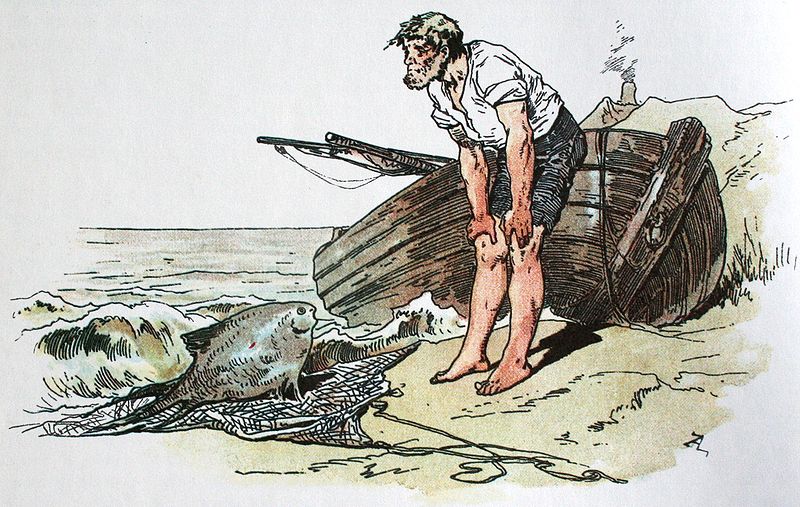
Manntje, Manntje, Timpe Te,
Buttje, Buttje inne See,
myne Fru de Ilsebill
will nich so, as ik wol will.
143


It vanished, got no notice and nothing. Posted one yesterday.

144


She walks in beauty, like the night

Of cloudless climes and starry skies;

And all that’s best of dark and bright

Meet in her aspect and her eyes:

Thus mellow’d to that tender light

Which heaven to gaudy day denies.

One shade the more, one ray the less,

Had half impair’d the nameless grace

Which waves in every raven tress,

Or softly lightens o’er her face;

Where thoughts serenely sweet express

How pure, how dear, their dwelling-place.

And on that cheek, and o’er that brow,

So soft, so calm, yet eloquent,

The smiles that win, the tints that glow,

But tell of days in goodness spent,

A mind at peace with all below,

A heart whose love is innocent!

145


Shall I compare thee to a summer’s day?
Thou art more lovely and more temperate:
Rough winds do shake the darling buds of May,
And summer’s lease hath all too short a date;
Sometime too hot the eye of heaven shines,
And often is his gold complexion dimm'd;
And every fair from fair sometime declines,
By chance or nature’s changing course untrimm'd;
But thy eternal summer shall not fade,
Nor lose possession of that fair thou ow’st;
Nor shall death brag thou wander’st in his shade,
When in eternal lines to time thou grow’st:
   So long as men can breathe or eyes can see,
   So long lives this, and this gives life to thee.

146


Dead Language Lesson by A.E. Stallings

They life their half-closed eyes out of the grammar.

What is the object of love ? You,
Singular. The subject? I.

Aeneas has nothing to say for himself.
Even the boys confess that he
Didn't intend to come back, the girls
Already know the tale by heart.

They wheedle me for tangents, for
Anything not in a book,
Even though it's all from books:
The many-wiled Penelope,
Orpheus struck dumb with hindsight.

I confiscate a note in which
The author writes, "who do you love"?--
An agony past all correction.

I think, as they wait for the bell,
Blessed are the young for whom
All languages are dead: the girl
Who twines her golden hair, like Circe,
Turning glib boys into swine.

147


To the Virgins, to Make Much of Time By Robert Herrick


Gather ye rose-buds while ye may, 
Old Time is still a-flying; 
And this same flower that smiles today 
Tomorrow will be dying. 

The glorious lamp of heaven, the sun, 
The higher he’s a-getting, 
The sooner will his race be run, 
And nearer he’s to setting. 

That age is best which is the first, 
When youth and blood are warmer; 
But being spent, the worse, and worst 
Times still succeed the former. 

Then be not coy, but use your time, 
And while ye may, go marry; 
For having lost but once your prime, 
You may forever tarry.

148


The Fisherman by Anis Mojgani

The fisherman

throws his nets

At night, when he eats, he sits alone

His plate round as the moon

He lights one candle on his table

He cuts the fish with his fork and his knife

Peeling back its skin like a bed sheet

Most mornings he wakes before the sun

For the fish, they don't sleep long

On some nights, when he's been drinking heavily

He goes down to the rocks and he reads to the fish

He reads to them poems, poems from books

Poems about the human condition, about the muscles inside of him

That question and quiver and shiver in sleep

Bottle in one hand, book in the other

Books clutching poems like they were their mother

Too afraid to let their children out into the soft fear of the electric night

And he was the wild one to show them this world

His mother will never hold him like that again, he thinks

I'm too big

Book in one hand, bottle in the other

While the storms flock behind him like gathering ballooning corpses

He screams these poems, screaming out the words

Like they were teeth he no longer needed or cared for

He slurs his screams like a drunk preacher cutting a rope

Picking up poems like they were stones to fling at the foot of God's throne

Hurling word, after word, after word

Waiting for some door in some black cloud, but nothing happens

The rain falls, the waves swing, and the fish sleep

And awake, and sleep, and awake, and again and again

In the rocking of the ocean

He stands above them like a Noah surrounded by bucket after overflowing bucket

And all he has left to catch this wet lightning is this open mouth

So he reads to them

He reads to them about things that none of them will ever see

About flowers opening

About birds as large as cliffs, holding heroes between their silver wings

Carrying these warriors into the open grace of the gods

And a mighty providence this fisherman stands inside of

Their shields and shoulders polished hard enough to blind the sun right back

He empties himself and the waves swing

He goes home, falls into bed, sleeps all the next day

Night comes through his window like a dream, like a fever

Like a mother to hold him close to her

He wakes inside of her arms, goes to his kitchen

Lights his candle, cooks his audience

And peels back its skin like a bed sheet before crawling inside

149


They Feed They Lion By Philip Levine

Out of burlap sacks, out of bearing butter,

Out of black bean and wet slate bread,

Out of the acids of rage, the candor of tar,

Out of creosote, gasoline, drive shafts, wooden dollies,

They Lion grow.

                           Out of the gray hills

Of industrial barns, out of rain, out of bus ride,

West Virginia to Kiss My Ass, out of buried aunties,

Mothers hardening like pounded stumps, out of stumps,

Out of the bones’ need to sharpen and the muscles’ to 
stretch,   

They Lion grow.

                          Earth is eating trees, fence posts,

Gutted cars, earth is calling in her little ones,

“Come home, Come home!” From pig balls,

From the ferocity of pig driven to holiness,

From the furred ear and the full jowl come

The repose of the hung belly, from the purpose

They Lion grow.

                          From the sweet glues of the trotters

Come the sweet kinks of the fist, from the full flower

Of the hams the thorax of caves,

From “Bow Down” come “Rise Up,”

Come they Lion from the reeds of shovels,

The grained arm that pulls the hands,

They Lion grow.

                           From my five arms and all my hands,

From all my white sins forgiven, they feed,

From my car passing under the stars,

They Lion, from my children inherit,

From the oak turned to a wall, they Lion,

From they sack and they belly opened

And all that was hidden burning on the oil-stained earth

They feed they Lion and he comes.

150


Because the birds sculpted the air with their song — 

I sent that flash across the sea. Candle in a paper lantern,

the flame rose and dipped.

I’ve been hiding from my father.

Fog-damp pall over the city. I ink this bruise onto paper.

Years ago, in Highland Park, we’d picnic in the backyard.

We slept in the living room. I clung to my beautiful mother.

Flipped the pillow and pressed against its coolness.

I held grudges like tiny fists of sand, then, let go.

I kissed the fog and sky and the ocean’s cobalt hue.

You. I hadn’t yet met you.

Murky alphabet — 

I falter the letter, I elide the gaps. If the opalescent dew meant anything,

it meant that one day I’d be lifted above my feelings.

You’d become less than a feeling, the way every lover I’ve known

no longer hurts me. Those old charges detonated.

Here and now, I make room for joy. Birds ribbon the air with their singing.

Bird voices riot up. The planes with their hulking engines — 

they fly too. The jags of each cliff head —  Your lips — I uninterrupt.

I charley horse and miracle ride your absence. The whipped froth of the ocean.

Puddle of salt water, shivering wound. Seaweed, we sing of losses.

Cold under this blanket, I wait for my alarm to sing.

I’ve polished this anger and now it’s a knife. I’m hardened as a hunter ornamenting his cave

with the bones of the dead. I’m so sick of history dragging behind me.

Today, I don’t want to be sad. But my father has retreated into silence and the lashes

across his back have not healed, and my mother tells me he could have killed

himself that night and we’d be blamed. Call the police, she said.

We stood barefoot on the street, listening to him throw things

against the garage walls, detonations of only what we could imagine.

I hurl stones into the ether. I wash my hands in ink.

The lost in the fog body borne of matter, history-less, untethered.

Better to be alive and bewildered. At least I can name the thing.

To love my father is to love his wounds.

In times like these, we present our hurts like old toys we polish up

to show each other who we used to be.

view more: ‹ prev next ›