politics
Welcome to the discussion of US Politics!
Rules:
- Post only links to articles, Title must fairly describe link contents. If your title differs from the site’s, it should only be to add context or be more descriptive. Do not post entire articles in the body or in the comments.
Links must be to the original source, not an aggregator like Google Amp, MSN, or Yahoo.
Example:
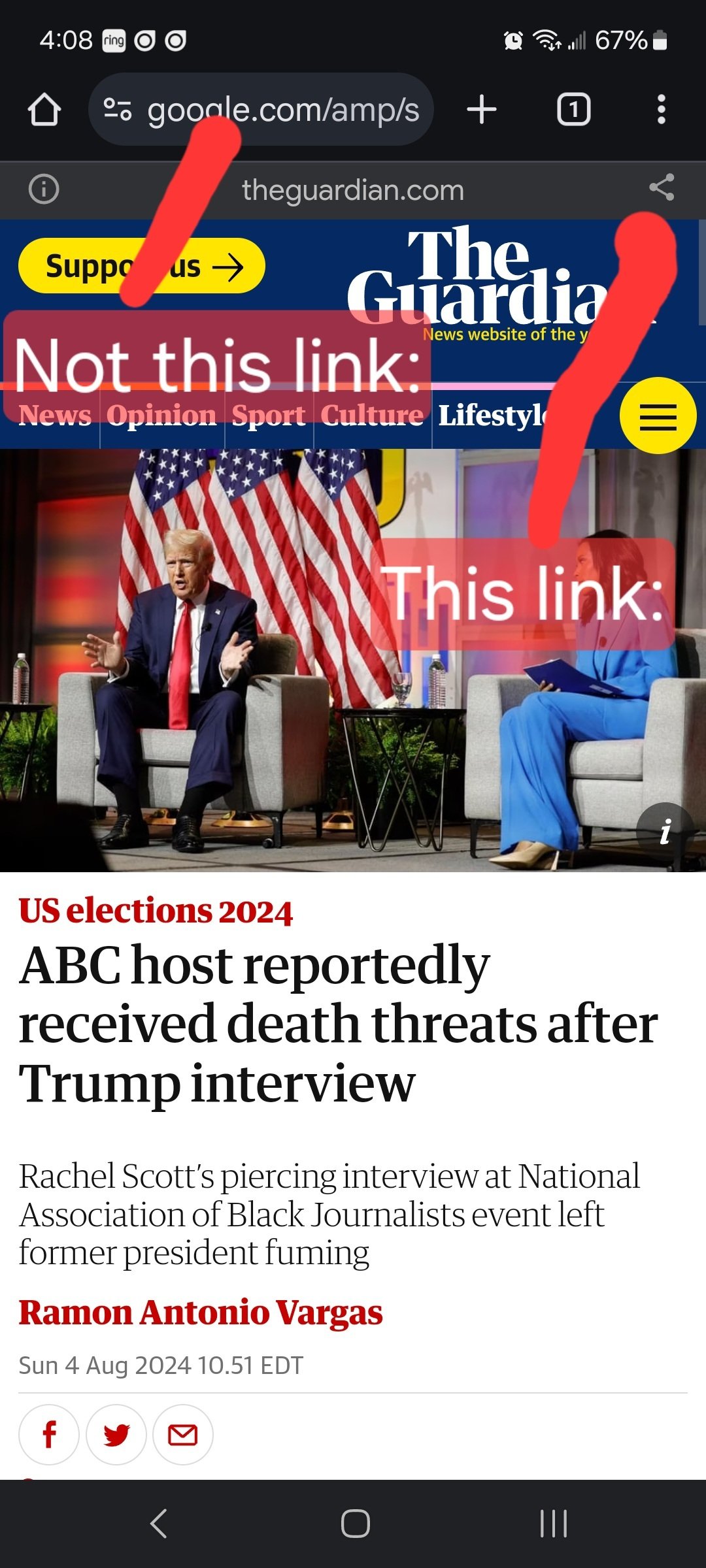
- Articles must be relevant to politics. Links must be to quality and original content. Articles should be worth reading. Clickbait, stub articles, and rehosted or stolen content are not allowed. Check your source for Reliability and Bias here.
- Be civil, No violations of TOS. It’s OK to say the subject of an article is behaving like a (pejorative, pejorative). It’s NOT OK to say another USER is (pejorative). Strong language is fine, just not directed at other members. Engage in good-faith and with respect! This includes accusing another user of being a bot or paid actor. Trolling is uncivil and is grounds for removal and/or a community ban.
- No memes, trolling, or low-effort comments. Reposts, misinformation, off-topic, trolling, or offensive. Similarly, if you see posts along these lines, do not engage. Report them, block them, and live a happier life than they do. We see too many slapfights that boil down to "Mom! He's bugging me!" and "I'm not touching you!" Going forward, slapfights will result in removed comments and temp bans to cool off.
- Vote based on comment quality, not agreement. This community aims to foster discussion; please reward people for putting effort into articulating their viewpoint, even if you disagree with it.
- No hate speech, slurs, celebrating death, advocating violence, or abusive language. This will result in a ban. Usernames containing racist, or inappropriate slurs will be banned without warning
We ask that the users report any comment or post that violate the rules, to use critical thinking when reading, posting or commenting. Users that post off-topic spam, advocate violence, have multiple comments or posts removed, weaponize reports or violate the code of conduct will be banned.
All posts and comments will be reviewed on a case-by-case basis. This means that some content that violates the rules may be allowed, while other content that does not violate the rules may be removed. The moderators retain the right to remove any content and ban users.
That's all the rules!
Civic Links
• Congressional Awards Program
• Library of Congress Legislative Resources
• U.S. House of Representatives
Partnered Communities:
• News
view the rest of the comments
Party cohesion and the relative strength of the party are key factors. In a two-party system like our's, the Dems should be well-placed, nominally, to resist (if not necessarily stop) the rise of fascism, since the division of the opposition and uniting with useful idiots is often a key tactic in fascist consolidation of power. Italy and Nazi Germany alike.
... but the Democratic party has no cohesion. Neoliberal ghouls try to milk the far-right for all its worth, like Zentrum in Weimar Germany, while the socdems and demsocs in the party actually trying to resist fascism are reduced, by their extreme minority status, to nothing more than admitting that they are defenceless, but not honorless when the hour of reckoning arrives.
For example, in South Korea in the late 80s, while not strictly speaking an expression of fascism (which is generally considered to combine totalitarian revolutionary with reactionary ideas, while South Korea was just a bargain-bin authoritarian military junta), the opposition parties fought the long-lasting authoritarianism of South Korea even without holding a majority. Even in the immensely repressive environment of a police state, they managed to not simply resist the expansion of authority, but reverse it entirely. But it required the diverse opposition groups to present a united front on at least the singular issue of opposition to authoritarian abuses.
And a lot of people taking to the streets. A lot of people taking to the streets.
Wow. That's fascinating about North Korea. I know you've got your day job and all, but if you had to stack rank say.. 5 regimes that went full blown fascism, and five that maybe were near misses, by where in the "the internal powers resisted", I think it could make for a very interesting if brief article.
I suppose one more difficult component might be time, and being in the eye of the maelstrom, it's hard to tell what phase we're at in regards to totalitarian collapse. But if Hitlers ascent to power is on one end of the spectrum, and like, even that showed a stronger internal political resistance...
As Napoleon once noted, conflicts are resolved not according to genius, but who makes the fewest mistakes. Certainly, our fools making mistakes are less brave and less competent than the SDP. We can only hope the same counts for our Nazi Party.
We live in a comedy of errors that would be much funnier if we were not fucking living in it.
Unfortunately, modern history isn't my main field! I could probably give a quick attempt at it, though. I don't know that I can sort them, because every situation is a unique clusterfuck of successes and failures, but you might have a preference you can order the summaries in.
(Note: some of these are ambiguously fascist because of a lack of revolutionary elements; however, in the same spirit of the South Korea example, I think it counts for the purposes we're talking about currently)
Fallen To Fascism By Internal Forces:
Japan: God, this one was slow-motion. There was no single event, just a long, slow decline from the pressures of an overpowerful traditional and business class, and cowardly politicians. It was something like 20 years before the final pieces fell into place, each part being pushed forward by another group of meek moderates who preferred to yield to threats from the far-right than put up a fight. One of the figures who actually DID push back against the military's demands and forced his party to go along with it, Prime Minister Osachi, was hamstrung by the oncoming Great Depression and little economic success in alleviating it, and was assassinated in any case.
Austria: A complete failure of the political class. A not-particularly-charismatic man with a one vote majority in the legislature managed to pull a legal coup over the fucking government. The legislators were scared away by armed cops preventing them from entering the legislature, and the president was too chickenshit to dismiss the fascist as prime minister despite having the legal power to do so and having over a million Austrians petition him to do so before something irreversible happened, like, say, the destruction of Austrian democracy.
For that matter, the Austrian people themselves were incredibly lukewarm about the whole affair, in terms of intensity of feeling. The Social Democrats and Communists joined together to call for armed resistance and a general strike, and just... no one bothered. So the SocDems and Communists were crushed by the armed forces inside of a week.
Italy: Just an utterly humiliating and embarrassing series of events. The Italian liberals supported nationalist chestbeating that was more popular on the right than the left (😬), the socialists and Communists were more interested in fighting each other than the fascists, and Mussolini effectively slipped into power with a minority government of like, 1/5 of the legislature, just by making a large partisan demonstration on the fucking capital. Jan 6 but immediately successful.
The prime minister advocated to fight back initially (after letting fascist thugs suppress anti-fascist strikers - surely these fascists would never turn on ME!), but resigned when he didn't have the support of the king instead of at least going down with a shred of fucking honor. Mussolini headed the government, and the legal institutions failed to stop any further behavior performed by/passed in the legislature that was unlawful by the Kingdom of Italy's own laws.
Weimar Germany: Agh. I think most of us know this one. The Social Democrats got isolated by both the 'moderates' and the Communists, weren't numerous enough on their own to do jack shit, and while they went out (literally) fighting (with the formation of paramilitaries to challenge Nazi paramilitaries), it wasn't enough.
The (largely religious) moderates claimed definite opposition to the Nazis, in the spirit of a moderate and democratic Germany! Until the Nazis were in a good position, at which point they immediately started licking boots.
The Communists were taking marching orders from Moscow, and Stalin preferred a Nazi victory in Germany to a Social Democrat victory, so the Communists refused cooperation with the SPD and even made political alliances of convenience with the literal fucking Nazis to weaken Social Democrats.
The conservatives handed over power once it was apparent that no one was going to stop them from doing so. Anything to crush the filthy poors and minorities.
Resisted Fascism By Internal Forces:
The USA: Yep, we've been through this song and fucking dance before. Though with the president in opposition, rather than support of the fascists. The US was in uncertain straits at the beginning of the Great Depression, with both the dissatisfied working class and big business interests eyeing the idea of an overthrow of democratic governance. The Silver Shirts were something of a joke, but figures like Coughlin had significant influence over the opinions of the electorate.
Luckily, the Dems didn't shit the bed for once, and nominated a charismatic (if moderate) progressive reformer to head off trouble - FDR. After FDR's election, and the control and cooperation of the legislature, the New Deal gradually reduced workers' grievances and business independence to the point where fascist and fascist-adjacent movements to a tiny minority that were formally suppressed come WW2. It was touch-and-go, requiring a great deal of skirting and bending rules without breaking them and destroying the government's legitimacy, but the Dems (and even some Republicans) were desperate enough to risk that kind of brinkmanship.
You could also point to Nixon, back when the system was still semi-functional, and Nixon's own party was willing to demand a resignation from him over him breaking the law and then trying to argue that the president has unlimited legal power to do whatever he wants.
Interwar France: The Communist, Socialist, and liberal parties all sucked it the fuck up and worked together, forming a popular front that shut out the fascist movement, with the liberals offering concessions to the working class and the left-wing offering legislative support, while simultaneously stringently enforcing the law against fascist paramilitaries who had been boldly skirting (or passing) the edges of legality.
Unfortunately, all three groups turned on each other before long. While it didn't lead to a resurgence of fascism, WW2 was so close on the horizon that it didn't much matter in the end.
Boulangist Crisis in France: This is one of those comedy of errors things, except this time the fascist (or proto-fascist) is the one who makes the most mistakes. The fascist had basically set up all the pieces for a successful coup, but decided to wait instead of striking immediately. This gave the French non-fascists time to unparalyze themselves from their shocked stupor, and actually do something about the fascists, directing their justice department to actually prosecute the criminal, despite having won a recent election (😬), causing him to flee and commit suicide.
India: Despite Indira Gandhi's genuine and enduring popularity, the opposition parties all uniting to condemn the coming election as the last chance to choose between dictatorship and democracy (😬) resulted in a crushing victory for the opposition. While Indira Gandhi would return to the position of Prime Minister later, she would not regain the political support to repeat her initial 'rule by decree' period that risked total autocracy and the dissolution of Indian democracy.
Spain: After a pro-democracy leader came into power (King Juan Carlos I had been playing the long game under the fascist regime), there was an attempt by pro-fascist forces to coup the government and restore a far-right regime. They literally stormed the legislature and took the representatives hostage. However, while the King's actual power under the new system was limited, as a figurehead, his voice still carried great weight. Juan Carlos went to the radio and condemned the coup in no uncertain terms, resulting in most of the rank-and-file abandoning the cause.
Who is in the driver's seat, however little formal power they may have, matters greatly. Appeals to national unity and expressing confidence in the democratic process can go a long way from the lips of a respected figure.
Reversed Fascism By Internal Forces:
Pinochet's Chile: The people voted fascism out. Yes, literally. Most dictators still rely on elections for the illusion of legitimacy to the dumber portion of the population that's willing to lick boots, but not necessarily comfortable with naked dictatorship (sadly not insignificant). Pinochet held an election that he tried to clamp down on as tight as he could, but popular opinion was so overwhelmingly against him at that point that he couldn't suppress or falsify enough results to be believable. Mass protests demanding the implementation of the results of the election were coupled with the military refusing to back Pinochet having blatantly and unambiguously lost an election, and Chile returned to democracy after nearly 20 years under dictatorship.
Legitimacy is a big deal, and sometimes people who focus too much on the 'raw' policies and personalities of governance forget that. Even kings can be felled by a loss of legitimacy; dictators are no different.
Portugal: Basically, even in a dictatorship, opinions matter. Militaries are recruited from ordinary people - and when the ordinary people become dissatisfied, generally, so too does the general population of the military. The cruelty and incompetence of the fascist regime, and the influence of outside politics pushing democracy and socialism, led to a pro-democracy conspiracy being formed amongst mid-ranking officers, and then executed with unexpected mass civilian support, which probably prevented pro-government forces from engaging with the revolutionary forces. No one wants to fire on their neighbors, friends, and family.
South Korea: See above comment.
Resisted Fascism Internally, Fell Externally: Special shout-out to the Spanish Republic, which didn't let even a military coup dissuade it from resisting fascism. The parties of the Republic (initially) rallied together, despite their differences and called on the people to support them in the war for the soul of Spain. Unfortunately, several years of civil war wherein major powers (Italy and Germany) funded the fascists did result in their eventual defeat by force. Also, there was infighting after like, a year. Not good.