Japanese Language

1792 readers
1 users here now

ようこそJapaneseLanguageへ! 日本語に興味を持てば、どうぞ登録して勉強しましょう!日本語に関係するどのテーマ、質問でも大歓迎します。 This is a community dedicated to the Japanese language. Feel free to come in and ask questions or post your thoughts and opinions about this beautiful language.

Feel free to check out the web archive of r/LearnJapanese's resources if you're looking for more learning material or tools to aid you in your Japanese language journey!

—————————

Remember that you can add furigana to your posts by writing ~{KANJI|FURIGANA}~ like:

~{漢字|かんじ}~ which comes out as:

{漢字|かんじ}

founded 2 years ago
MODERATORS
76
77


I just switched to Android after being a very long time iOS user and I'm somewhat at a loss at the best apps and must-haves of Japanese content, dictionaries and similar stuff.

What are your best recommendations?

78


Not a plea for help since I imagine using the word bank allows the text to be accepted. And no, I'm not trying to get it to fail by using 二 instead of ニ. I'm pretty sure the exercise is bugged.

79


You can now use furigana in your posts via the DenDen Markdown syntax for furigana. If you write the following

{学校|がっこう}

It will come out like this: {学校|がっこう}

80


This channel is pretty fun whenever I need something to watch and relax without thinking much about it. It has also helped me realise I make a lot of mistakes when writing by hand which inevitably leads to messier characters. Definitely recommend watching if you’re into this type of stuff.

81
1
submitted 2 years ago* (last edited 2 years ago) by HoloPengin@lemmy.world to c/japaneselanguage@sopuli.xyz


I've been playing japanese games on my steam deck lately and have discovered a useful workflow for looking things up if you've got an Android device on hand.

Install Google Lens. Install Aedict and add JMDict in it (JMDict is what jisho.org uses, so it's pretty good). When in Google Lens, you can use "Text" mode to take a picture then select and copy text. When you copy text, Android will helpfully pop up a Share dialog. Click the share logo, find Aedict in the list and bookmark it so it's always at the top by holding down on it and click "pin".

Google lens will smartly let you select entire words with a single tap and has a dedicated copy text button, so this workflow is a surprisingly fast way to open your dictionary when trying to read text from other devices, from physical media, or out in the wild. It's even pretty good at reading handwriting.

82


Mine was at the beginning to be able to read Visual Novels, but now is more than that, I like to learn more and there are few sensations like understanding new "symbols" as words.

83


If so, any recommendations on podcasts to listen to?

Thanks in advance!

84


知ってる慣用句は少ないけど、「死んだ魚の目」という慣用句が好き(英語の意味は「thousand-yard stare」それとも「empty eyes」)。

他の面白い慣用句を聞かせてください!

85
 
 
86


This video by Kotorabo, one of the best YouTube channels about language and etymologies talks about the question we’ve all wondered at some point: why doesn’t Japanese just get rid of Kanji?

87


It seems like it's every day that I get advice that is aimed at beginner learners, like how to learn kana, or to pick up Genki or Minna no Nihongo, or use an app like Duolingo or Lingodeer. However, I'm closer to intermediate level (approximately N3, maybe N2), and I'm kind of stumped when it comes to studying.

For example, one of the most common pieces of advice I get is to immerse myself in the language, for example by playing games or watching movies/anime in Japanese. However, that method does get really frustrating in many ways. For example, when there are no closed captions available for Japanese movies, which makes understanding much harder, especially if the characters speak very quickly. Another nuisance this method has, is when I have to look up a word or two for every single sentence I hear/read. This is made even more annoying when a certain word contains complicated kanji, so I have to type it into the dictionary radical by radical. Doing that so often can be a real pain in the backside and suck the enjoyment out of the game/film. And also, it gets even tougher when I come across some slang or colloquial expression, or onomatopoeia, or a grammar structure I haven't heard of before. During these times, I'm not very sure how to look those up, since I'm most likely not going to find these in the dictionary I use.

Moreover, I'm not quite sure how to learn vocabulary with this method of media consumption, since it's not uncommon for me to encounter a word once or twice and then never again, making it difficult to remember. I'd learn it with flashcards, but 1, making flashcards takes a long time. And 2, it gets quite boring, and I tend to forget words very easily, even with Anki.

I also heard of advice saying I should pick up an advanced textbook, like Tobira. However, the grinding aspect of just translating sentences into a specific grammar pattern repeatedly always felt boring. Even with Genki, I kinda just speedran/skimmed through the exercises, made notes out of the grammar explanations, and solidified what I learned through graded readers (which were still a pain, because they weren't very interesting to read, to be honest).

I have a feeling that despite being given these pieces of advice, there must be a wrong and right way of using them. So, I think I might be misusing the advice I've been given (either that, or I've been given the wrong advice, which I kind of doubt).

If anyone out here can give me corrections on how to study correctly, as well as perhaps giving new advice, would be very much appreciated. 読んでくれてありがとうございました。

88
1
submitted 2 years ago* (last edited 2 years ago) by DigitalAudio@sopuli.xyz to c/japaneselanguage@sopuli.xyz


Alright everyone! JLPT is tomorrow. Discuss anything related to the test, success or failure stories, fun anecdotes and everything in-between in this thread!

Good luck to all of you taking JLPT within the following hours!

89


When I mean learning I do not mean translating big sentences or something like that, I mean things like: "Is this japanese sentence correctly written? 雲の日が好きです" In this example it answered: "

Yes, the Japanese sentence "雲の日が好きです" is correctly written. It translates to "I like cloudy days" in English. Here's a breakdown of the sentence:

  • 雲 (くも/kumo): This means "cloud."
  • の (no): This is a possessive particle that indicates the relationship between "cloud" and "day" in this context.
  • 日 (ひ/hi): This means "day."
  • が (ga): This is a subject marker particle that marks "cloudy day" as the subject of the sentence.
  • 好きです (すきです/suki desu): This means "like" or "to like" and is a polite way of expressing one's preference. The verb 好き (suki) means "to like," and です (desu) is a polite copula used to indicate politeness and formality.

Therefore, the sentence "雲の日が好きです" correctly conveys the meaning "I like cloudy days" in Japanese.

"

Is this correct,do you consider it reliable?

Sometimes I also ask some questions like: "What function does 'こと' grammatically fulfill on this sentence? .... "

90


Since I decided to nuke my reddit account, here's an archive link to one of my niche posts that has helped people interested in Classical Japanese.

91
92
93
 
 
94


I've found that any time I'm interested in a game, looking up let's plays in Japanese has helped me make a lot of connections between the game's contents and Japanese vocabulary.

I'm linking a good example of that with Metroid Dread, which is a game I played last year and I spend a few weeks watching let's plays and reading online content about it in Japanese, mostly because I loved the game, but I also thought that doing so might be a good exercise for intermediate learners as well.

The key to searching for a let's play is to just enter the Japanese name of the game (for example: バイオハザード4 or ダークソウル3)and then adding 実況 which is the keyword here. Any popular game followed by 実況 is likely to yield tons of results, so give it a try if you're into games, and you may learn a lot of vocabulary from it!

95


Hey all, I barely passed the December 2022 N3 and last month, I went to Japan for the first time and spent two weeks there.

Overall, I was both disappointed and pleased with how far the N3 got me (note I'm talking purely about my skill level -- at no point did I ever show anyone in Japan my N3 certificate lol).

On the one hand, some might say that N3 is enough for anime and conversations with normal people. As someone with a 31/60 on the listening section, this is categorically not true. I never got the chance to, nor do I likely have the ability to, hold a long everyday conversation with anyone in Japan. It's not like I was surprised at my lack of skill by the time I was on the ground in Japan and talking to people, but I did expect to have been able to do so by the time I got an N3 back when I first started studying. So I am a bit sad that that expectation was off.

On the other hand, wow does real immersion make a huge, gigantic difference. When I first landed I had to ask people to repeat themselves slowly two or three times for me to get what they said, and people would often switch to English before I put together what Japanese words (that I already knew) actually corresponded to the sounds I was hearing when they were speaking Japanese earlier. But by the end of the first week, my conversation skill was enough for dining in restaurants, shopping in malls, speaking to hotel staff, and small talk with tour guides 100% in Japanese. It was incredible how comfortable I felt talking about non-trivial upgrade options or specific observation site locations, and it was also incredible how much nicer people treated me when I was speaking Japanese with them vs when my wife would talk first in English. It was absolutely 100% worth it for me to get to this level of skill, and it really made me feel like my work has finally paid off.

To conclude, if you're like me and you grinded almost nothing but Anki all the way to around N3 level, you probably have the same mix of okay vocab/grammar but extremely shitty listening comprehension. If so, I highly recommend greatly increasing the amount of listening practice you do on a daily basis. I'm still not sure what's the best way to study that, but I definitely could have used more of it before my trip. But at the same time, don't despair if you're going on a trip without that. You'll be fine -- trust your subconscious brain and enjoy the huge comprehension gains!

96


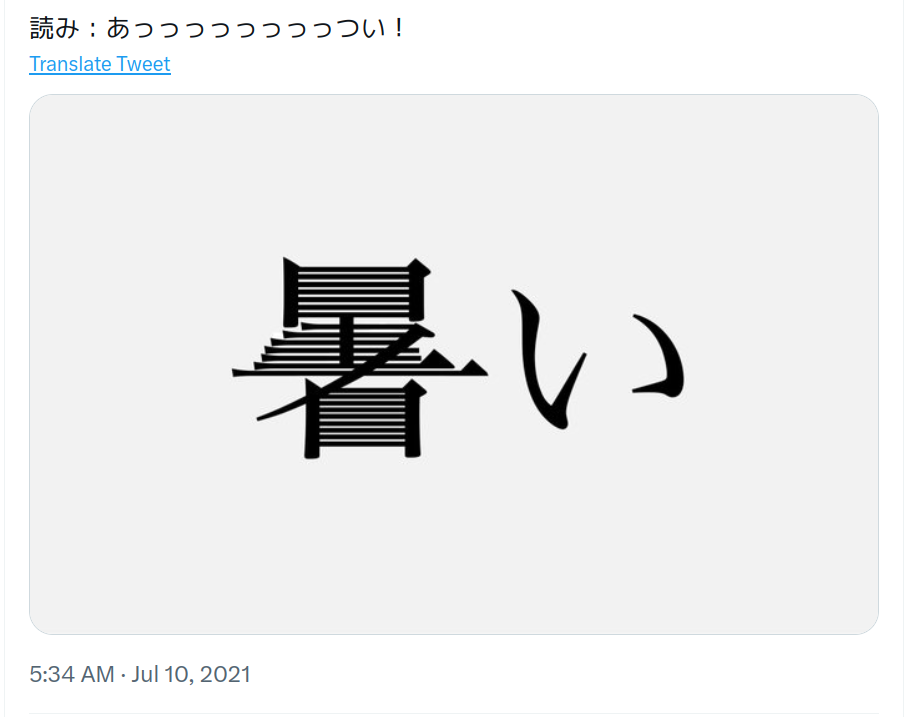
Source: https://twitter.com/shamo0301/status/1456534675376119808 with an omake in the replies! 😊

97


Hello everyone, and welcome to our (kind of) daily JLPT thread! I'm sorry I couldn't post one of these for the past week. I was busy with work and couldn't get the time to prepare an entire review of a new structure. I'm back and hopefully will be posting these more regularly again. With that said, let's get started!

本日の文法:JLPTN3の「~(という)わけではない」

~わけではない Is a pretty common expression that you're going to find in a lot of media such as anime, manga, manzai and dramas. It's also used in everyday conversation, though, so you will get a lot of mileage out of this one.

For the most part, its meaning is close to "it's not like..." or "...doesn't mean that...", so basically, it's an expression for a partial negation of a statement. You'd use it when you don't want to fully deny something, but still want to point out that something isn't quite correct.

So a few example sentences would be

お金があるから、必ず幸せにるというわけではない。"Having money doesn't necessarily mean you will be happy."

成績が良かったから、他の生徒に教えるのが得意なわけではない。"Having good grades doesn't mean you will be good at teaching other students"

So right now there are a few additional things you may be wondering:

First of all, what is という in this instance, and why is it optional? Is it really always optional or does it have a more nuanced use most of the time?

Generally speaking, where you can use a simple わけではない, you can also use a というわけではない. They're grammatically equivalent in that sense. However, they do have a very slightly different meaning, where という gives the impression that you're taking a less opinionated and more objective approach to the conversation. You would use というわけではない when you perhaps want to make a general statement. Looking at our first example sentence, you will notice that we're talking about a general perspective "money doesn't mean happiness in general", and as such, it doesn't feel like you're talking about anyone in particular, and you're just making a statement. But for our second sentence, you may notice the situation is most likely referring to a successful student that has decided to teach the rest of his class, and is probably not great at it. In this case, leaving out という makes the comment slightly harsher, almost like a criticism to a specific person in question.

So do keep those differences in mind.

Also, it's important to point out that わけではない is a rather stiff way to use this expression, and you may want to use わけではありません in formal contexts, or わけじゃない in more casual contexts. わけではない sounds a bit academic, kind of like the one speaking is a figure of authority. The type of speech you would find in textbooks, newspapers, academic research and similar scenarios.

Some examples for different settings would be

この道まっすぐ行ったら、すぐに図書館に到着するというわけではありません。その前、公園も渡らなければなりません。"You will not reach the library immediately if you walk straight down this road. You have to cross the park first as well."

いや、別に俺の妹が天才なわけじゃないけど、結構頭がいいし、頑張れる人間だから。"Nah, it's not like my sister is a genius or anything, but she's pretty smart, and she works hard."

The first example could be someone giving directions to another person, presumably a complete stranger. In this scenario, using full-on 敬語 would probably be overkill, but using a more informal form would come off as rude. This is why a polite form like this one might work.

The second example is far more informal, but you will also encounter a lot of this in every day life. I've personally found myself speaking to many of my co-workers like this in the office. Definitely not to my boss or other superiors, though, so watch out for that.

I think that will be all for today! Hope everyone is having a nice day, getting ready for JLPT in only 12 days!

98
99


Hello everyone, and welcome to our daily JLPT thread! The July tests are coming up quickly, so I thought we could have a daily thread where we discuss questions, or talk about what we've been practicing. In this thread I will also be sharing one graded grammatical structure every day, so feel free to use it for your own reference.

本日の文法:JLPTN1の「~極(きわ)まりない」

~きわまりない Is a very interesting structure that could translate to "extremely" or "as can be".

A few example sentences for this could be

図書館で大声を出して騒ぐなんて、迷惑きわまりない。 "Speaking loudly and making a ruckus at a library is as annoying as it gets"

昨日、彼の態度は失礼きわまりない "His attitude yesterday was extremely rude"

This structure could be considered relatively similar in meaning to 「非常に」 though naturally the way it's built is different. In this case you mostly just attach it to a noun. That makes it relatively easy to use! Remember that this is a relatively literary or formal structure, so you probably won't be hearing it too much when speaking casually or colloquially.

Hope everybody has a very nice day studying for your upcoming test!