Entomology

671 readers
1 users here now

A general community to post things about insects

For more specific communities:

Isopods and Myriapods: !isopodmyriapod@mander.xyz


A community for our eight-legged friends: !arachnology@mander.xyz

founded 2 years ago
MODERATORS
76
77
10
Grasshopper (sh.itjust.works)
submitted 2 years ago* (last edited 2 years ago) by TeachableMoment@sh.itjust.works to c/entomology@mander.xyz


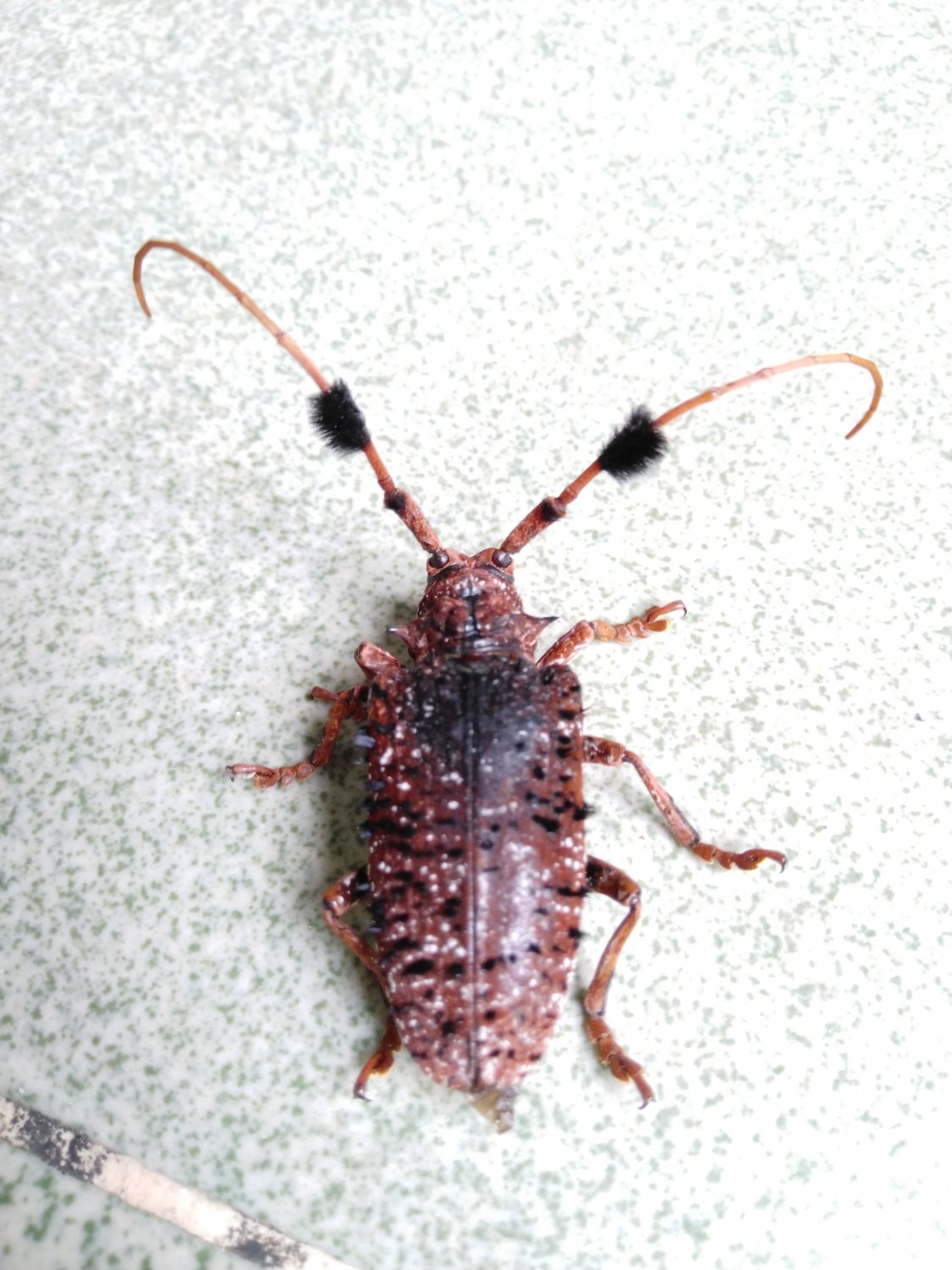
Sorry, no Lemming for scale (Wikipedia tells me a Lemming is '13–18 cm (5–7 in)'. So about the same size. I would imagine there are many about, but I only notice them when they are on doorframes or something.

They happily crawl onto my hand, my coworkers tell me they are delicious grilled, so I don't mention it and go for a walk in the forest.

Southwest Cambodia

78


A very interesting bug. Aside from the colouration it has fuzz on part of its antennae, and horns/ spikes on its back. Another photo from the side in comments.
79
80
81
82


cross-posted from: https://sopuli.xyz/post/9346337

[…] What is surprising is how poorly we still understand global ant societies: there is a science-fiction epic going on under our feet, an alien geopolitics being negotiated by the 20 quadrillion ants living on Earth today. It might seem like a familiar story, but the more time I spend with it, the less familiar it seems, and the more I want to resist relying on human analogies. Its characters are strange; its scales hard to conceive. Can we tell the story of global ant societies without simply retelling our own story?

[…] Recognition looks very different for humans and insects. Human society relies on networks of reciprocity and reputation, underpinned by language and culture. Social insects – ants, wasps, bees and termites – rely on chemical badges of identity. In ants, this badge is a blend of waxy compounds that coat the body, keeping the exoskeleton watertight and clean. The chemicals in this waxy blend, and their relative strengths, are genetically determined and variable. This means that a newborn ant can quickly learn to distinguish between nest mates and outsiders as it becomes sensitive to its colony’s unique scent. Insects carrying the right scent are fed, groomed and defended; those with the wrong one are rejected or fought.

[…] It is remarkable how irresistible the language of human warfare and empire can be when trying to describe the global history of ant expansion. Most observers – scientists, journalists, others – seem not to have tried. Human efforts to control ants are regularly described as a war, as is competition between invaders and native ants, and it is easy to see why comparisons are made between the spread of unicolonial ant societies and human colonialism. People have been drawing links between insect and human societies for millennia. But what people see says more about them than about insects.

83
84
85
86
1
submitted 2 years ago* (last edited 2 years ago) by voight@hexbear.net to c/entomology@mander.xyz


https://x.com/EerikaSchulz smash the mfing subscribe button

87
88
89
90
91
92
93
94
95
96
97
98
99
100
view more: ‹ prev next ›