

TheModerateTankie

joined 5 years ago
[–] TheModerateTankie@hexbear.net 54 points 1 year ago (2 children)

“By the way, I’m proud to be, as I said, the first Vice President, first Black woman, to serve with a Black president,” Mr. Biden said, apparently garbling a line he often uses about both serving as vice president under Barack Obama, the first Black president, and choosing Kamala Harris as his running mate, making her the first Black woman to become vice president.

Things are going great!

[–] TheModerateTankie@hexbear.net 24 points 1 year ago (2 children)

This passage describes how he was in 2019-2020

A campaign trail is a grueling exercise for anybody of any age, from the youngest network embeds to the oldest would-be presidents, and back then, there were days when Biden appeared sharper than on others. I knew it was a good day when he saw me and winked. On such occasions, he joked and prayed and cried with voters. He stayed to take a photo with every supporter. He might even entertain a question or two from the press. He had color in his face. There was no question he was alive and present. On bad days, which were unpredictable but reliably occurred during a challenging news cycle, he was less animated. He stared off. He did not make eye contact. He would trip over his words, even if they were programmed in a teleprompter. On such occasions, he was hurried out of the venue quickly and ushered into a waiting SUV.

Did they think his condition would improve?

For many inclined to support the president, this was good enough. They did not need to monitor the president’s public appearances, because under his leadership the country had returned to the kind of normal state in which members of a First World democratic society had the privilege to forget about the president for hours or days or even weeks at a time.

Brunch time is over sadness

He's been in cognitive decline for at least 4 years, and they convinced themselves it was just a stutter. Simply because he was the only person who could beat Bernie due to name recognition.

Kamala wasn't on the primary ballot so she's not guaranteed. Its going to be whatever horrible person the donors coalesce around.

spoilerhillary-assassin

There's talk a major donors refusing to give any more money. Will he destroy the chances of the democrats by refusing to step down?

Its like watching a visibly drunk guy getting into a car to drive home from a bar, while assuring everyone he's fine and fighting them off when they try taking his keys.

Amazing.

chefs-kiss

So his excuse is that being president is too tiring. Maybe he should let someone else do the job. (oh, right, he's handing it to Trump)

[–] TheModerateTankie@hexbear.net 12 points 1 year ago (2 children)

Isn't this scenario why they have superdelegates?

[–] TheModerateTankie@hexbear.net 32 points 1 year ago (1 children)

crown Harris.

cedar-rapids isn't there someone you forgot to ask?

biden-harbinger Listen here jack, you better vote for me or this other lunatic will take control of the doomsday machine I built. what? No, I will absolutely not destroy it.

Hot hurricanes summer

I use it on the weekends, and sometimes after work. At first to see if it would help with anxiety and job related pain , then a few days after trying it I noticed it killed my desire for alcohol and I kept using it 3 days on, 4 days off type thing. 2.5-3grams a couple times a day. Eventually I quit alcohol entirely. Whatever is in it helps me focus on tasks, too. If I'm mentally and physically exhausted from work, taking a dose when I get home will help me relax and focus on doing things besides being completely worn out.


Research published today in Lancet Infectious Disease and supported by PolyBio Research Foundation provides the strongest evidence yet that the COVID virus can persist for months or years after infection. The findings, published by a UC San Francisco/Harvard Medical School team, found that proteins created by the virus were still present for up to 14 months in a quarter of people tested. This demonstrates SARS-CoV-2 viral persistence as an urgent area of research underlying a breadth of chronic disease after COVID.

“The fact that every new SARS-CoV-2 infection has the potential to become chronic is perhaps the single most concerning aspect of this virus” says Dr. Amy Proal, President of PolyBio. “We have compelling data that viral persistence is much more common than recognized which could have major health implications.”

wtf

However, with an estimated 18 million adults and 5.8 million children suffering from Long COVID, government investment is also needed. SARS-CoV-2 has even been found in the lymph nodes of children months after COVID, suggesting persistent infection can begin early in life.

long suspected and showed up in research before, but here's more proof this is a thing.

Nearly all people in the study were not vaccinated, and generally the sicker they were the more likely they had viral persistance.
56
submitted 2 years ago* (last edited 2 years ago) by TheModerateTankie@hexbear.net to c/covid@hexbear.net
 

Independently, advocates, researchers, and clinicians also reported seeing an increase in the number of people who have developed long COVID after a second or third infection.

John Baratta, MD, who runs the COVID Recovery Clinic at the University of North Carolina, said the increase is related to a higher rate of acute cases in the fall and winter of 2023.

In January, the percentage of North Carolinians reporting ever having had long COVD jumped from 12.5% to 20.2% in January and fell to 16.8% in February.

At the same time, many cases are either undetected or unreported by people who tested positive for COVID-19 at home or are not aware they have had it.

Hannah Davis, a member of the Patient-Led Research Collaborative, also linked the increase in long COVID to the wave of new infections at the end of 2023 and the start of 2024.

"It's absolutely real," she said via email. "There have been many new cases in the past few months, and we see those new folks in our communities as well."

After there was a lull in cases last spring/summer, a lot of covid minimizers claimed long covid isn't a big deal anymore because there were less new cases. Immunity wall or whatever. Turns out cases start increasing again when there is a major covid wave. No one could have forseen...

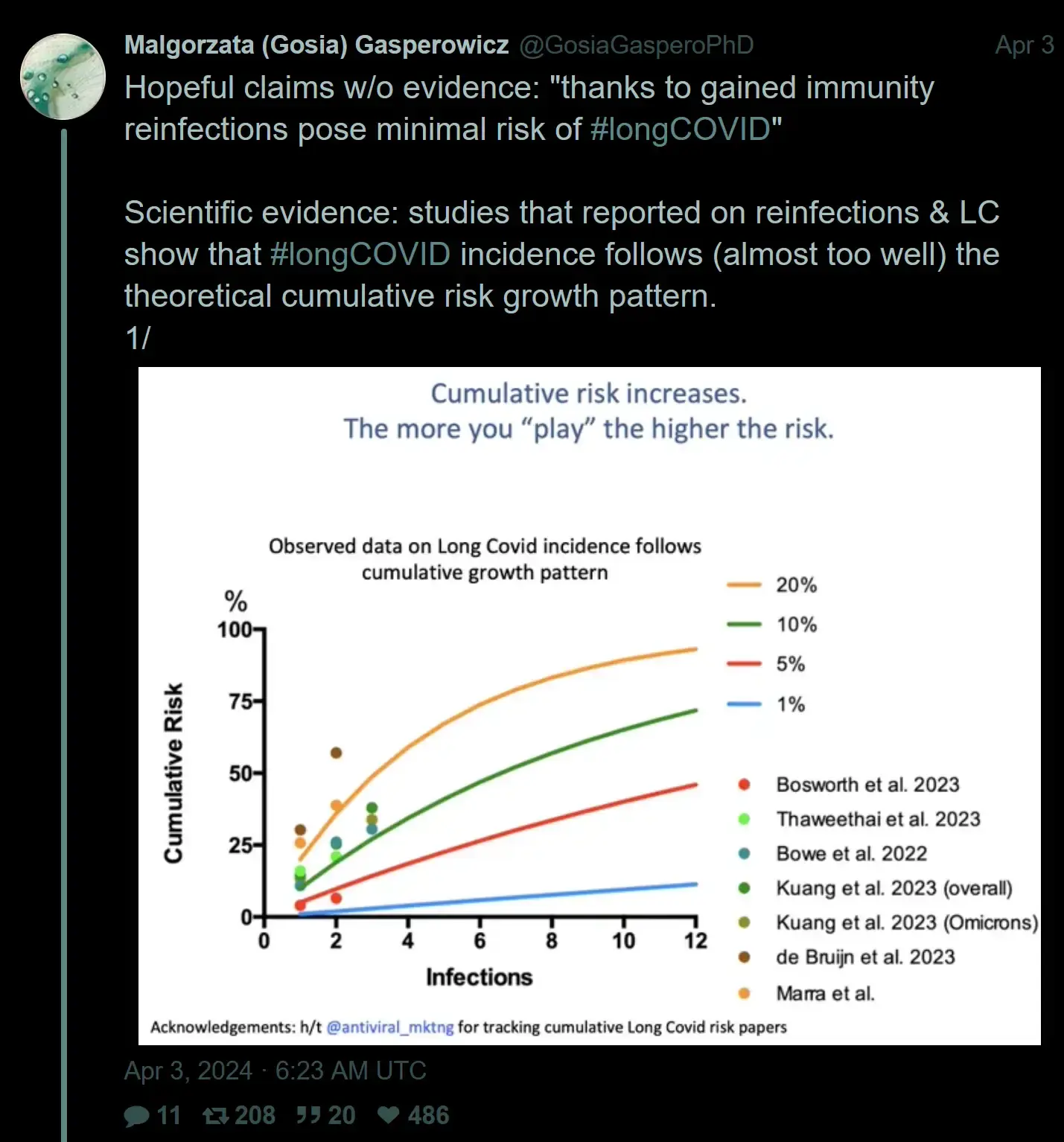
The best we can say is that some people who get long covid will feel better within a year, and all current data points to covid having cumulative risk. Everytime you get covid, your risk of long term symptoms goes up.


Four years late. They knew it was airborne at the start and it took them four years to release this info. They could have prioritized upgrading indoor air in busy public places, but nah, better to just throw money at millionaires and hope something sticks. They opened up schools which were unsafe (rich schools had air filtration installed so the important people were protected) and they did it specifically to spread the disease after the vaccines were available, chasing the "herd immunity" fantasy. Maybe that's not working out as well as they thought it would?

The guidance emphasizes the importance of bringing in fresh outdoor air and ensuring that air conditioning and heating systems are operating properly, preferably with filters rated MERV-13 or higher. It also describes other steps that can be added, including air circulation, proper exhaust venting, air cleaners, and ultraviolet air treatment.

So HEPA filters, far-uvc, CR-Boxes are all a good idea. Small anecdote, but I have a couple CR-Boxes I set up and ran them when someone in my house was sick, and it never spread to me. A very rare occurance pre-pandemic.

Some co-workers and I have been advocating for proper air filtration for years now, and have basically been treated like kooks because the CDC has dragged their feet on this. Maybe now they'll listen to us?


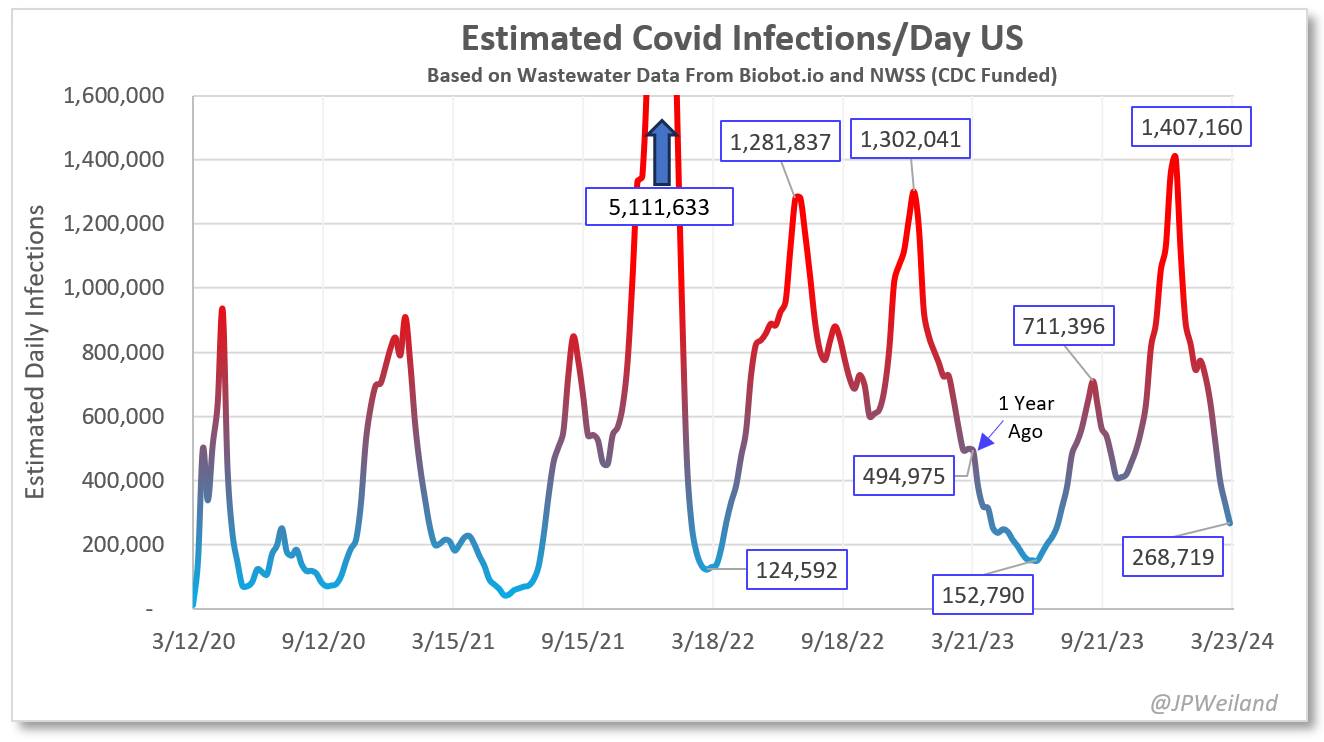
According to JPWeiland's twitter account:

🔸270,000 new infections/day 🔸~2.75 avg total infections per capita across the US 🔸1 in every 124 people currently infected

This is considered low? lol, we're fucked.

Covid wastewater levels where I am dropped to the lowest recorded since they started keeping track just about a year ago, and still we had a couple people get covid where I work last week, so it's still going around depsite that. Your town may vary. Still, it seems like it will be a little less precarious for the next couple months for what that is worth.


This is a pretty good video on the latest research on long covid.

Some takeaways:

CDC estimates 40 million people had long covid, and 15 million still do. 5 million people dropped out of the workforce because of it.

While studies on long covid can have huge lists of potential problems, they all fall into three main groups., the first two are better to be considered post-covid conditions and not necessarily long covid, because they are detectible. (I don't know if these distinctions apply to the 40 million people who had long covid, or if the CDC lumps them all together.)

  1. Detectable organ or tissue damage
  2. New chronic illness after infection (diabetes, stroke, etc)
  3. Mystery symptoms!

The mystery symptoms are what they consider long covid. There are no simple tests anyone can do to confirm you have long covid. There is research into possible causes like microclots, autoimmunity, etc... but it's still in early stages.

Even though they don't know what exactly causes long covid there are two signs that seem to always show up:

  1. Neurologic Inflammation (decreases blood supply to the brain). It can extend down to peripheral nerves and disrupt your heart rate and other fun stuff.
  2. Exercise causes extreme fatigue due to poor oxygen utilization. It's there, in the blood, but for some reason it's not being absorbed or transfered to where it needs to be. Since the oxygen is not reaching the parts of the body it needs to.

The only good news is that it seems like 60% of people get better after 1-1.5 years. We've all got enough savings to cover a years and a half worth of expenses if we get unlucky and get bopped with long covid, right?

What frightens me are the potential blood clots. Didn't Michael Brooks die due to a freak blood clot in his lungs or something in 2020? Didn't Matt Christman have a stroke last year? Those both may have been unrelated to covid (maybe matt was just doing coke), who knows, but isn't it a bit unusual for young people to get blood clots out of nowhere? When shit like this happens it's usually several weeks to months past the acute stage, so it's likely overlooked in a lot of cases and chalked up to "sometimes bodies just do that shrug-outta-hecks ".


CDC data shows nearly 18m people could be living with long Covid even as health agency relaxes isolation recommendations

Some 6.8% of American adults are currently experiencing long Covid symptoms, according to a new survey from the US Centers for Disease Control and Prevention (CDC), revealing an “alarming” increase in recent months even as the health agency relaxes Covid isolation recommendations, experts say.

That means an estimated 17.6 million Americans could now be living with long Covid.

“This should be setting off alarms for many people,” said David Putrino, the Nash Family Director of the Cohen Center for Recovery From Complex Chronic Illness at Mount Sinai. “We’re really starting to see issues emerging faster than I expected.”

When the same survey was conducted in October, 5.3% of respondents were experiencing long Covid symptoms at the time.

The 1.5 percentage-point increase comes after the second-biggest surge of infections across the US this winter, as measured by available wastewater data.

  1. There is no cure for long covid. Sometimes symptoms get better with time, sometimes they don't. Reinfections can make everything worse, or destroy any progress you've made in getting better.
  2. Covid can effect systems in the entire body, so persistant symptoms could be anything and everything going wrong.
  3. Follow long covid communities and you will realize a lot of doctors are arrogant assholes and will likely imply you are fat and/or lazy and need to get more exercise and change dietary habits before they admit "a cold" could be causing new debilitating onset symptoms after an infection.

The rate of adults currently experiencing long Covid has not been this high since November 2022; the greatest height since CDC began tracking the illness was 7.6% in June and July 2022.

So the rate of long covid went from 7.6% in mid 2022, to 5.3% in october 2023. At which point minimizers took it as great news that the virus was "mild now" and the "immunity wall" was working. Now it's gone up to 6.8%. Nevermind the problem of underdiagnosing covid because we stopped testing requirements in mid 2023 because the emergency was declared over. You can be certain this is missing a lot of people who just assume it's just age, or lack of exercise, or "sometimes bodies just do that".


German man got 217 COVID shots over 29 months—here’s how it went

It conflicts with concerns of repeat boosters, but authors warn against hypervaccination.

A 62-year-old man in Germany decided to get 217 COVID-19 vaccinations over the course of 29 months —for "private reasons." But, somewhat surprisingly, he doesn't seem to have suffered any ill effects from the excessive immunization, particularly weaker immune responses, according to a newly published case study in The Lancet Infectious Diseases.

The case is just one person, of course, so the findings can't be extrapolated to the general population. But, they conflict with a widely held concern among researchers that such overexposure to vaccination could lead to weaker immune responses. Some experts have raised this concern in discussions over how frequently people should get COVID-19 booster doses.

In cases of chronic exposure to a disease-causing germ, "there is an indication that certain types of immune cells, known as T-cells, then become fatigued, leading to them releasing fewer pro-inflammatory messenger substances," according to co-lead study author Kilian Schober from the Institute of Microbiology – Clinical Microbiology, Immunology and Hygiene. This, along with other effects, can lead to "immune tolerance" that leads to weaker responses that are less effective at fighting off a pathogen, Schober explained in a news release.

My guess is that his t-cells are fine because he's had constant antibodies so the t-cells haven't had to mop up anything, and also it's not a live virus. If you are living life like it's pre-covid times, you're most certainly being constantly exposed to covid anyway.

If you aren't over 65, or immunocompromised, and you find a way to get two vaccines a year, you'll probably be fine. People doing this have had mixed results in regards to how the 1-per year recommendation is being enforced and the CDC official covid advice is now "fuck it, do whatever, yolo", so why not?

If you got an MRNA in the fall, maybe try novavax for less side effects and a slightly different spectrum of protection.


dem

How COVID-19 leaves its mark on the brain

Here are some of the most important studies to date documenting how COVID-19 affects brain health:

spoiler

  • Large epidemiological analyses showed that people who had COVID-19 were at an increased risk of cognitive deficits, such as memory problems.

  • Imaging studies done in people before and after their COVID-19 infections show shrinkage of brain volume and altered brain structure after infection.

  • A study of people with mild to moderate COVID-19 showed significant prolonged inflammation of the brain and changes that are commensurate with seven years of brain aging.

  • Severe COVID-19 that requires hospitalization or intensive care may result in cognitive deficits and other brain damage that are equivalent to 20 years of aging.

  • Laboratory experiments in human and mouse brain organoids designed to emulate changes in the human brain showed that SARS-CoV-2 infection triggers the fusion of brain cells. This effectively short-circuits brain electrical activity and compromises function.

  • Autopsy studies of people who had severe COVID-19 but died months later from other causes showed that the virus was still present in brain tissue. This provides evidence that contrary to its name, SARS-CoV-2 is not only a respiratory virus, but it can also enter the brain in some individuals. But whether the persistence of the virus in brain tissue is driving some of the brain problems seen in people who have had COVID-19 is not yet clear.

  • Studies show that even when the virus is mild and exclusively confined to the lungs, it can still provoke inflammation in the brain and impair brain cells’ ability to regenerate.

  • COVID-19 can also disrupt the blood brain barrier, the shield that protects the nervous system – which is the control and command center of our bodies – making it “leaky.” Studies using imaging to assess the brains of people hospitalized with COVID-19 showed disrupted or leaky blood brain barriers in those who experienced brain fog.

  • A large preliminary analysis pooling together data from 11 studies encompassing almost 1 million people with COVID-19 and more than 6 million uninfected individuals showed that COVID-19 increased the risk of development of new-onset dementia in people older than 60 years of age.

covid-cool

Here's another article from Eric Topal summarizing some of these studies showing significant brain damage: Long Covid and Cognitive Deficits

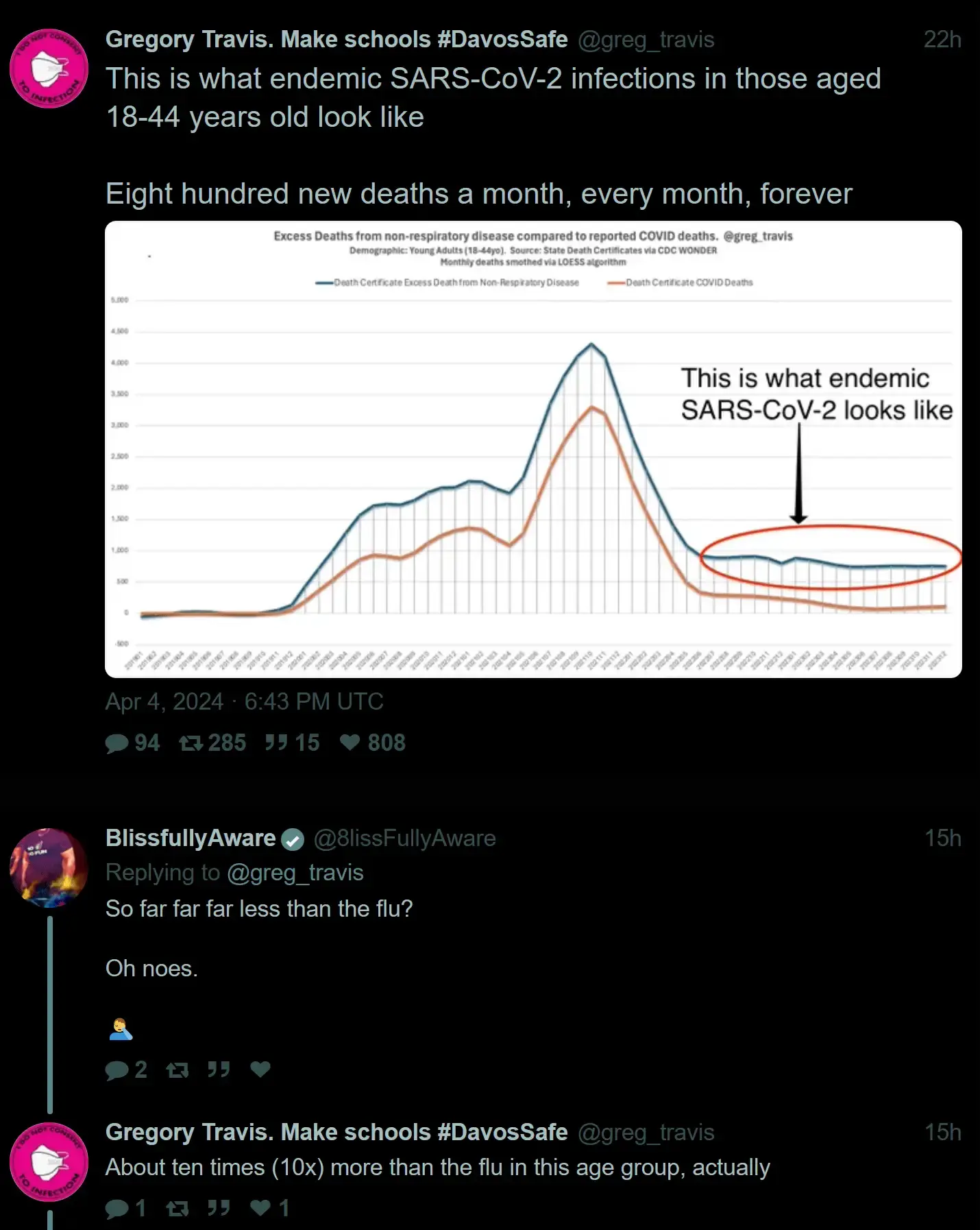
Whenever you run across a story about how kids these days are dum-dums with behavior problems, keep in mind that we lied about how little covid effects them so as a population kids are undervaccinated and were basically used to infect the rest of the population pursuit of "herd immunity" through repeated infections.


Mortality data of the past four years show a wave of deadly cardiovascular and metabolic illness.

From 2020 to 2022, a quarter of a million more Americans over 35 years old succumbed to cardiovascular disease than predicted based on historical trends, according to Bloomberg analysis of data from the Centers for Disease Control and Prevention. In 2023, age-adjusted stroke mortality was almost 5% above pre-pandemic levels, according to preliminary data, while rates from deaths related to hypertensive heart disease, rhythm abnormalities, blood clots, diabetes and kidney failure were 15-28% higher. Covid had a muted impact on other common causes of death such as cancer and Alzheimer’s disease, the data show.

“The cardiometabolic aftereffects of SARS-CoV-2 have been profound, persistent, and peculiar — really peculiar,” said cardiologist Susan Cheng, director of public health research at Cedars-Sinai’s Smidt Heart Institute in Los Angeles.

frothingfash vaxxed?

Greater immunity and the emergence of less severe variants have since lowered the incidence of deadly complications, but the problem hasn’t gone away. Each coronavirus infection a person experiences, no matter how mild, might be acting like its own cardiovascular risk factor, she said. The longer-term effects are even more mysterious.

Doctors in the article are puzzled about if the cause is because Americans are too fat, or "the lockdowns" (not the hospitals being flooded with sick people for months at a time) caused people to avoid doctors, while noting that the healthcare system itself broke down and has made it harder for people to find care in the first place ever since. Could it be that these "less severe" variants are still causing heart problems? Gosh, maybe, but it's just a big ol' puzzle and no one can be sure of anything yet.

reddit-logo threads on this article are full of people describing the new heart conditions they developed after getting covid.


 

This is a good overview of long covid, and what we are trying to avoid.

From an extensive body of mechanistic research in people affected by Long Covid, there appear to be multiple potential pathogenic pathways, including persistence of the virus or its components in tissue reservoirs; autoimmune or an unchecked, dysregulated immune response; mitochondrial dysfunction; vascular (endothelial) and/or neuronal inflammation; and microbiome dysbiosis (2). In people with severe COVID-19, systemic acute infection can arise in which SARS-CoV-2 replicates in pulmonary and extrapulmonary tissue, and its genomic RNA may persist for months in multiple sites, including the brain and coronary arteries (3). To what extent this happens in milder cases and whether this contributes mechanistically to Long Covid is not yet clear. SARS-CoV-2 may also reactivate dormant viruses, including Epstein-Barr virus and varicella zoster virus, as well as lead to gut-brain and neuroendocrine dysfunction, mitochondrial dysfunction, and impaired coagulation (4, 5) (see the figure).

covid-cool

Preventing infections and reinfections is the best way to prevent Long Covid and should remain the foundation of public health policy. A greater commitment to nonpharmaceutical interventions, which include masking, especially in high-risk settings, and improved air quality through filtration and ventilation, are requisite. Updating building codes to require mitigation against airborne pathogens and ensure safer indoor air should be treated with the same seriousness afforded to mitigation of risks from earthquakes and other natural hazards. Reducing the risk of serious outcomes after COVID-19 and some prevention of Long Covid can be attained with vaccination of a wider spectrum of the population. Given the dwindling appetite for COVID-19 boosters, strategies to improve uptake (e.g., pairing it with the annual influenza vaccine) may be effective. Development of more durable, variant-proof vaccines that are not vulnerable to evasion by the ever-mutating virus needs to be accelerated (12). Nasally or orally administered vaccines that induce strong mucosal immunity to block infection and transmission should be pursued, and there are preliminary supportive data from clinical trials (10). It is also necessary to broaden the pipeline of SARS-CoV-2 antivirals, especially because of rising resistance (13).


The World Trade Organization has failed to reach an agreement to waive intellectual property rights on Covid-19 tests and treatments for poorer countries.

Members of the Trade-Related Aspects of Intellectual Property Rights (Trips) council said it could not reach consensus after years of discussion, despite the “considerable efforts” of members.

Campaigners said the news was a “slap in the face”.

Research published last year found that more than 50% of Covid deaths in low and middle-income countries could have been avoided if people had the same access to vaccines as wealthy states. According to data published by the World Health Organization in January 2023, 75% of people living in high-income countries have been vaccinated compared with fewer than 25% in low-income states.

“Clearly, to the governments of rich countries, protecting the monopoly profits of pharmaceutical companies was more important than saving lives in the global south,” said Mohga Kamal-Yanni, the policy co-lead for the People’s Vaccine Alliance, an organisation advocating for equitable medicine access across the world.

international-community-1 international-community-2

The international community will continue to use covid to cull the population of the global south.


Before a recent hospital visit, Christine Link requested that her healthcare providers wear masks because of her autoimmune disease and medications that further suppress her immune system. A phlebotomist initially refused her request, leaving her feeling “shocked, scared.”

Escalating her concern to the Mass General Brigham’s patient advocacy office, she received this response: “While the request by a patient to an employee to wear a mask is not an ADA-related accommodation, it is a patient-centered and trauma informed best practice, and we encourage patients to make this request with the provider who is ordering the testing. The provider would determine if it would be in the patients’ best interest clinically to have staff wear a mask while interacting with the patient. Then they would need to communicate the decision to all staff providing services to the patient, such as phlebotomy staff.”

The patient advocate’s response left Link feeling, “foolish for thinking that Mass General Brigham would actually care enough to follow the law regarding reasonable accommodations. Instead I was gaslit about my needs.” She added, “Each time I have an in-person appointment, I have to go through being made to feel as less than any other human being as a result of my disabilities, bullied, and forced into unsafe care as a condition of getting the healthcare I need.”

Link is not alone. She is one of the many patients who reached out to tell me about how the refusal of this simple ADA accommodation is ruining their lives. One of the most worrisome bits of fallout is that many patients now fear they will get Covid-19 in the hospital or medical office. They are delaying getting medical care, including cancer screening and infusions of drugs, putting off vital appointments. This risks seriously damaging their health.

Fuck this piece of shit country.

view more: ‹ prev next ›