DIY

3665 readers
1 users here now

Share your self-made stuff and half-baked projects here.

Also check out !diy@beehaw.org

There is also a related XMPP chat.

founded 3 years ago
MODERATORS
1
11
submitted 2 weeks ago* (last edited 2 weeks ago) by Rolive@discuss.tchncs.de to c/diy@slrpnk.net


This is an idea that entered my mind. As far as I understood lithium ion batteries still need oxygen from the air to burn.

They don't provide their own oxidizer IIRC but they do reignite when left to dry because they rapidly build up heat again. Please correct me if I'm wrong.

Edit: I was wrong: https://www.sciencedirect.com/science/article/pii/S2352152X24008739

The cathode breaks down into oxygen among other things.

Would it make sense to have a lithium ion battery inside an airtight enclosure and fill it up with nitrogen? This way the only source of oxygen is from the decomposing cathode but that should react away quickly. The fire will be much less intense than in regular air. Assuming the enclosure holds.

Is this a silly idea? Is it even worth doing?

2


By way of thanks I offer pictures of this crazy job. I ended up having to run a hose into my house to soak the dryset quickerete. I don't care what anyone says I'm not mixing cement in my house. The whole slab is supported on top of 2" floor insulation on top of a leveled bed of crusher dust.

Addition photos in comments

3


I just saw this "Billyboil" brand "Thermal Cooker" for sale at an energy-efficiency store. Initially I was intrigued by the terrible marketing (what on earth would be a "Non-Thermal Cooker"?) but the concept of using retained heat interests me.

The idea is, you have two pots - an inner one that goes on the stove-top, and an outer one that has extremely high insulation. You heat up the inner one on the stove until it reaches the desired temperature for what you are cooking, then turn off the stove and put the inner pot into the outer one and seal it up. Ideally, the high insulation of the outer one will slow leakage of heat for hours, and so the food in the inner pot can continue to cook from its retained heat with no further energy input required.

That model costs AU$150, and I was thinking that this should be also feasible with other, cheaper containers - you would need to find a pair that complimented each other:

  • Inner stockpot with small handles that don't stick out, or better a compact camping pot with folding/removable handles.
  • Outer insulator which is large enough to completely enclose the inner pot, made of materials which won't melt or burn when a hot object is put inside, and with insulation effective enough to retain enough heat to keep the food cooking.

Seems like the outer one would be most difficult to find, maybe a large vacuum-insulated metal thermos would work, but it would need to be big enough to contain the inner pot.

Has anyone seen or tried a similar project? I wonder how it would compare to a pressure cooker in terms of input energy required to make what would be 1 or 2 hour stew in a "normal" pot.

4


Hey all, thanks for the replies and comments so far, I've cleared out as much as I'm willing to at the moment, I've started hitting mainly clay and stone and I'm getting a fair amount of water in the clay (is it possible this dirt is actually attached to outside dirt?)

Anyway, 2 pipes visible in front of the clean-out opening, one large pipe visible out the back side, both seem to go right into the wall of the concrete lower lip

At this point my thought is backfill with clean gravel and install a thick foam board as others have suggested, possibly with concrete poured on top once I'm comfortable that will be ok, maintaining access to the clean-out somehow

But any advice is welcome

5


Hey, I've got a cold room in my place that is concrete on all sides, I'm going to be framing it in and insulating and I don't really need any help there unless there's anything cold room specific I should know, however.

As you can see I have a floor that appears to be a stepped concrete pit, filled with quite a lot of dirt, and what I believe is probably a tie in to the sewage drain.

Can I just get rid of the dirt? The whole room spells like petrichor because of it.

Assuming the pit continues to step down, can I just build the floor over it regardless, and do I need to support the pipe in some way if the dirt is removed?

Or, if I'm completely off base please let me know what I should be doing.

Thanks

6


cross-posted from: https://lemmy.ca/post/54746362

I was burning a cone incense and left it on the sink, and this stain won't come off. I tried baking soda, water, vinegar, hydrogen peroxide. I tried letting them sit for multiple interations, and it made no difference.

7


My enameled cast iron was leaving sharp little blue flakes around, so I decided it was time to take off the enamel. I tried a brass drill brush first, which only dislodged the loosest flakes. Then I got the cheapest Harbor Freight needle scaler ($40), and it worked great.

My small compressor couldn't really keep up, but working 30s at a time gave me time to grab the drill brush and clean up the exposed iron.

Washed, dried, seasoned, and ready for use. (I didn't bother with the lid, which isn't in as bad shape.)

8
21
18650 battery pack 16s2p design (imgur.artemislena.eu)
submitted 1 month ago* (last edited 1 month ago) by Rolive@discuss.tchncs.de to c/diy@slrpnk.net


This is a design I'm working on. The idea behind the wave pattern is so that they can be stacked without losing all too much space compared to rectangular cell packs.

I'm putting a 60C thermal fuse in between each cell pair. Should a cell overheat, the fuse will pop and render the pack useless. This is an additional safety feature on top of a BMS and periodic manual checkups with a thermal camera.

The idea behind all cells pointing upwards (positive facing up) is also a safety feature. Should one start to vent or catch fire the flames will go up immediately triggering an extinguisher above the cell pack.

Let me know what you think! I'm not finished with it yet but if you want the design files already let me know I'll send them to you.

Edited with a deshittified version of imgur.

9
10
42
Cool Project? (www.opensourceecology.org)
submitted 2 months ago by coffee_tacos@mander.xyz to c/diy@slrpnk.net
11


So, I had the stupid/great idea to Upgrade my halloween costume. I think it's going to take at least a year's work. I want to take my bike and turn it into a pirate ship. I also recognize that I'm not quite proficient at all of the tasks ahead of me so I thought I'd ask y'all if you had any advice. I'm at the drawing up plans stage. Here's what I've got:

I plan to take a generation one electric terratrike rambler and make a "little" removable shell i can clamp to it, remove it every year &c. for halloween that looks like a small pirate ship i can ride around the neighborhood and give out candy. they, not mine, look like this but i've got more neat shit on minei'll let you guess what my costume is.
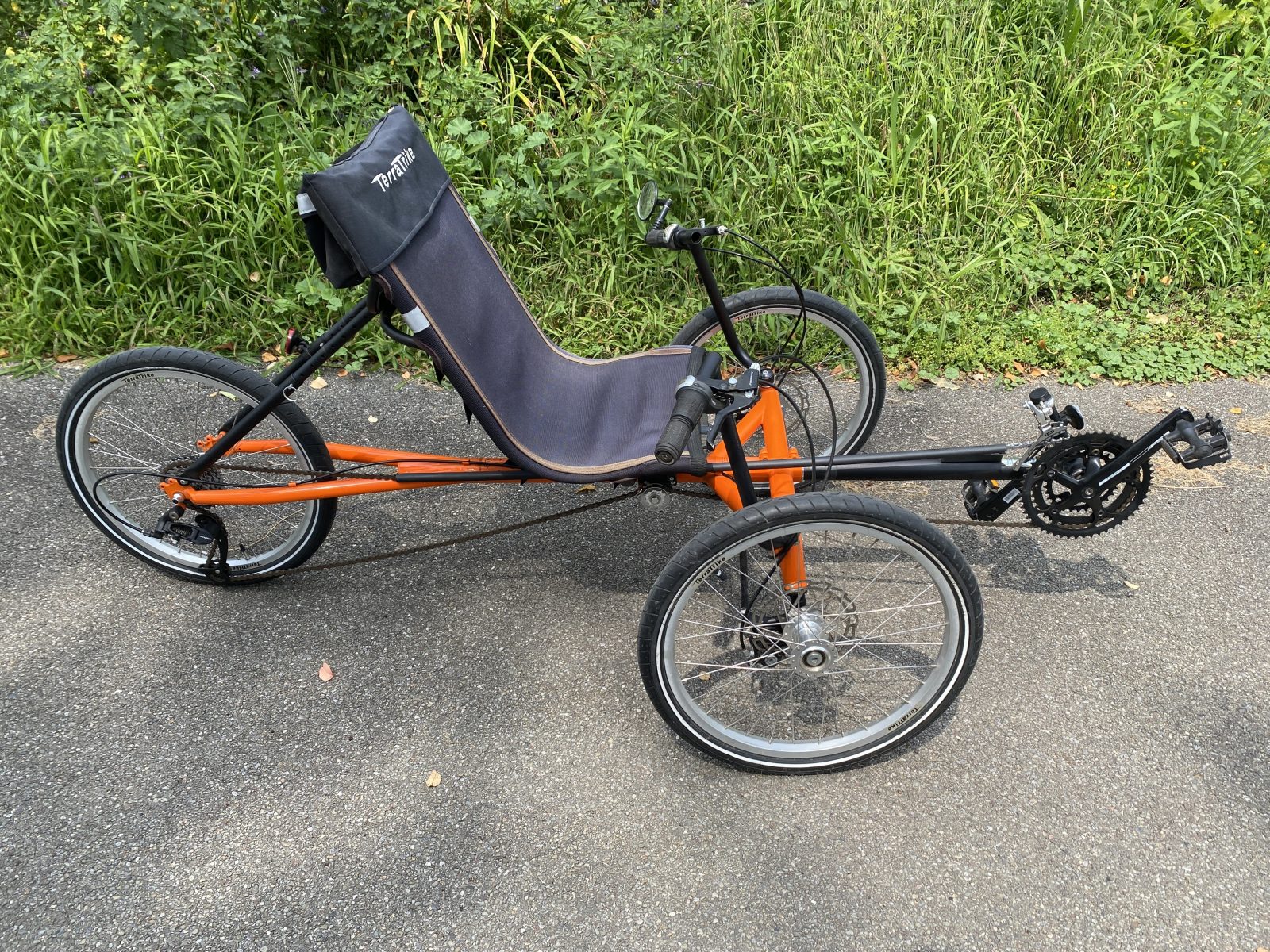
so here's a crude mockup of what my trike looks like:
crude mockup of trike

now here's a basic idea of what i'm planning on doing: crude mockup of trike with a boat shell

my first thought for that purple frame outline is to get some PVC, bend it the shape i want, put some cardboard on, paint on some fiberglass, once it's dry sand it and paint it like an old timey boat. attach it with some struts and clamps of some sort i'm sure i can frankenstein together in the back and front, fuck pedaling while it's together just run off the electric. have my crate in the back be the poop deck, maybe put a mast in where my headrest is i dunno.

so: any tips with the fiberglassing? see anywhere I'm going wrong? I've never done anything like this before, it just looks fun.

12


Thinking about making myself a Jankó pad controller, and I thought the cheapest and easiest way would be like those velocity sensitive rubber pads usually found on drum machines and samplers.

I remember some forum posts about DIY-ing these kind of conductive rubber dome switches, so it must be possible somehow with the right kind of chemicals...

13


Super easy to make, and holds a phone super well

14
15


Hello, Lemmy,

I had been posting here about my basement build for the last few years. I had been using a different account, but then that instance folded and I became a refug.ee.

The current phase of my man cave is basically done. Phase one is two bedrooms, a bathroom and a kitchen. I have this corner of the kitchen I am not sure what to do with. Its in between a sink base, an upper cabinet, and wall. Its about 20 in wide and there is 66 inches of clearance from the floor to the cupboard.

I already have a decent enough place for my garbage can. I was thinking maybe a tall thin cabinet for brooms? or maybe a chest of drawers for my kitchen implements?

Any ideas?

16


Today I noticed a wasp coming and going in my living room. More precisely, it goes into the wall just next to the light. There is not too much room there and I don't really have visibility, so I can't tell what this wasp-like insect is doing there. Also, even tho I think it's one, maybe it's one at a time? Not sure.

I did check some videos on the topic and maybe this could be the beginning of nest? Since, I wouldn't want something like that in my home, I am looking for ideas on how to deal with this. It seems like a tricky spot to me due to the electric wires connections, in the sense that spraying something there could be dangerous.

Anyways, if you have experience and/or ideas on what to do, please help!

17
33
submitted 3 months ago* (last edited 3 months ago) by xylol@leminal.space to c/diy@slrpnk.net


I recently got a little tablet laptop, and learned that over thunderbolt you could plug in a GPU with a little dock board.

My desktop had a liquid cooled GPU so it became a whole thing to get it out and dockable.

I always wanted to mess with 2020 aluminum extrusion so this was my chance.

Its been a couple weeks work at this point and I'm in the home stretch. I have it running now so its just about tidying up and finding a good way to mount the acrylic panels after doing a final coolant flush

I also wanted to say thank you to all the comments from my last post when i first got my mitre saw for this project. it really made me be cautious when making my cuts, I always took my time clamping my pieces down and then going through the motion of making the cut with the saw powered off before making the cut https://leminal.space/post/24432635

18


I recently started setting up an intercom system between my workshop and the kitchen using a pair of antique Leich 901 telephones.

These are old local battery, crank/magneto phones originally intended to be used on small co-op networks (sometimes run over barbed wire!) or other odd uses. Each one has a crank which generates AC to ring all the phones on the circuit, and a talk battery (usually in a separate case) to power it as it was assumed houses didn't have electricity.

I've been able to get them talking following these guides:

https://www.valhallatreefarm.com/magneto%20phone/phonemagneto.htm

https://www.classicrotaryphones.com/forum/index.php?PHPSESSID=5c899c410c9abe5eb18fde4aa5ed41de&topic=17372.0

Now I'm planning my next steps, which include setting up a nice display panel for the workshop phone (partly to make hanging it on the wall a bit easier).

One of the things I'm thinking of is adding a small voltmeter to the voice line, like in this picture:

From their description of "When you speak, the needle moves rapidly like a VU meter!" I was assuming it's a 0-5 Voltmeter (maybe something like this) but Im worried about the AC ringer power coming down the same line.

According to the best guide I've found: "It should put out about 75 Volts AC when vigorously cranked." While the talk battery is only 4.5 Volts DC.

I have some huge holes in my understanding of electricity (especially considering how often I mess with it) but I'm worried an analog 5v Voltmeter wouldn't like 75 volts. I've read Voltmeters are supposed to be higher resistance than the circuit they're measuring. Does that protect it in a situation like this? Otherwise is there a way to safely set this up? Bonus points: is there a way to rig a light that blinks or flickers using this circuit in case I can't hear the ringer over tool noise and earpro?

Thank you very much!

19


Turns out the rattling was coming from the heatshield of the DPF so I spent a day replacing a part which wasn't even the source of the issue. Well, atleast I've got a new exhaust now and did some underbody rust prevention while I was at it.

20


Recently I got a little tablet laptop which led me down the path of eGPU's, which led me down the path of aluminum extrusion which led me to looking for a mitre saw. Now that I have it and have been learning more about what it can do I'm super excited!

21
22
23


The guys at Flow Battery Research Collective have been designing a Redox Flow Battery development kit that you can build yourself using a 3d printer and a few tools. It's a desktop size flow battery that you can use to either do your own research, e.g. on different electrolytes or just to replicate their experimental findings.

Redox Flow Batteries have the potential to become grid scale or home electric energy storage solutions that are way better for the environment than current lithium based batteries. They can often scale power and capacity independently and allow for repairs.

The FBRC project wants to spread the knowledge on RFBs and help kickstart a global community that develops sustainable energy storage technology in an ope source fashion.

Beware that the project is still in its infancy and sourcing the materials can be a bit of a challenge. Be sure to ask around in the forums for help!

24
15
Numechron Digital Clock (www.instructables.com)
submitted 5 months ago* (last edited 5 months ago) by Blair@slrpnk.net to c/diy@slrpnk.net


I came across these instructions to make a Numechron Digital Clock almost completely out of wood, and I thought it was beautiful so wanted to share.

If I can figure out how to add a chime (and how to build the parts without a CNC) I really want to try this.

25
view more: next ›