
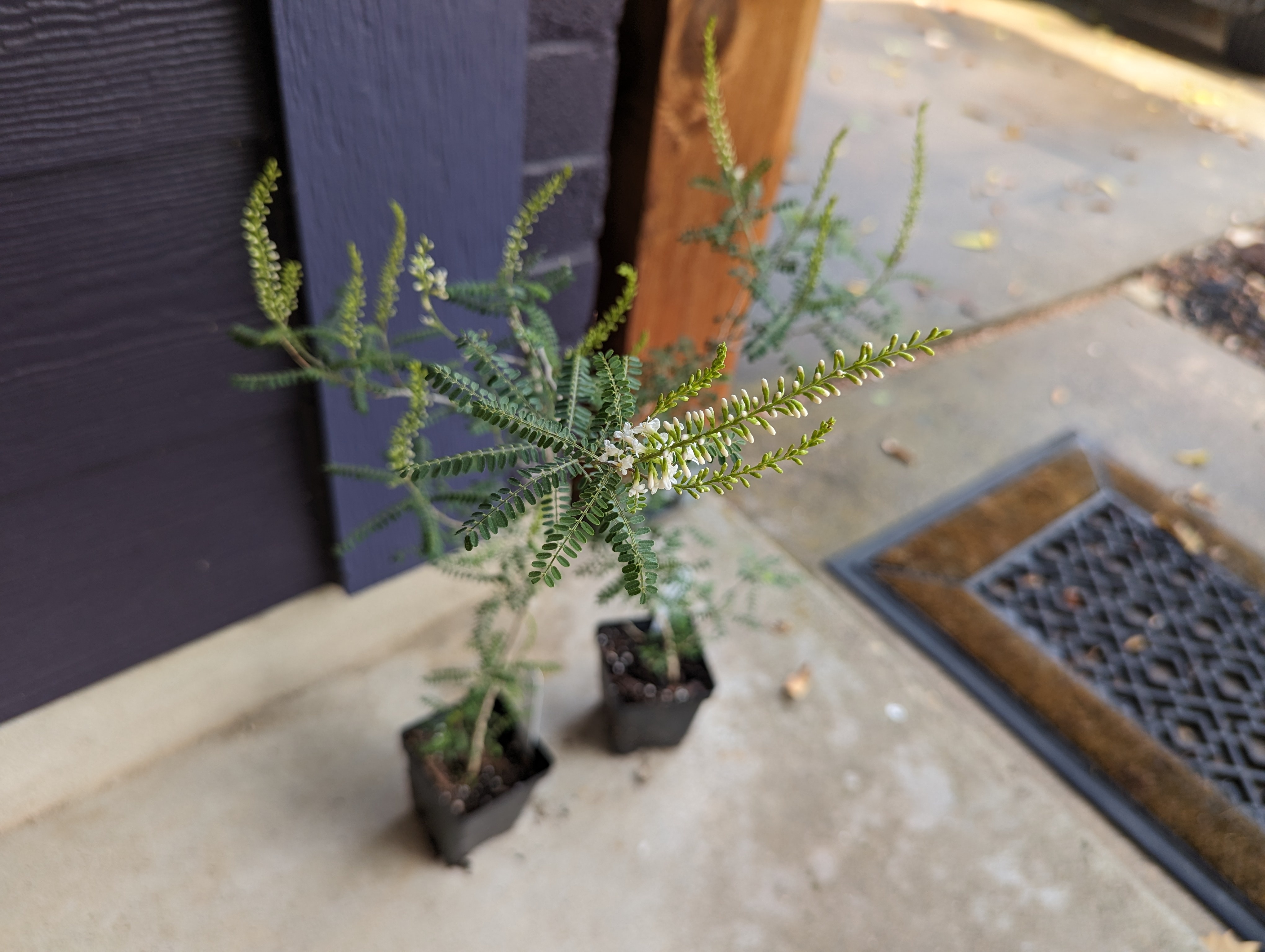
they do look like young gangly specimens of the Senegalia drawing on Wikipedia
they’re technically “neighbors” to acacia – senegalia, acacia, mimosa, and mesquite are all part of the Mimosoid clade

Notice Board
This community is a work in progress, stay tuned while we build the ID bot and set up shop.
About
Whether you're seeking help with identifying a particular plant or eager to share your own findings, our community is here to offer support and foster a love for exploration. We believe in collaborative and inclusive learning, providing guidance, and celebrating the joy of discovery as we deepen our understanding of the natural world.
Rules
The Bot
How to Use:
Tips:
Open Source Code:
Get involved in Citizen Science: Add your photo here to help build a database of plants across the entire planet. This database is used by non-profits, academia, and the sciences to promote biodiversity, learning and rewilding.
Resources
See the sidebar at !houseplants@mander.xyz for a more detailed list.

DM us to add yours! :)
they do look like young gangly specimens of the Senegalia drawing on Wikipedia
they’re technically “neighbors” to acacia – senegalia, acacia, mimosa, and mesquite are all part of the Mimosoid clade
I agree they have a similar form, but the flowers on these seem very different from any Texas native Senegalia species I've found. That drawing on the Wikipedia page shows the kind of spiky flowers they all seem to have, where these each have 5 rounded petals (see pic in comments)
 Close up of flowers
Flowers are not compatible with any mimosoid.
I think it’s an Eysenhardtia but not certain on the species.
Genius! They're totally Texas kidneywoods