fixing

925 readers
1 users here now

Celebrating/talking about repairing stuff, the right to repair stuff, and the intersection of tech and solarpunk ideals.

What does it mean to use what we have, including technology, to try to build a better, more environmentally just world?

founded 3 years ago
MODERATORS
1
2


The thermostat is dead in my strange¹ fridge with no replacement parts. I posted about the mystery component before.

There is a metal plate that appears to sandwich a single small loop of refrigerant (guessing!). Mounted attached to the backside is a coil with a ground and two wires marked to handle 220v. One of the leads connects to the LOAD wire on house mains and the other to the (now broken) thermostat.

I can only imagine that it’s a heating element for defrosting (as suggested). But I struggle a bit with that theory because I’m surprised the fridge would ever get cold enough to justify defrosting.

Anyway, I wired the mystery coil directly to mains and left it for 10 min or so. The temp of the metal plate did not feel any different. Is that expected? Metal is naturally cold at room temp and that did not change.

I would like to understand it because I cannabalised a simpler t-stat from another fridge. The t-stat has no connector for whatever the mystery component is.. it’s just a switch that connects two wires. I don’t know if I should just omit the mystery component, or if I should wire it in series with the new t-stat, or keep it attached to the old broken t-stat and wire that in parallel to the new t-stat.

¹ I say strange because there is no freezer-fridge vent. So the fridge is independently cooled.

3
14
submitted 1 month ago* (last edited 1 month ago) by dudesss@lemmy.ca to c/fixing@slrpnk.net


I was burning a cone incense and left it on the sink, and this stain won't come off. I tried baking soda, water, vinegar, hydrogen peroxide. I tried letting them sit for multiple interations, and it made no difference.

4


Either the relay is broken or the thermostat. I know this because I could force the fridge to run by hotwiring 220V across the common and run pins then briefly jumping the start pin to the run pin (thus sending 220V through the start winding for a split second).

The thermostat assembly has too many wires to know what to measure resistance on. But I figure that the thermostat can be black-box tested simply by checking whether it sends 220v to the relay switch. There are THREE wires involved (in addition to ground). With the relay removed (thus compressor disconnected), I plugged the fridge into mains. Got these measurements:

common pin to run: 220v
common pin to start pin: 20v

I’m tempted to conclude that the start winding /can/ accept 220v (proven by hotwiring), but 20v is also sufficient to cause enough motor movement to get it started. Does that sound reasonable? Can I conclude that the thermostat works and the relay is toast?

It’s hard to be confident without a service manual, particularly when the relay¹ has continuity. The common pin goes through a cylinder marked “Klixon MRP342LZ-32Q1”, which as 0.5 Ω. The start and run pins go through what seems to be a ceramic disc having 45 Ω. Is that reasonable?

I am ½ tempted to attach the relay, bypass the thermostat, and wire the relay to mains with start-run jumped persistently. Is that crazy? I assume the relay would internally disconnect the start winding. The fridge has no fans AFAICT, so no need for anything else to have power in this test.

¹ The relay I have has part № “A 3B7 8100” printed on it, which I cannot find online. But it looks exactly like this one.

Update

I hot-wired the relay. It was non-trivial because the relay has /3/ inputs. After studying it closely, I realised that one of the inputs (apparently for the start winding) is phony. The spade connector that attaches to it ultimately goes nowhere. When connecting the remaining 2 pins to load and neutral for the house mains, the fridge started and ran just fine.

Thus I have to conclude that the thermostat went bad. And replacements are not sold. However, Amazon has what’s claimed to be a universal fridge thermostat. It’s cheap, but I boycott Amazon. I think I will wait until someone throws out their fridge. Perhaps I can just take any thermostat and make it work.

5


This thread gives some history and pics. Someone found a closely matching service manual, which is here:

https://www.how-to-repair.com/wp-content/uploads/2024/07/Beko-WMB61431B-Washing-Machine-User-Manual.pdf#page=72

That goes to the error codes, which implies that I was reading the error codes upside-down. I thought it was error code 9 but the machine apparently has error code 18. It means the “load is imbalanced”. How does it sense that? There is no load in it at all now . But it’s trapped in an error state that cannot be cleared.

Am I missing something? Because this is outrageous. AFAICT, all components work. But the control board thinks there is a fault. And there is no way to clear it and force it to run. Page 86 of the service manual says:

“Explain the customer the following unbalanced load preventive actions.”

IIUC, according to page 86, the previous user ran an unbalanced load many times in a row. They retried running an unbalanced load enough times that the machine entered a locked state to protect itself from damage. But this service manual does not give a way to reset the machine. Am I fucked?

It’s the same problem with my other Beko washing machine as well. Both my Beko washing machines are trapped in an error state that is unclearable. The secret info was not released for either machine.

6


Fridge stopped running. Both freezer and fridge do not cool. The compressor is silent and cold. Light comes on when the door is opened, so power is getting to the light and thermostat assembly.

I found no service manual for any Zanussi fridges. There is a (apparently useless) user manual for model ZD 19/4. My model is Z 19/4 D, which archive.org does not have the manual for.

Anyway, I pulled off the relay switch and took these compressor measurements:

        ° common
start °   ° run

common-run:    14.3 Ω
common-start:  19.3 Ω
start-run:    ~33.3—34 Ω

Ytubers quote values of ¼ of what I am measuring. They are demonstrating on different models of course, never my model, but they speak as if their measurements are a norm. My start-run resistence is the sum of the other two measurements, which is the one characteristic that is claimed to be correct. But are my resistences all too high? I used 2 different DMMs to confirm.

I hot-wired the common and run terminals to the house mains. It made a hum sound. Then I jumped the start winding to the run winding and the motor started. From there, it runs fine. Sounds like normal and the external coils get hot, as expected. So I assume the compressor is good and the problem is either the relay switch OR the thermostat. How can I narrow that down?

The relay measured at ~45 Ω. One Ytuber says the relay should be 0—1 Ω, so I am tempted to conclude my relay is bad. But I also have little confidence in what Ytubers say on these measurements. I have not yet taken resistence measurements on the thermostat, but when I do I expect the same problem: not knowing if my reading is good. Because user manuals withold this info.

I thought perhaps the relay is cheap enough to experiment, particularly in my case because apparently there is no starter capacitor. It’s a quite simple design. The parts shops all say the relay is discontinued, except one, who says they can get ½ a relay (it’s missing a circular part that looks like it might be the part that switches off when hot -- not sure). They want €40 for ½ a relay. Fuck me. Not worth the risk. It might be the wrong half, or my problem might be the thermostat (which is also likely unavailable).

But I have to ask, isn’t it foolish that relays are not standardized? Or is there a chance that I can hack together another relay to work? Or do generic relays exist to save these big boxes from landfills?

I could rig up a switch and a pushbutton to turn on the fridge.. then off, periodically, but that manual effort will test my tolerance.

7


I’m trying to fix a broken washing machine for which I do not know the history. It simply had a note on it: “filter needs cleaning”. The cap to access the filter was jammed by a maxi pad that got tangled with the cap arms, which I was able to clear by removing the drain pump.

So then I tried to run a program. All programs fail, even just the spin program. It pauses, then the end program light (“Einde-Fin”) LED blinks. The machine is undocumented (no user manual nor service manual), but often a soft-reset (of sorts) is a matter of holding down start/pause for 3 seconds, which I did. That gets it back into the initial power-on state, but from there every program I start goes to the fault state.

Various videos for repairing other Beko models show entry into diagnostic mode by holding the start button while turning the knob from OFF to COTTON (the first program). When I do that, it seems to give an error code (guessing!) This is in the top pic. Then after a few seconds, it goes what lower pic shows, but with the Fin LED blinking.

I am guessing that the ~3 second display is showing an error code and that it’s in binary. The top LED (1400) is lit as well as the 4th one down (a fill icon). Does that correspond to binary number 1001? Can I then assume it’s error code 9?

Can I then leap to the next assumption that error code 9 is a door latch problem? I get the impression that Beko error codes are relatively consistent across models, and one video for a different model indicates error code 9 is the door latch. Is there a way to test that without buying a door latch? I would be happy to hack it to get a false signal that the door is latched certainly just to test the machine but perhaps even on a permanent basis because no kids live here.

Seems unlikely that the machine would simultaneously have 2 problems. Whoever dumped the machine only knew of the filter problem. So I also wonder if error code 9 is really a drain fault and the machine is trapped permanently in that state as it waits for a secret sequence of steps to clear it (in which case I’m fucked because Beko will not disclose that info unless I take a hostage and even then it would have to be the CEO).

8


cross-posted from: https://lemmy.sdf.org/post/40709622

Getting burnt by repair-hostile makers of washing machines who refuse to share documentation inspired this form letter (in LaTeX):

\documentclass[DIV=16]{scrlttr2}

%\LoadLetterOption{NF}              % uncomment for French standard windowed envelope
%\LoadLetterOption{DIN}             % uncomment for German standard windowed envelope
%\LoadLetterOption{UScommercial9DW} % uncomment for US standard double-windowed envelope

\usepackage{ragged2e} % needed to restore the loss of paragraph indents when \raggedright is used
\usepackage{hyperref}

\setlength{\RaggedRightParindent}{\parindent} % restore the loss of paragraph indents when \raggedright is used
\RaggedRight

\newcommand{\appliance}{washing machine} % replace with whatever you need to buy
\newcommand{\mfr}{Machine Maker} % replace with Whirlpool, or whatever
\newcommand{\mfrAddress}{123 sesame street\\90210} % replace with mfr address

\begin{letter}{%
  \mfr\\
  \mfrAddress}

  \opening{Dear \mfr,}

I am in the market for a \appliance.
When I asked the local retailer (whose profession is to sell your products)
which \mfr\ models include service manuals, they were helpless.
Could not find a single machine that respects consumers and thus their right to repair.
Zero. Every product by \mfr\ in their showroom was anti-consumer.

There are no service manuals published on your website either. 
When looking at various second-hand models, many basic user guides were missing as well,
apparently depending on the age of the unit.

I will not buy a disposable anti-consumer \appliance.
Those are for stupid consumers.
A \emph{\bfseries good} \appliance\ meets this criteria:

  \begin{enumerate}
  \item has a \emph{good} service manual which is available to anyone, free of charge
  \item has no cloud-dependency (\emph{all} functionality accessible without Internet)
  \item has no app, OR has a \emph{good} app
  \end{enumerate}

  A \emph{good} app satisfies this criteria:
  \begin{itemize}
  \item open source
  \item requires no patronisation of Google or Apple to obtain
  \item has an APK file directly on your website or on f-droid.org
  \end{itemize}

  A \emph{good} service manual meets this criteria:
  \begin{itemize}
  \item wiring diagram
  \item parts diagram with part numbers
  \item inventory of components including the manuafacturers and models, and functional resistence ranges (Ω)
  \item error codes and their meanings
  \item steps to reach diagnostic mode and steps to use it
  \end{itemize}

Do you make any \emph{good} pro-consumer \appliance s with a good service manual, with no bad apps?
If yes, please send me the service manual and I will take your product seriously.
If not, you are sure to lose the competition.
If everyone else loses the competition as well, then I will continue washing my clothes by hand
-- perhaps with this repairable machine: \url{www.thewashingmachineproject.org}.


  \closing{Sincerely,}
\end{letter}

I suggest sending that letter to every manufacturer making machines for your region. It will get no results but it will send the message they don’t hear enough of.

9


I'm frustrated about trimmers today. I hope somebody can recognize the problem and even though the channel has been not very active I hope somebody has a direction to look into.

I have a 230v trimmer and the wire of 1.6mm. I trim grass. But the problem I get with this trimmer is that the wire snaps too often. Many times the wire is melted or clamped in the spool in which it breaks. The more this happens, the more damage to the spool which makes breaking more occuring. Now it happens every 1 minute of trimming. I probably do something not okey. I bought a new spool with original wire but the problem occurs also there Does anybody have had the same problem? It's a 250w trimmer with a very standard trimmer head.

10
7
submitted 4 months ago* (last edited 4 months ago) by toebhi@slrpnk.net to c/fixing@slrpnk.net


Crosspost from: https://slrpnk.net/post/25006653

So my Siemens Fridge has been acting weird lately. The freezer under the fridge has randomly started to cool to -30°C. The temperature is set to -18°C and the freezer actually gets back to that after reaching -30 for a while and then warming back up again. It sounds like the compressor is working almost the entire day and the temperature at the top seems to almost always display the correct temperature. Ive yet to check wether it actually reaches -30, but my vegetables in the fridge have started to freeze 🙃 Ive noticed that manually rebooting the fridge helps to get it started and I plan on doing it automated until I can fix it myself. Siemens wants 120€ just for a technician to come look the the problem and because I am a cheap college student, I'd really like to fix it myself. Is there any steps I can take to further locate the problem or should I let a technician come look at my fridge?

Its a Siemens KG25FA40/01 fridge and freezer.

Thanks in advance :)

11


Repair cafes are great for getting appliances fixed. But I think they could improve from volunteers just doing the work to a more instructional format. It’s great that you can watch them work and ask questions. It’s almost a teachng experience in that regard, but teaching is merely incidental. The repairer probes around with the DMM¹ quickly because they want to get answers quickly. Understandably so, as there is usually a line of people waiting to get stuff repaired. They don’t generally have time to explain everything.

But what if instruction were part of the goal? I would like to hang out in the workshop and watch other repair jobs and ask questions. But I get the feeling I would be in their way and slow them down. It feels like it would be unwelcome.

In principle, they could have one repairer who welcomes an audience where he describes his every move. He works slower, but ~5 or so people could learn from it. It could even be recorded and posted on peertube (not Youtube!).

Repair cafes do not accept large appliances because they are working out of classrooms and community centers on weekends, which don’t accommodate bulky things. So I have a broken refrigerator and washing machine that will not get repaired. In principle, a repairer could have a planned session and meet “students” outside to demonstrate and teach large appliance repair.

¹ digital multimeter

12
13
14
15


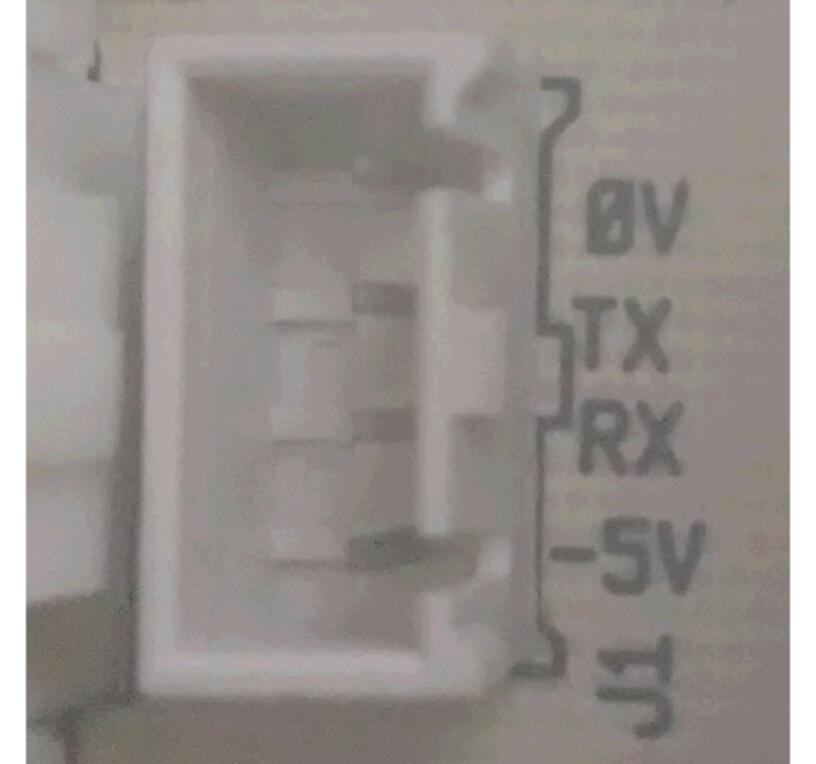
I need to connect a PC to my washing machine. The washing machine has a bank of pins labelled like this:

  • 0v
  • tx
  • rx
  • 5v

The microcontroller is an ATmega32L, which has specs for the serial connection as follows:

specsThe Universal Synchronous and Asynchronous serial Receiver and Transmitter (USART) is a highly flexible serial communication device. The main features are:
• Full Duplex Operation (Independent Serial Receive and Transmit Registers)
• Asynchronous or Synchronous Operation
• Master or Slave Clocked Synchronous Operation
• High Resolution Baud Rate Generator
• Supports Serial Frames with 5, 6, 7, 8, or 9 Data Bits and 1 or 2 Stop Bits
• Odd or Even Parity Generation and Parity Check Supported by Hardware
• Data OverRun Detection
• Framing Error Detection
• Noise Filtering Includes False Start Bit Detection and Digital Low Pass Filter
• Three Separate Interrupts on TX Complete, TX Data Register Empty, and RX Complete
• Multi-processor Communication Mode
• Double Speed Asynchronous Communication Mode

My USB to TTL serial adapter is apparently based on a ch340 chip. It looks almost exactly like the pic I attached, except mine does not have a crystal on it because I think the chip has an embedded clock. The important thing is the pins match my adapter.

My knee-jerk thought was to connect it as follows:

adapter → washing machine PCB

gnd → 0v
rxd → tx
txd → rx
3v3 → (nothing)
5v → 5v ← bad idea?

(with s1 jumped to 5v on the adapter)

Someone told me I should not connect 5v to 5v. I was assuming one connection needed 5v and the other supplied it, but I was told they are both supplying 5v, but not perfectly 5v, so the difference will strain something and cause damage.

So how should I hook this up?

update (I’m stuffed?)

I heard washing machine manufacturers often sabotage the serial ports before shipping as an anti-repair tactic. I thought my old machine might pre-date that practice, but I might be wrong. I metered TX voltage against 0v using a crappy cheap DMM. Results:

0.01, 0.00, 0.01, 0.00, 0.01, 0.00, 0.01, 0.00, … etc, every second or so.

Looked encouraging, as if there is activity. Then I metered 0v against 5v:

~~0.01, 0.00, 0.01, 0.00, 0.01, 0.00, 0.01, 0.00, … etc, every second or so.

Yikes. I was expecting that to read a steady 5v. Due to bad wiring in the house, I think that is just noise on the ground wire. And apparently the serial port is dead.

I had the two 5v lines connected to each other for a while, so it’s possible I damaged it, if not the manufacturer.~~

Update 2: I have 5v, so the port may work

It turns out I had a bad alligator clip, so of course I got a flat reading. The 5v pin on the serial port gives 5v. Thus I might have a live port. Now how do I use it?

16


Unfortunately I have excessive battery drain in the left earbud of my Sony WF XM4 set. I really like these earbuds and I am going to at least try to fix them. Has anyone here done any thing like this before?

It makes sense, honestly, that the left runs down faster than the right, I use just the left at work all day everyday and only use the right at home maybe once a week. The left lasts 2.5 hours, the right lasts six or more.

17


cross-posted from: https://lemmy.dbzer0.com/post/38015770

A washing machine is trapped in a fault state even though all the components function (AFAICT). The controller board has two ports:

  • ISP (to attach an ISP programmer to flash new software)
  • USART (4-pin serial port: 0v, TX, RX, 5v)

I’m guessing the ISP port is useless without whatever proprietary software is needed. But what can the USART do for me? Can that be used to obtain the error code and clear it, or reset the board to the factory state? Has anyone done that, without documentation?

18
19


I was never able to obtain the service manual (thread).

When I called them for repair info, they asked me if I was a consumer or a pro repair tech. I find the question disturbing. If I lie then I risk them making assumptions about my tools and perhaps willingness to pay for wiring diagrams and service manuals. They probably assume I would have access to some kind of subscription to a pro repair platform that has that info. So I admitted to being a consumer at the risk of being told “call a pro”. They asked what was wrong with the machine, then I got cut off because I ran out of phone credit (after being on hold for a long time). A glimpse of their answer before the call dropped sounded like incorrect speculation.

Google as a repair gatekeeper

I’ve watched a lot of Youtube videos. Also quite disturbed that Google is the gatekeeper of educational repair videos which it blocks me from saving a local copy of. I can only watch at the public library because I do not have an unlimited connection. So I have to memorize steps or take notes.

I don’t give a shit if Google jails viral cat videos. But Google jails knowledge, and it’s knowledge that ecocide avoidance depends on. Maybe we need some #Greenpeace sponsored peertube instances to become a go-to for repair instructions.

Error codes concealed

One of the youtubers said Beko’s PCB stores the error internally but it will not allow consumers to see the error code. Does anyone see a legit reason for this? Even if they intend to block consumer repair, consumers would still have a legit use for the code -- to have an idea of the cost of a problem before calling out a costly technician. It would also be sensible to to give the code to the technician in advance.

The Youtuber (fuck I hate that term) gave a secret sequence of steps to get the PCB to disclose the error code. The special sequence has no effect on my particular model. Different models have different secret sequences to reach the diagnostic mode, and no youtuber has covered my exact model. Similar models from roughly the same time period are covered in various non-English languages, but when I repeat the motions I do not reach diagnostic mode.

Do I have a serial port?

The PCB has unused pins labeled 5v, TX, RX, ~~9v~~ 0v. Apparently this is a serial port for an RS232 cable. What info likely comes from it? My boiler PCB has the same thing and in that case there are mere hints in the docs that it is to attach a device that transmits telemetry data over GSM. Would a washing machine have that? Or is it to attach a PC or proprietary device to get detailed telemetry data?

Secret steps to tell the machine that the fault is gone

A youtuber gave the impression that after fixing the problem (whatever it is, I still don’t know), the PCB will still think there is a fault until steps are taken to clear the error. The video ended before he explained how to do that -- although it was not my model and would not have worked for me anyway. But I have to wonder if my problem is merely a false detection of a problem. Or if it’s a real problem that I fix, is it likely that I have track down a special sequence of steps to tell the PCB the fault is fixed?

I think if I could go back in time and mention this experience to Twilight Zone writers in the 1980s, they would simply write this into an episode as-is.
20
21


cross-posted from: https://lemmy.dbzer0.com/post/36272192

My washing machine is dying in stages. It started with the same symptoms as this thread. Specifically, after filling the tub for a wash cycle, it would go straight into a high-speed spin (full of water!) for a second or two (instead of the expected slow tumble), then quit. The speculation is that the tachometer is failing.

Then the machine got worse. I now cannot even start any program. No matter what program I select, I press start and after a few second pause the start button LED just blinks. It’s a generic blunt signal of a fault. The blinks are evenly spaced non-stop, so there is no error code of any kind.

To test the universal commutative motor, I followed the linked video and took resistance measurements. All seems okay in that regard (but this is based on vague resistance ranges that are not specific to my machine). Test results:

tachometer

Expectation: any reading that is not infinite/disconnected is fine.

  • (video): 70 Ω
  • (my motor): 52 Ω

carbon brushes:

Expectation: should be in the range 1—7 Ω

  • (video): 5 Ω
  • (my motor): 3.45 Ω

field windings:

Expectation: all combinations should be 1-7 Ω

  • (video): 3.5 Ω
  • (my motor): pin1-2: 1.35Ω, pin1-3: 1.35Ω, pin2-3: 1.9Ω

I do not have whatever model is in that video, but my readings are in the range suggested by the video presenter, fwiw. I believe my testing is incomplete because I was expecting the tachometer to be bad based on the behavior.

Motor spin test (hotwiring)

My next move was to try to make the motor spin. There is no service manual or wiring diagram for my Beko. So I inspected the motor and derived these pins (quotes are labels on the PCB):

1 (field) brown socket → brown+white “stator M” 2 (field) black socket → purple+white “stator 1” 3 (field) blue socket → red+white “commu” (commutator) 4 (brush) white socket → purple+yellow “rotor 2” 5 (brush) red socket → green+red “rotor 1” 6 (tacho) yellow socket → green “tacho” 7 (tacho) yellow socket → green “tacho” 8 (ground) green+yellow socket → green+yellow

Someone suggested this wiring:

L → pin 1
N → pin 5
jumper connecting pins 3 & 4

I did not connect direct to the wall because I wanted to use the mechanical power button of the machine to turn on and off the motor (so I could quickly cut power if needed). So power took this path:

wall (220 VAC) → safety capacitor → mechanical button → motor (wiring redirected to motor instead of control panel)

When I switched it on, the motor spun for 1 or 2 seconds and I saw a white flash (I think) and the motor quit. I turned it off. Then tried to switch it on again. No response.

220 VAC quit coming out of the safety capacitor. Instead the voltage jumped around between 10 VAC and 20 VAC. So I thought I fried the capacitor or resisters therein. I checked the motor to see if any of the pins connected to ground (answer: no, so the motor was not harmed). Then I disconnected the safety capacitor and connected it just to mains and ground. 220 VAC was output (WTF.. why does it magically work again?)

I think I’m back to the state it was in before I tried to power the motor. But I want to understand why the safety capacitor apparently flashed white and temporarily died with only 10—20vac output. I need to get to the bottom of this because I still need to test the motor for more than 1 second in a way that doesn’t cause more white flashes. Is it a bad idea to have the safety capacitor in the circuit?

22
23
24


I cannot repair my washing machine without documentation. I have no idea how to use my multimeter to check the components. There are parts dealers for Beko in my area, but none of them have the service manual.

The parts shops all say go to the website for the manual as a flippant off-the-cuff answer. There are no service manuals on the Beko website -- at least not for my model. The navigation of the Beko website does not even have a path to docs. And worse, my model is treated as non-existent by the website.

What would I do if I were a professional repair service? What is the official channel?

I am open to “piracy¹” but it would be a long shot to scour all the dark web for a manual for a specific washing machine. It’s not the type of content people have a strong interest in spreading/trading.

¹As RMS says, it’s not a just and appropriate term for it (but “sharing” is awkward too).

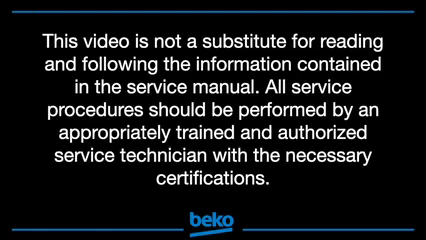
(update) Added frame from Youtube video t1XaUolbjLY which shows that service manuals exist for at least some Beko models. As we can see in the snapshot, Beko wants to restrict who is servicing their machines. (btw the video covers a very different model than mine).

I probably need to find the test mode for my machine, comparable to YT video cq_uSyghZC0.

new problem

The machine reached a new low. Now there actually is a problem with the water valve, it seems. When running a program, it pauses then the start button just blinks. (It previously started by pumping then at least filled the tub). So I followed this video from the 5m10s position. I do not get 220v on either valve. But certainly I can see that 220V is getting to the control panel. So 220v goes into the control panel, but does not make it out of the control panel leads where the water valve connects.

(edit) The water valves themselves are fine (I connected 220v directly to the water valves and water flows). I guess I should suspect the pump now. The pump was actually the very first task back when the machine worked. So I should not have even been looking at the water valves which only start after the initial pumping ends.
25
view more: next ›