jet

joined 2 years ago
MODERATOR OF
[–] jet@hackertalks.com 0 points 1 month ago

I did not upvote this, because cholesterol is not a disease. Reducing LDL by itself is not necessarily healthy, especially in the context of a metabolically healthy individual. Chasing intermediate metrics is not something I think is prudent

[–] jet@hackertalks.com 2 points 1 month ago (1 children)

What was the benefit of surrounding every trace with ground? Reduced crosstalk?

[–] jet@hackertalks.com 1 points 1 month ago

With Android auto and apple carplay... The car is just a screen and the phone does all the work. I don't want the car to do anything

[–] jet@hackertalks.com -1 points 1 month ago

I look forward to the all cause mortality data on these edited people

[–] jet@hackertalks.com 1 points 1 month ago

That is a whole other ballgame.

Golf clap

[–] jet@hackertalks.com 1 points 1 month ago

Great project

[–] jet@hackertalks.com 4 points 1 month ago* (last edited 1 month ago)

Kinda expected, I always disable leta when I setup a mullvad browser.

The biggest killer was not being able to go to the original engine. Let's search for the image of a duck, oh leta doesn't do images, ok open this search in Google... Not a option either. Adds lots of friction

I like the DDG option of having a g! Escape to Google with my query if I need it.

[–] jet@hackertalks.com 1 points 1 month ago

The irony of a streamable video talking about not streaming anything

[–] jet@hackertalks.com 1 points 1 month ago

Biological meat eaters don't get heart disease and diabetes from eating meat, for example.

Humans do not get diabetes (type 2 the most common) from eating meat, it's a direct result of pernicious carbohydrate consumption

The same for heart disease

[–] jet@hackertalks.com 2 points 1 month ago

It's almost like this isn't about porn at all, but an attack on the open internet and being about to track every one

[–] jet@hackertalks.com 2 points 1 month ago* (last edited 1 month ago) (1 children)

Actually it's used in everything, it's available, it's well studied, it's cheap, and most importantly it grows fast in a lab, so it's easy to work with....

I wish I was joking, but lots of in vitro human research is done on the poor women's cancer cells when the research has nothing to do with cancer, it's quite the confounder

[–] jet@hackertalks.com 1 points 1 month ago

There are some unifying theories of cancer that do kinda make it into one thing: https://doi.org/10.3389/fcell.2015.00043

I.e. the Warburg effect, and damaged mitochondria being st the root of all cancers.

In your example the flu is not just one thing either, it's a group of viruses that broadly have the same symptoms


Yesterday I cheated a bunch, added lots of plant foods to my normally clean diet:

  • garlic
  • pistachios
  • onions
  • olives

I'm a sucker for olives and pistachios. Still keto, but not carnivore

By the end of the day I was feeling bad

  • small periodic pains on my skin
  • old shoulder injury started hurting again
  • weird heart beat
  • waking up feeling like crap

My shoulder hasn't hurt in a long time, it stopped when I went carnivore... And now it's back. Very curious

The skin pains were just a few spots but felt like a needle being pushed in, not prolonged, but enough to notice

Heart beat kinda off, I checked my blood pressure 112/70, but it just doesn't feel right

I usually wakeup feeling amazing and ready for anything, but now I feel a bit strungout and cloudy

All of this used to be my baseline aches and pains of just being old, but it's all gone away... And now with a bit of cheating it's back.


This retrospective case report presents the use of a carnivore ketogenic diet by a subject with schizophrenia, supported by a nutritional therapy practitioner, resulting in remission. The narrative describes how ketogenic metabolic therapy can be implemented and optimized in difficult socio-economic circumstances, something not previously reported in the literature. Compliance with diet is reported using glucose and ketone blood markers. The qualitative impact of the therapy is explored from the subject’s perspective as well as the potential for collaboration between nutritional and mental health practitioners to help implement and sustain ketogenic therapies.

Full Paper: https://doi.org/10.3389/fnut.2025.1591937


Results - We randomized 26 patients, of whom 21 (81%) completed the ketogenic diet; only one withdrawal was attributed to the ketogenic diet. While on the ketogenic diet, patients achieved sustained physiological ketosis (12-week mean beta-hydroxybutyrate level: 0.95 ± 0.34 mmol/L). Compared with usual diet, patients on the ketogenic diet increased their mean within-individual ADCS-ADL (+ 3.13 ± 5.01 points, P = 0.0067) and QOL-AD (+ 3.37 ± 6.86 points, P = 0.023) scores; the ACE-III also increased, but not significantly (+ 2.12 ± 8.70 points, P = 0.24). Changes in cardiovascular risk factors were mostly favourable, and adverse effects were mild.

Conclusions - This is the first randomized trial to investigate the impact of a ketogenic diet in patients with uniform diagnoses of AD. High rates of retention, adherence, and safety appear to be achievable in applying a 12-week modified ketogenic diet to AD patients. Compared with a usual diet supplemented with low-fat healthy-eating guidelines, patients on the ketogenic diet improved in daily function and quality of life, two factors of great importance to people living with dementia.

Full Paper https://doi.org/10.1186/s13195-021-00783-x


A hypocarnivore is an animal that consumes less than 30% meat for its diet, the majority of which consists of fungi, fruits, and other plant material.


Purpose of review: Although there is an extensive literature on the efficacy of the low carbohydrate diet (LCD) for weight loss and in the management of type 2 diabetes, concerns have been raised that the LCD may increase cardiovascular disease (CVD) risk by increasing the level of low-density lipoprotein cholesterol (LDL-C). We have assessed the value of LDL-C as a CVD risk factor, as well as effects of the LCD on other CVD risk factors. We have also reviewed findings that provide guidance as to whether statin therapy would be beneficial for individuals with high LDL-C on an LCD.

Recent findings: Multiple longitudinal trials have demonstrated the safety and effectiveness of the LCD, while also providing evidence of improvements in the most reliable CVD risk factors. Recent findings have also confirmed how ineffective LDL-C is in predicting CVD risk.

Summary: Extensive research has demonstrated the efficacy of the LCD to improve the most robust CVD risk factors, such as hyperglycemia, hypertension, and atherogenic dyslipidemia. Our review of the literature indicates that statin therapy for both primary and secondary prevention of CVD is not warranted for individuals on an LCD with elevated LDL-C who have achieved a low triglyceride/HDL ratio.

Full Paper: https://doi.org/10.1097/med.0000000000000764


summerizer

"Tips To Start Carnivore Right In 2025" — Summary

What the video covers

  • Practical guidance for starting and sustaining a carnivore diet in 2025.
  • Safety considerations, common mistakes, troubleshooting, and how to transition from other diets.
  • How to handle medications, electrolytes, and typical adaptation symptoms.

What to eat (animal-sourced foods)

  • Ruminant meats (e.g., beef), pork, poultry, fish, and seafood.
  • Eggs emphasized as a complete, nutrient-dense food.
  • Fats from animals (e.g., butter/tallow) used to satiety and for cooking.
  • Simple, minimally processed options like ground meat, steaks, roasts, canned fish, hard-boiled eggs, jerky/pork rinds (without added sugars/fillers).

What to avoid

  • Plant-based foods and products.
  • Sugars, starches, grains, and carbohydrate-containing processed items.
  • Sauces/condiments with sugar; limit seasonings that trigger cravings.

Dairy

  • Optional; can be included if well-tolerated.
  • Cheese/cream/butter are common, but dairy can stall progress or drive cravings for some—adjust or remove if issues arise.

Beverages

  • Water as the default.
  • Coffee and tea are allowed as a bridge for some; monitor if they trigger cravings or stalls.
  • Avoid sweeteners when possible; even non-caloric sweeteners may maintain cravings.
  • Alcohol is not recommended (often stalls progress).

Electrolytes & salt

  • Salt food “to taste”; most people don’t need complicated electrolyte products.
  • If symptoms suggest low sodium during adaptation, simple measures like salting food or using broth can help.
  • People with salt-sensitive conditions (e.g., high blood pressure, heart/kidney failure) should monitor closely and coordinate care.

Adaptation & common symptoms

  • Early “carb withdrawal”/adaptation (“keto flu”) may occur; typically resolves within days.
  • Hydration, adequate salt, and sufficient dietary fat/protein help.
  • Bowel changes are common: less frequent stools are normal with very low fiber.
    • If constipated: consider more fat and adequate hydration; magnesium can help some.
    • If loose stools: often temporary during adaptation; reassess triggers (e.g., dairy) if persistent.

How to eat (patterns & portions)

  • Eat to comfortable fullness; do not intentionally undereat.
  • Prioritize protein and add fat to satiety, especially if using lean cuts.
  • Snacking is discouraged; aim for structured meals (many do well on 1–2 meals/day naturally as appetite normalizes).
  • Do not force intermittent fasting in the beginning; let meal timing self-regulate as hunger signals stabilize.

Cooking & practical tips

  • Keep meals simple; batch-cook large cuts or ground meat for easy portions.
  • Use straightforward cooking methods (grill, pan, roast, pressure/slow cooker).
  • When eating out: order meat/eggs; ask for butter; skip buns, breading, and sugary sauces.

Budget considerations

  • Ground meat and tougher/cheaper cuts are fine when cooked appropriately.
  • Buying in bulk and simple preparation can lower cost.

Supplements & organ meats

  • Supplements generally not required when eating adequate animal foods.
  • Organ meats are optional, not mandatory.

Exercise

  • Not required to start losing weight or improving metabolic markers; add as desired for fitness/health.

Health markers & lab expectations

  • Many see improvements in metabolic health (e.g., blood sugar/insulin resistance, triglycerides, HDL).
  • LDL responses vary; focus on the overall clinical picture and multiple markers.
  • Inflammation markers and other labs may improve alongside carbohydrate reduction.

Medications & medical supervision

  • Those on glucose-lowering or blood-pressure medications must monitor closely; doses often need reduction as the diet improves control.
  • Be alert for signs of low blood sugar or low blood pressure during the transition; coordinate with a clinician.

Results & expectations

  • Early weight changes often include water shifts; track multiple metrics (belt notches, energy, cravings, symptoms), not just the scale.
  • Cravings typically diminish as carbohydrate intake remains low and protein/fat intake is sufficient.

Troubleshooting stalls

  • Reassess dairy, sweetened beverages, and “keto” processed products.
  • Ensure sufficient total intake (avoid chronic under-eating).
  • Simplify food choices; return to basic animal foods if cravings return.

Social/travel strategies

  • Plan simple, portable animal-sourced options (e.g., eggs, jerky/pork rinds without sugar, canned fish).
  • At restaurants, choose meat-centric dishes and ask to omit carbohydrate sides and sauces.

Long-term sustainability & safety

  • Presented as safe and sustainable for many, with clinical experience indicating long-term use is feasible when properly managed.
  • Emphasis on individualized adjustment (dairy, beverages, salt) and ongoing health monitoring.

No specific research papers or DOIs were referenced in the video.

Remember Carnivore is jut a strict keto diet so you can also reference keto start guides as well.


Dr. Chaffee and Dr. Nagra debate and have a good conversation, this is the full interview. In the the constant pursuit of truth we need to be willing to listen to opposing views that challenge our own. "Echo chambers" and lack of open communication are the bane of our existence.

The two go into exactly why they believe that what they promote makes the most sense (carnivore vs. vegan) and give us real data. Dr. Chaffee, a well known Doctor who promotes carnivore takes on Dr. Nagra, a Vegan Doctor.

summerizer

Debate Summary: Dr. Matthew Nagra vs. Dr. Anthony Chaffee — “Whether the Carnivore Diet Is Healthy”

Participants

  • Dr. Anthony Chaffee (Pro-Carnivore) — argues that an all-animal-based (“carnivore”) diet is healthy and often therapeutic.
  • Dr. Matthew Nagra (Skeptical of Carnivore) — argues that evidence does not support carnivore as a generally healthy or advisable diet.

Format & Setup

  • Host moderates an open debate.
  • Each participant gives brief credentials and an opening position, followed by themed discussion, rebuttals, and audience questions.
  • No sponsor segments summarized; no calls to action included.

Opening Positions

  • Chaffee:
    • Human evolutionary adaptation favors animal foods; many chronic conditions improve when eliminating plant foods and ultra-processed carbs.
    • Claims fiber is not essential; saturated fat and LDL concerns are overstated in metabolically healthy, low-carb contexts.
    • Cites clinical observations of improvements in weight, blood sugar, autoimmune symptoms, and gastrointestinal issues on carnivore.
  • Nagra:
    • Emphasizes hierarchy of evidence (randomized trials, meta-analyses, large cohorts).
    • Notes established associations between higher red/processed meat and cardiovascular disease, diabetes, certain cancers.
    • States LDL/ApoB causally linked to atherosclerosis; saturated fat reliably raises LDL; fiber and plant foods provide protective effects and nutrients.

Major Discussion Themes

1) Lipids, Saturated Fat, and Cardiovascular Risk

  • Chaffee:
    • Argues LDL should be interpreted alongside triglycerides, HDL, and inflammatory markers; in low-carb states LDL elevations are not necessarily harmful.
    • Points to populations or clinical anecdotes where low-carb diets improve metabolic markers despite higher LDL.
  • Nagra:
    • Stresses consensus that ApoB-containing lipoproteins drive atherosclerosis and that saturated fat intake increases LDL.
    • Asserts that lowering LDL reduces risk; argues anecdotes do not override controlled evidence.

2) Fiber, Gut Health, and GI Conditions

  • Chaffee:
    • States fiber is not required for health or bowel function; some patients with IBS/IBD report symptom relief when removing fibrous/plant foods.
    • Notes elimination diets can clarify triggers; claims plant antinutrients/toxins may provoke symptoms in some people.
  • Nagra:
    • Highlights benefits of dietary fiber for microbiome, stool quality, and cardiometabolic markers.
    • Argues that broad recommendations should not be based on elimination anecdotes; supports inclusion of varied plant foods.

3) Weight, Diabetes, and Metabolic Health

  • Chaffee:
    • Reports frequent improvements in HbA1c, fasting glucose, insulin requirements, body weight, and satiety on carnivore/very-low-carb diets.
    • Attributes benefits to carbohydrate restriction, higher protein, and removal of refined foods.
  • Nagra:
    • Acknowledges low-carb diets can aid glycemic control and weight loss, but argues these benefits are not unique to all-meat diets.
    • Emphasizes long-term adherence, nutrient sufficiency, and lipid risk need consideration.

4) Micronutrients, “Nose-to-Tail,” and Adequacy

  • Chaffee:
    • Argues a well-constructed carnivore diet using “nose-to-tail” (organ meats, eggs, seafood, dairy if tolerated) can provide essential nutrients.
    • Notes bioavailability of animal-derived nutrients and absence of certain plant antinutrients.
  • Nagra:
    • Raises potential risks for certain vitamins, minerals, and phytonutrients when excluding plants.
    • Questions practicality of consistently consuming organ meats and achieving long-term adequacy.

5) Evidence Hierarchy and Epidemiology vs. Trials

  • Chaffee:
    • Critiques reliance on food-frequency questionnaires and confounding in observational nutrition studies.
    • Prioritizes interventional changes observed with carbohydrate restriction and elimination diets.
  • Nagra:
    • Defends the role of large cohorts and meta-analyses when RCTs are difficult or short; triangulates across evidence streams.
    • Argues totality of evidence supports plant-inclusive patterns for chronic disease risk reduction.

6) Cancer and Processed/Red Meat

  • Chaffee:
    • Questions strength and causality of associations linking red/processed meat with cancer, noting confounding and lifestyle clusters.
  • Nagra:
    • Points to hazard-ratio signals and mechanistic concerns; advises caution with processed meat and high red-meat intakes.

7) Practicality, Sustainability, and Individualization

  • Chaffee:
    • Positions carnivore as a therapeutic elimination framework for individuals with stubborn symptoms or metabolic disease.
  • Nagra:
    • Recommends flexible, evidence-aligned patterns emphasizing whole foods, plants, and attention to lipids and long-term health.

Areas of Agreement

  • Ultra-processed, refined-carbohydrate foods are problematic.
  • Higher-protein, whole-food approaches can improve satiety and weight control.
  • Individual variation exists; monitoring clinical markers is important.

Key Points of Disagreement

  • The risk meaning of elevated LDL/ApoB on low-carb diets.
  • Necessity and benefits of fiber and plant foods.
  • Strength and interpretation of observational evidence on red/processed meat.
  • Long-term nutrient adequacy and generalizability of carnivore.

Closing Notes

  • Each side reiterates core claims: Chaffee emphasizes clinical outcomes and evolutionary framing of animal-based diets; Nagra emphasizes the weight of controlled and epidemiologic evidence favoring plant-inclusive patterns and lipid management.


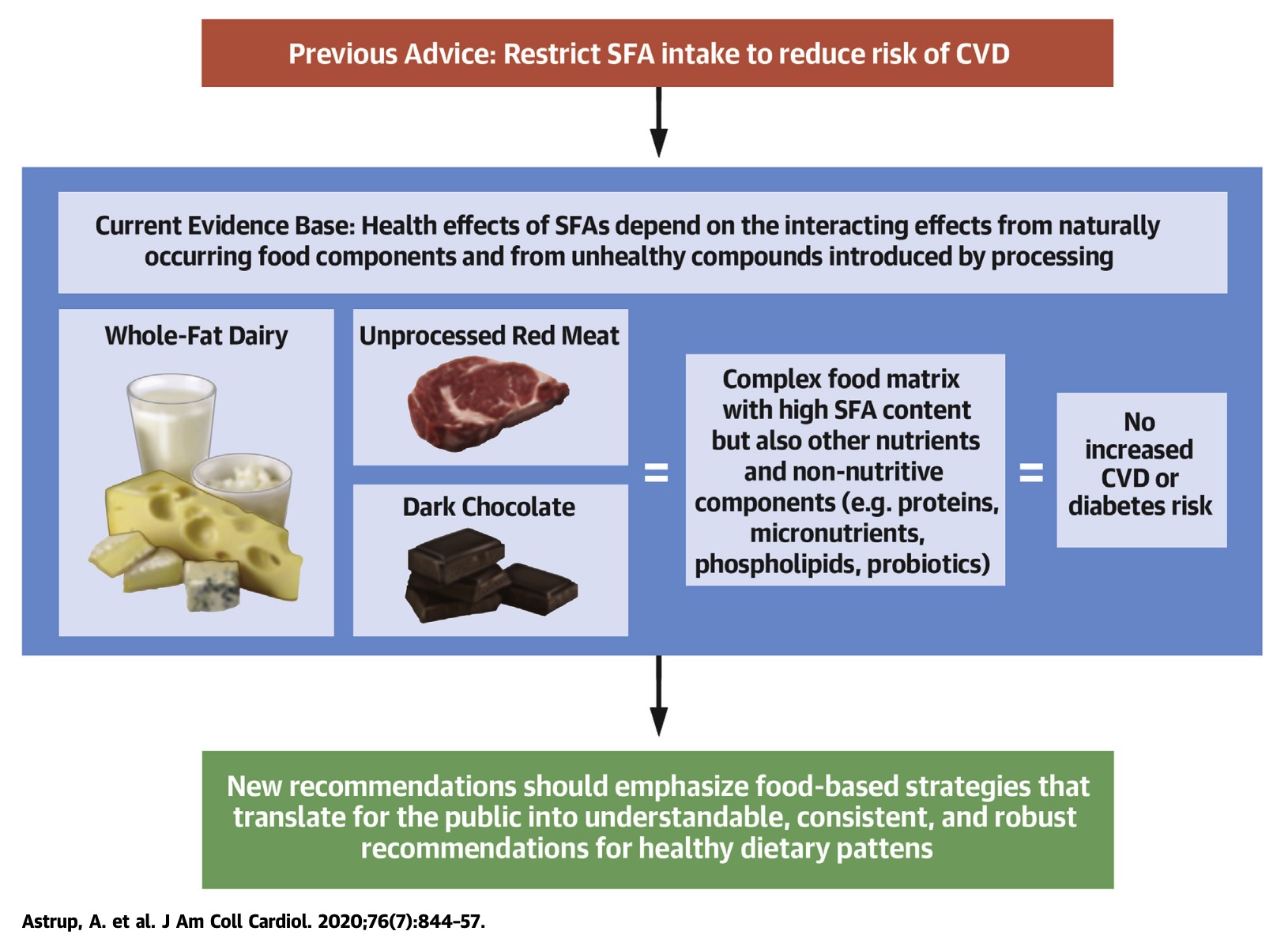
The recommendation to limit dietary saturated fatty acid (SFA) intake has persisted despite mounting evidence to the contrary. Most recent meta-analyses of randomized trials and observational studies found no beneficial effects of reducing SFA intake on cardiovascular disease (CVD) and total mortality, and instead found protective effects against stroke. Although SFAs increase low-density lipoprotein (LDL) cholesterol, in most individuals, this is not due to increasing levels of small, dense LDL particles, but rather larger LDL particles, which are much less strongly related to CVD risk. It is also apparent that the health effects of foods cannot be predicted by their content in any nutrient group without considering the overall macronutrient distribution. Whole-fat dairy, unprocessed meat, and dark chocolate are SFA-rich foods with a complex matrix that are not associated with increased risk of CVD. The totality of available evidence does not support further limiting the intake of such foods.

From - The Journal of the American College of Cardiology (JACC)

Full Paper: https://doi.org/10.1016/j.jacc.2020.05.077


In this Podcast Episode, Dr. Anthony Chaffee, Mark Bell, Nsima Inyang, and Andrew Zaragoza talk about the incredible benefits of following a strict carnivore diet.

summerizer

Core thesis

  • A meat-based (carnivore) diet is presented as optimal for human health and performance.
  • Carbohydrates are described as non-essential; ketosis is framed as a normal, beneficial metabolic state.
  • Plant foods are discussed as containing anti-nutrients/toxins; fiber is argued to be unnecessary.
  • Markers like fasting insulin/metabolic health are emphasized over LDL-C; LDL particle quality and overall clinical outcomes are prioritized.

Performance, training, and adaptation

  • Endurance/strength performance is said to recover to baseline after keto/fat-adaptation; an RCT is referenced indicating equal output after adaptation.
  • Glycogen can be maintained/replenished on low-carb via gluconeogenesis; fat oxidation is highlighted as a large, steady fuel reserve during long efforts.
  • Practical note from the video: allow several weeks for adaptation before judging performance.

Historical/clinical evidence presented (as stated in the video)

  • All-meat human trials: Early clinical research (Bellevue Hospital) is cited showing normal kidney function and health on a prolonged meat-only diet.
  • Traditional populations: Comparisons of neighboring African tribes with different diets (Maasai: animal-heavy; Kikuyu: largely plant-based) are referenced to illustrate differences in health/physique.
  • Diet-heart randomized trials: Re-analyses of older trials (e.g., Sydney Diet Heart; Minnesota Coronary Experiment) are cited, with the video stating that replacing saturated fat with vegetable oils (linoleic-acid–rich) lowered cholesterol yet did not improve—and in some cases worsened—clinical outcomes.
  • Large low-fat intervention: The Women’s Health Initiative dietary modification trial is referenced as lowering fat but not delivering the expected cardiovascular benefit.
  • Modern cohort evidence: The PURE study is referenced as associating higher carbohydrate intake with higher mortality, while total and saturated fat are not shown to increase CVD mortality as claimed historically.
  • Framingham: The video references Framingham data and claims the commonly repeated narrative does not match the study’s detailed findings (the specific paper is not named).
  • Industry influence: UCSF-led archival work is referenced alleging that the sugar industry paid Harvard academics, influencing historic nutrition guidance.

Disease topics touched on

  • Cardiovascular disease: Focus on outcomes over cholesterol alone; concern about seed-oil–heavy substitutions.
  • Metabolic disease: Ketogenic/carnivore approaches are described as improving insulin resistance and facilitating diabetes medication de-escalation.
  • Neurologic/other: The video makes favorable remarks about ketosis for brain energy, and briefly mentions conditions such as MS, autism, Alzheimer’s, etc., in the context of ketogenic metabolism (details vary across segments).


Results: In the fully adjusted model, significant positive associations between P_CARB and CVD risk were observed in the pooled analysis, showing that the HRs (95% CIs) for CVD across increasing quartiles of P_CARB were 1.00 (reference), 1.16 (0.94-1.44), 1.25 (0.96-1.63), and 1.48 (1.08-2.03). The restricted cubic spline regression analysis confirmed a linear dose-response relationship between P_CARB and CVD risk in both cohort studies, with all p-values for nonlinearity >0.05.

Conclusion: Our findings suggest that a carbohydrate-based diet high in proportion to total energy intake may increase the risk of CVD among middle-aged Korean adults, underscoring the importance of balanced macronutrient distribution. However, more research is needed to evaluate the sources and quality of carbohydrates in relation to CVD risk in this population.

Full Paper: https://doi.org/10.1016/j.clnu.2023.06.013


I thought I had totally lost this! https://www.imdb.com/title/tt1355599/

A dangerous mission reunites Stingray Sam with his long lost accomplice, The Quasar Kid. Follow these two space-convicts as they earn their freedom in exchange for the rescue of a young girl who is being held captive by the genetically designed figurehead of a very wealthy planet.

It's on youtube https://www.youtube.com/watch?v=lxfggiZLn60 but only 360p.


Ever feel like your battle with weight loss is a fight you can’t win, no matter the amount of healthy eating? You’re not lazy, and you don’t lack willpower—you’ve been set up to fail by a food system that has hijacked your biology.

In this powerful episode of The Dr. Hyman Show, I sit down with the ultimate insider, Dr. David Kessler—a physician, lawyer, and the former FDA Commissioner who famously took on Big Tobacco and won. Dr. Kessler reveals his own 40-pound weight gain after leading the White House COVID-19 response and how it led him to uncover the truth about our metabolic crisis.

We uncover how the food industry has engineered an alternate universe of ultra-processed foods designed to be addictive, creating a "food carnival" that keeps us coming back for more. Dr. Kessler also unveils his groundbreaking petition to the FDA—a brilliant legal strategy that uses the food industry's own rules against them to potentially transform our food supply forever.

This conversation is a masterclass in the science of food addiction, the failure of public policy, and the practical steps we can all take to finally reclaim our health.

In this episode, we dive into:

Why Dr. Kessler, former head of the FDA, couldn't control his own weight

The science of food addiction and how dopamine circuits in your brain get hijacked

How "toxic" visceral fat is the true cause of heart failure, diabetes, and even dementia

The legal loophole ("GRAS") that allows harmful ingredients in our food

Dr. Kessler’s plan to hold the food industry accountable, just like Big Tobacco

summerizer

“Why We Can’t Lose Weight (and What to Do About It)” — Summary (from the video only)

Speaker

  • Former FDA Commissioner David Kessler discusses why weight loss is so difficult and what can help.

Core Thesis

  • The modern food environment exploits hard-wired biology (reward, learning, and metabolic responses), making persistent overeating common. Sustainable weight control requires changing that environment and the types of foods we routinely encounter.

How Modern Food Hijacks Biology

  • Industrially formulated foods combine sugar, fat, and salt with specific textures and cues (smell, crunch, mouthfeel) to create powerful reward signals.
  • These cues trigger anticipatory (cephalic) responses and reinforce habit loops that drive “conditioned hyper-eating.”
  • Dopamine and related learning pathways are repeatedly engaged, increasing cue-reactivity and making restraint progressively harder in everyday settings saturated with these foods.

Food Addiction Framework (Yale Food Addiction Scale)

  • A “food addiction” phenotype can be measured behaviorally (e.g., loss of control, continued use despite harm).
  • Cited figure: a large population study estimates roughly 14% of people globally (including adolescents) meet criteria for food addiction by the Yale Food Addiction Scale (YFAS) or its updated version.
  • The term is used to describe a behavioral pattern; it’s not a moral failing but a predictable result of exposure to engineered, highly rewarding foods.

Papers referenced in the video

Ultra-Processed Food (UPF) Classification

  • The video references the Brazilian/NOVA framework for classifying foods, noting debates about definitions but emphasizing that the most highly processed products consistently concentrate sugar/fat/salt and sensory engineering.
  • The gist: regardless of taxonomy debates, the most ultra-processed items repeatedly elicit strong reward and drive passive overconsumption.

Paper referenced in the video

Why Willpower Alone Fails

  • Constant exposure to cues (packaging, availability, portion size, placement) overwhelms conscious control.
  • Once patterns of cue → craving → consumption are established, everyday environments reliably replay them.

Medications and Biology

  • GLP-1–based therapies are discussed as biological tools that can reduce appetite and cravings.
  • They can help interrupt compulsive patterns, but environment and food choices still matter; medication alone does not “fix” the food environment that trained the behavior.

Practical Levers Highlighted

  • Change the food environment: make highly engineered, ultra-palatable products less available and less salient in daily life.
  • Structure defaults toward minimally processed foods to lower cue-reactivity.
  • Portion and placement: smaller default portions; keep trigger foods out of immediate reach/sight.
  • Routine over willpower: build predictable eating patterns that reduce exposure to provocative cues.

Policy/Regulatory Perspective

  • Past successes (e.g., around tobacco) show that policy can reshape environments (labeling, marketing limits, availability, pricing signals).
  • Similar population-level measures could reduce exposure to the most problematic formulations without banning foods outright.
  • Acknowledges the tension between industry incentives and public health, and the need for evidence-based standards that reflect modern food engineering and its effects on behavior.

Open Questions Noted

  • How to operationalize definitions that capture the true drivers of overconsumption (beyond simple nutrient lists).
  • Where to draw policy lines that are practical, fair, and actually reduce cue-driven overeating.
  • How medical therapies, nutrition strategies, and policy can synergize to deliver durable weight control at scale.

view more: ‹ prev next ›